







Question: Using the arithmetic average change in dividends over the past four years, what will be the next dividend? $ 0.57 (Round to the nearest bent.)
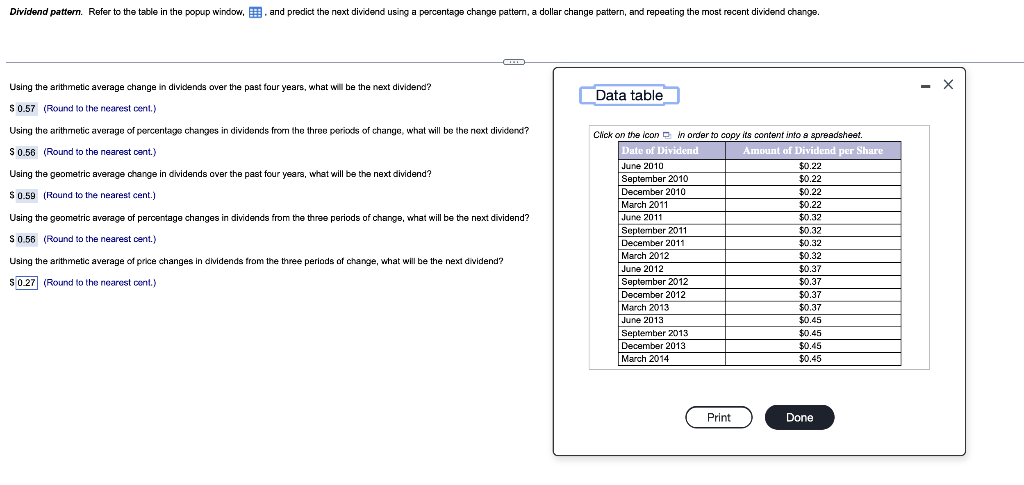
Using the arithmetic average change in dividends over the past four years, what will be the next dividend? \$ 0.57 (Round to the nearest bent.) Using the arithmetic average of percentage changes in dividends from the three periods of change, what will be the next dividend? (Round to the nearest cent.) Using the geometric average change in dlvidends over the past four years, what will be the next dividend? $0.59 (Round to the nearest cent.) Using the geometric average of percentage changes in dividends from the three periods of change, what will be the next dividend? \$ 0.56 (Round to the nearest cent.) Using the arithmetic average of price changes in dlvidends from the three periods of change, what will be the next dividend? (Round to the nearest cent.) Using the arithmetic average change in dividends over the past four years, what will be the next dividend? \$ 0.57 (Round to the nearest bent.) Using the arithmetic average of percentage changes in dividends from the three periods of change, what will be the next dividend? (Round to the nearest cent.) Using the geometric average change in dlvidends over the past four years, what will be the next dividend? $0.59 (Round to the nearest cent.) Using the geometric average of percentage changes in dividends from the three periods of change, what will be the next dividend? \$ 0.56 (Round to the nearest cent.) Using the arithmetic average of price changes in dlvidends from the three periods of change, what will be the next dividend? (Round to the nearest cent.)
Step by Step Solution
There are 3 Steps involved in it

Get step-by-step solutions from verified subject matter experts
 Study Help