



Question: Using the expanded accounting equation, calculate and enter the answers for each question. You will need to use the answers you calculate for beginning and
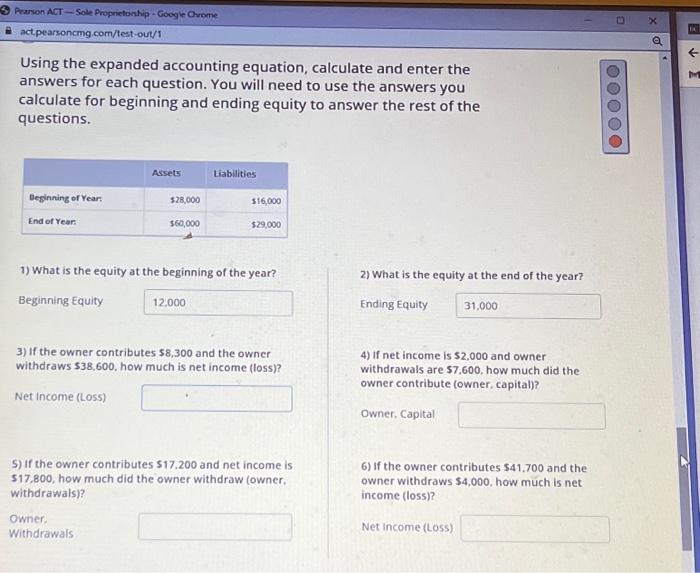
Using the expanded accounting equation, calculate and enter the answers for each question. You will need to use the answers you calculate for beginning and ending equity to answer the rest of the questions. 1) What is the equity at the beginning of the year? Beginning Equity 3) If the owner contributes $8,300 and the owner withdraws 538,600 , how much is net income (loss)? Net income (Loss) 5) If the owner contributes $17,200 and net income is 517.800, how much did the owner withdraw (owner. withdrawals)? Owner. Withdrawals 2) What is the equity at the end of the year? Ending Equity 4) if net income is $2,000 and owner withdrawals are 57,600, how much did the owner contribute (owner, capital)? Owner, Capital 6) If the owner contributes $41.700 and the owner withdraws $4,000, how much is net income (loss)? Net income (Loss) Using the expanded accounting equation, calculate and enter the answers for each question. You will need to use the answers you calculate for beginning and ending equity to answer the rest of the questions. 1) What is the equity at the beginning of the year? Beginning Equity 3) If the owner contributes $8,300 and the owner withdraws 538,600 , how much is net income (loss)? Net income (Loss) 5) If the owner contributes $17,200 and net income is 517.800, how much did the owner withdraw (owner. withdrawals)? Owner. Withdrawals 2) What is the equity at the end of the year? Ending Equity 4) if net income is $2,000 and owner withdrawals are 57,600, how much did the owner contribute (owner, capital)? Owner, Capital 6) If the owner contributes $41.700 and the owner withdraws $4,000, how much is net income (loss)? Net income (Loss)
Step by Step Solution
There are 3 Steps involved in it

Get step-by-step solutions from verified subject matter experts