



Question: Using the FCFS (first come, first served) decision rule for sequencing the jobs, the order is: Sequence Job RG-05 DE-06 SY-11) CX-01 BR-02 The total
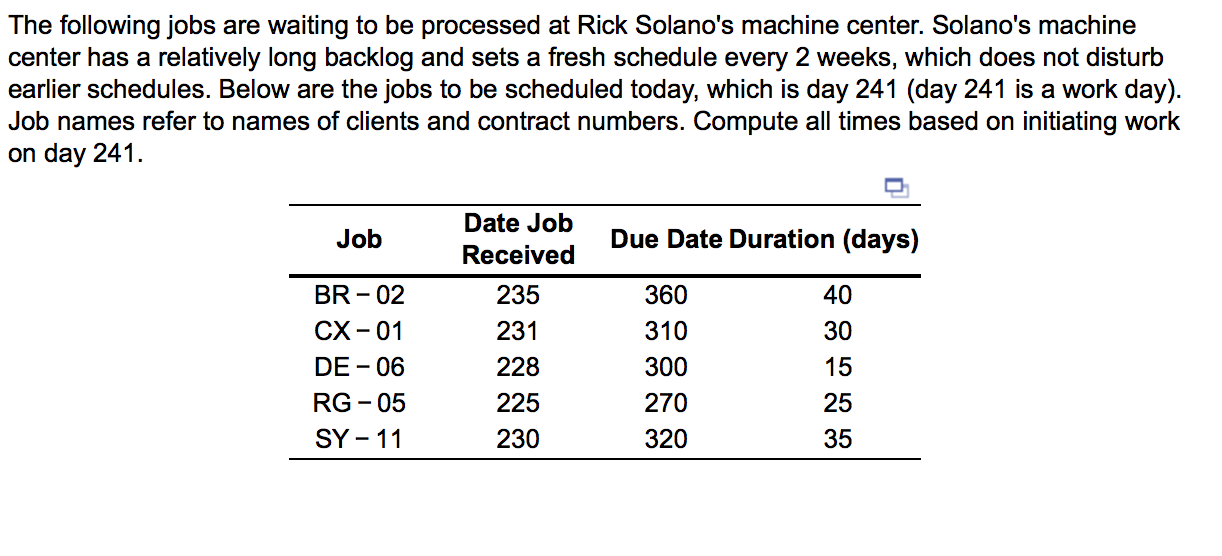
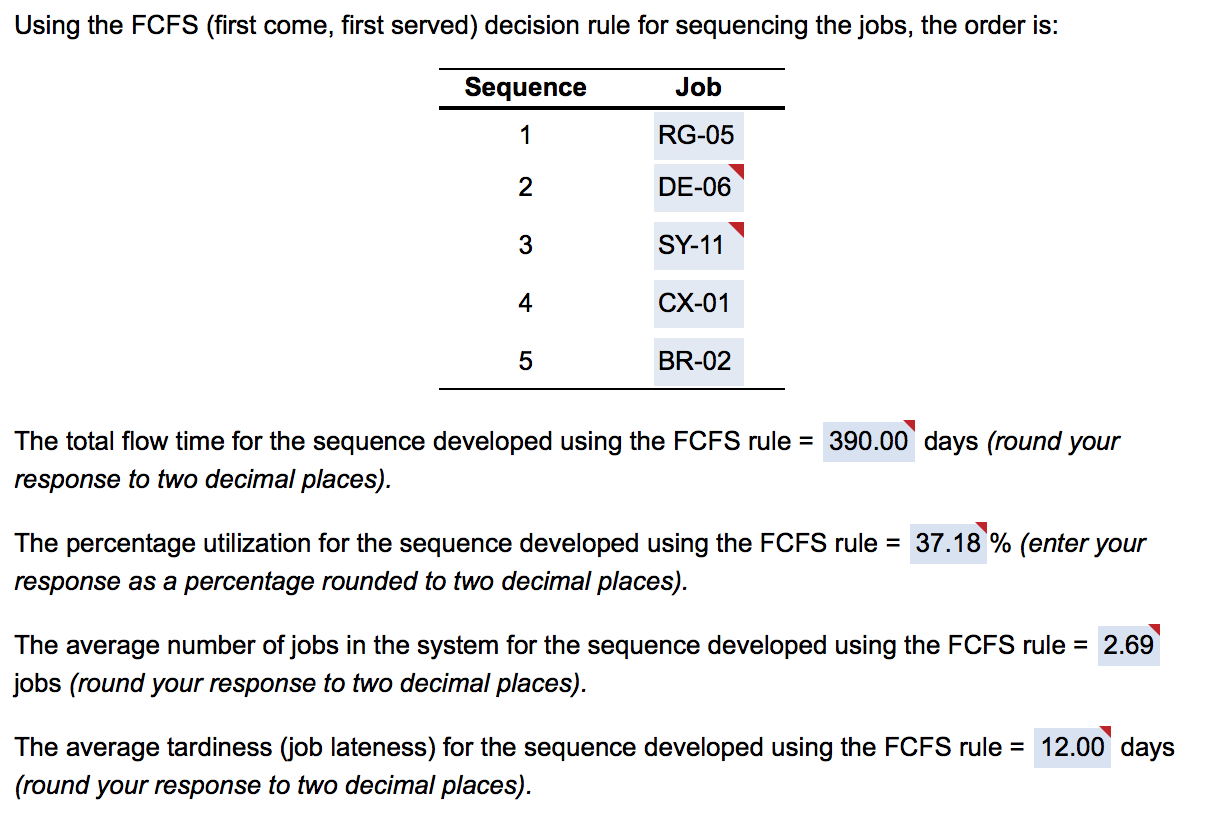
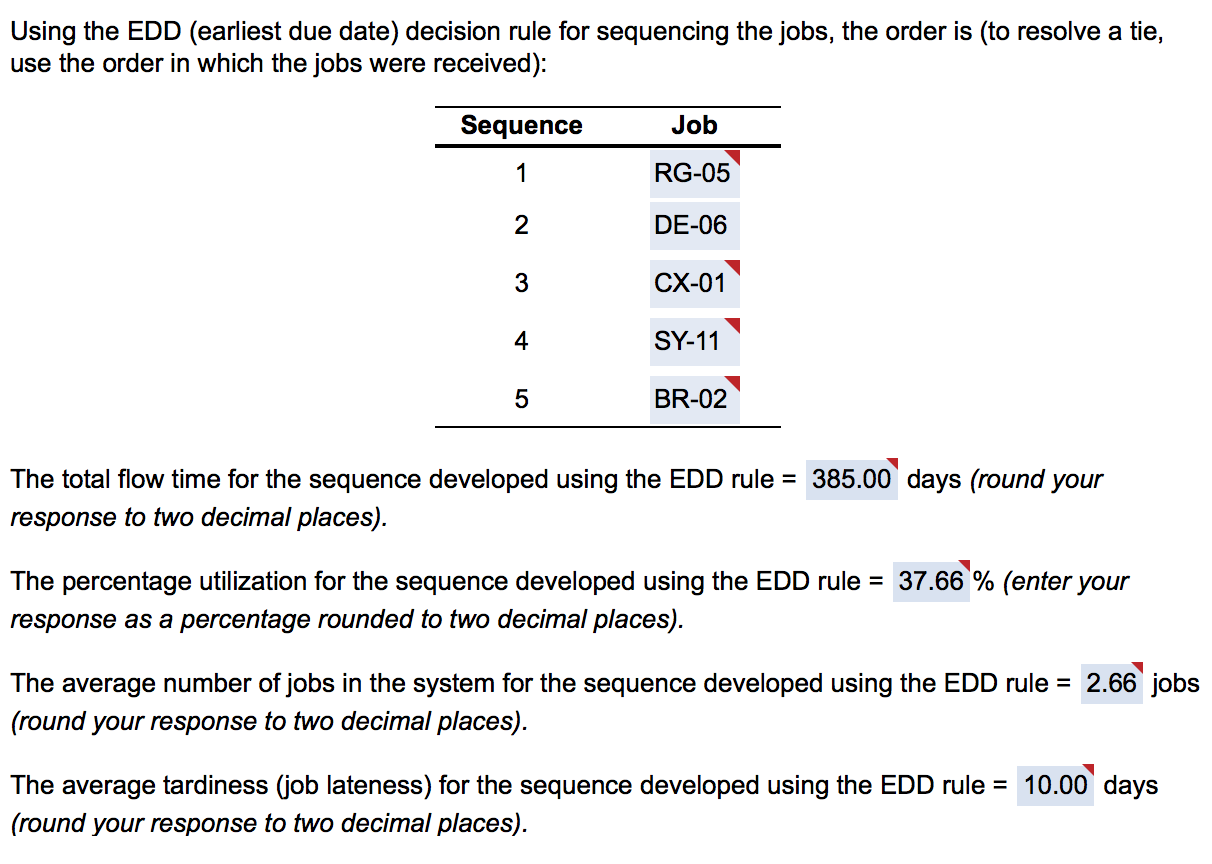
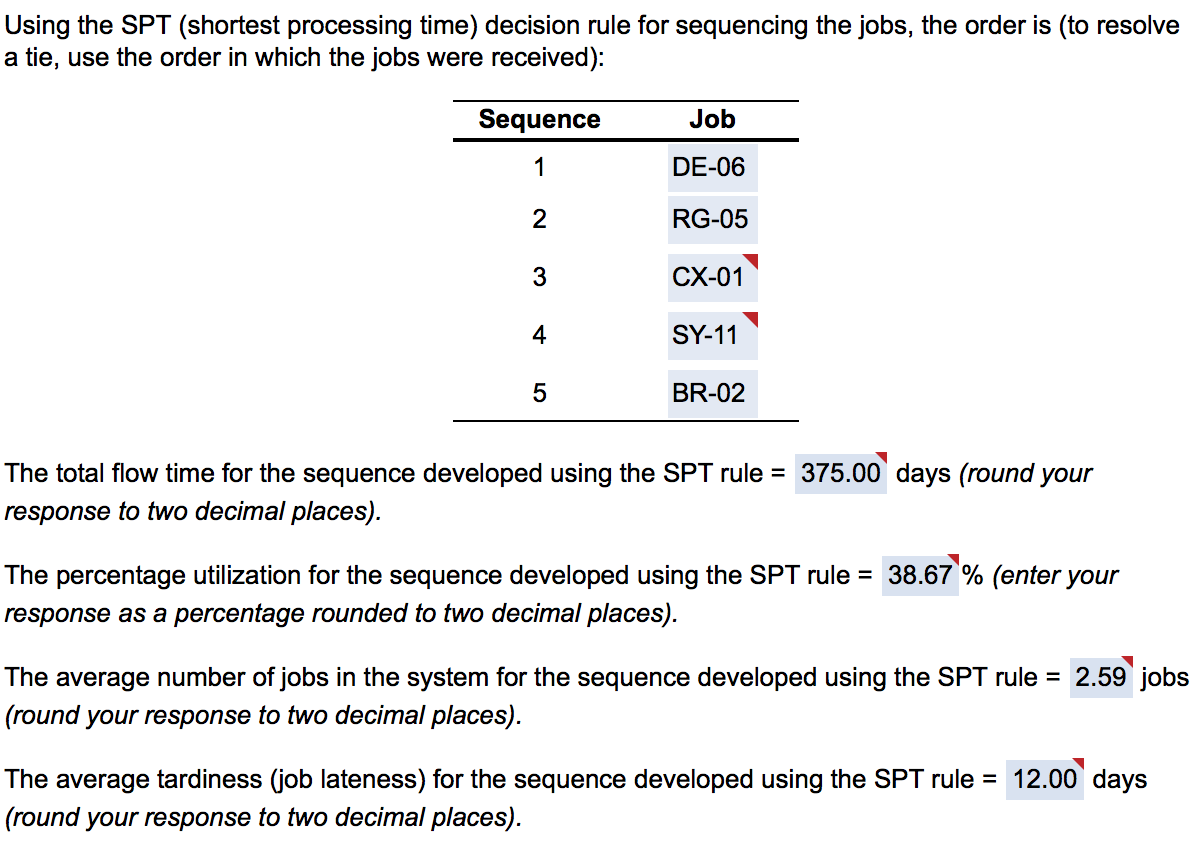
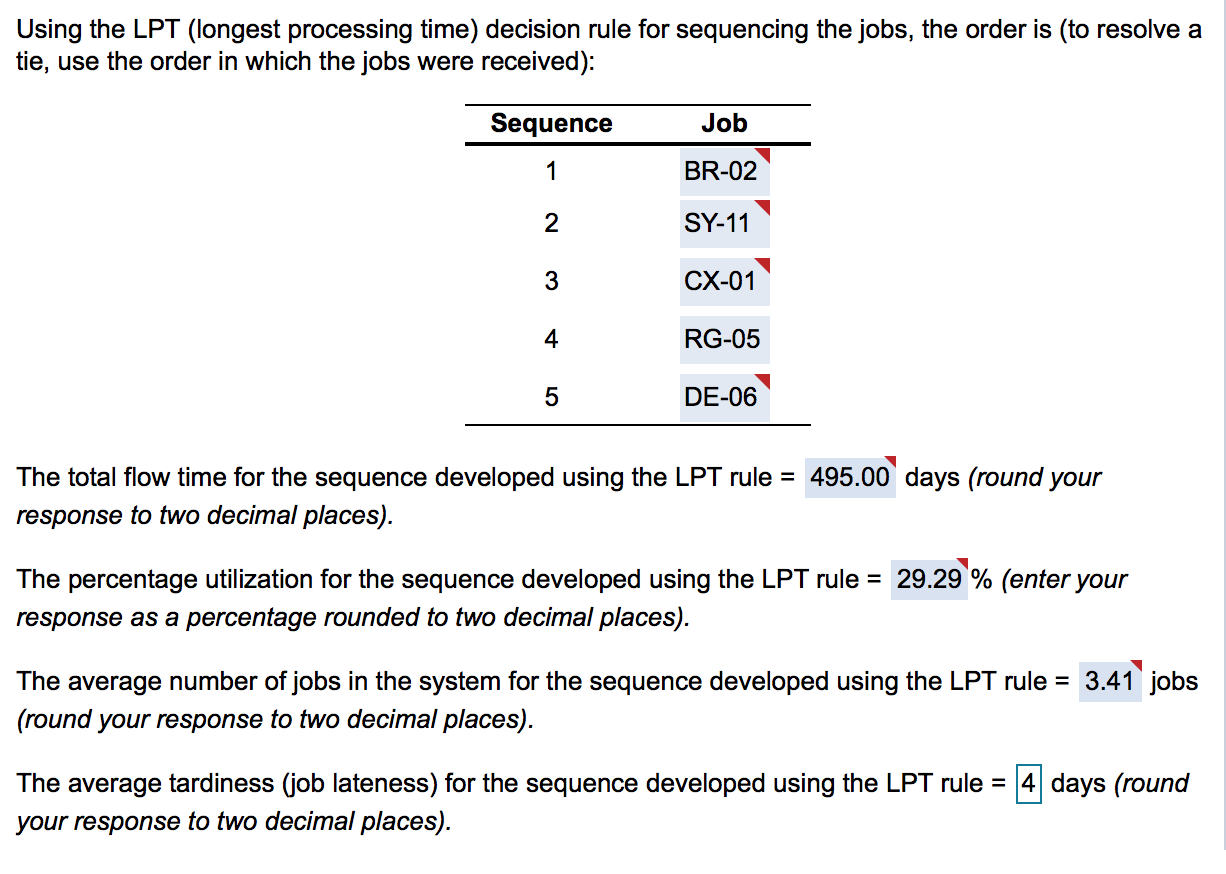
Using the FCFS (first come, first served) decision rule for sequencing the jobs, the order is: Sequence Job RG-05 DE-06 SY-11) CX-01 BR-02 The total flow time for the sequence developed using the FCFS rule = 390.00 days (round your response to two decimal places). The percentage utilization for the sequence developed using the FCFS rule = 37.18 % (enter your response as a percentage rounded to two decimal places). The average number of jobs in the system for the sequence developed using the FCFS rule = 2.69 jobs (round your response to two decimal places). The average tardiness (job lateness) for the sequence developed using the FCFS rule = 12.00 days (round your response to two decimal places). Using the EDD (earliest due date) decision rule for sequencing the jobs, the order is (to resolve a tie, use the order in which the jobs were received): Sequence Job RG-05 DE-06 CX-01 SY-11 BR-02 The total flow time for the sequence developed using the EDD rule = 385.00 days (round your response to two decimal places). The percentage utilization for the sequence developed using the EDD rule = 37.66 % (enter your response as a percentage rounded to two decimal places). The average number of jobs in the system for the sequence developed using the EDD rule = 2.66 jobs (round your response to two decimal places). The average tardiness (job lateness) for the sequence developed using the EDD rule = 10.00 days (round your response to two decimal places). Using the SPT (shortest processing time) decision rule for sequencing the jobs, the order is (to resolve a tie, use the order in which the jobs were received): Sequence Job DE-06 RG-05 CX-01 SY-11 BR-02 The total flow time for the sequence developed using the SPT rule = 375.00 days (round your response to two decimal places). The percentage utilization for the sequence developed using the SPT rule = 38.67 % (enter your response as a percentage rounded to two decimal places). The average number of jobs in the system for the sequence developed using the SPT rule = 2.59 jobs (round your response to two decimal places). The average tardiness (job lateness) for the sequence developed using the SPT rule = 12.00 days (round your response to two decimal places). Using the LPT (longest processing time) decision rule for sequencing the jobs, the order is (to resolve a tie, use the order in which the jobs were received): Sequence Job BR-02 SY-11 CX-01 RG-05 DE-06 The total flow time for the sequence developed using the LPT rule = 495.00 days (round your response to two decimal places). The percentage utilization for the sequence developed using the LPT rule = 29.29 % (enter your response as a percentage rounded to two decimal places). The average number of jobs in the system for the sequence developed using the LPT rule = 3.41 jobs (round your response to two decimal places). The average tardiness (job lateness) for the sequence developed using the LPT rule = 4 days (round your response to two decimal places). Using the FCFS (first come, first served) decision rule for sequencing the jobs, the order is: Sequence Job RG-05 DE-06 SY-11) CX-01 BR-02 The total flow time for the sequence developed using the FCFS rule = 390.00 days (round your response to two decimal places). The percentage utilization for the sequence developed using the FCFS rule = 37.18 % (enter your response as a percentage rounded to two decimal places). The average number of jobs in the system for the sequence developed using the FCFS rule = 2.69 jobs (round your response to two decimal places). The average tardiness (job lateness) for the sequence developed using the FCFS rule = 12.00 days (round your response to two decimal places). Using the EDD (earliest due date) decision rule for sequencing the jobs, the order is (to resolve a tie, use the order in which the jobs were received): Sequence Job RG-05 DE-06 CX-01 SY-11 BR-02 The total flow time for the sequence developed using the EDD rule = 385.00 days (round your response to two decimal places). The percentage utilization for the sequence developed using the EDD rule = 37.66 % (enter your response as a percentage rounded to two decimal places). The average number of jobs in the system for the sequence developed using the EDD rule = 2.66 jobs (round your response to two decimal places). The average tardiness (job lateness) for the sequence developed using the EDD rule = 10.00 days (round your response to two decimal places). Using the SPT (shortest processing time) decision rule for sequencing the jobs, the order is (to resolve a tie, use the order in which the jobs were received): Sequence Job DE-06 RG-05 CX-01 SY-11 BR-02 The total flow time for the sequence developed using the SPT rule = 375.00 days (round your response to two decimal places). The percentage utilization for the sequence developed using the SPT rule = 38.67 % (enter your response as a percentage rounded to two decimal places). The average number of jobs in the system for the sequence developed using the SPT rule = 2.59 jobs (round your response to two decimal places). The average tardiness (job lateness) for the sequence developed using the SPT rule = 12.00 days (round your response to two decimal places). Using the LPT (longest processing time) decision rule for sequencing the jobs, the order is (to resolve a tie, use the order in which the jobs were received): Sequence Job BR-02 SY-11 CX-01 RG-05 DE-06 The total flow time for the sequence developed using the LPT rule = 495.00 days (round your response to two decimal places). The percentage utilization for the sequence developed using the LPT rule = 29.29 % (enter your response as a percentage rounded to two decimal places). The average number of jobs in the system for the sequence developed using the LPT rule = 3.41 jobs (round your response to two decimal places). The average tardiness (job lateness) for the sequence developed using the LPT rule = 4 days (round your response to two decimal places)
Step by Step Solution
There are 3 Steps involved in it

Get step-by-step solutions from verified subject matter experts