



Question: Using the formula given by Gordon and Gould (1978) according to which V= [(1-b) Y)/(p-br) where :V = present value of the firm's stock of
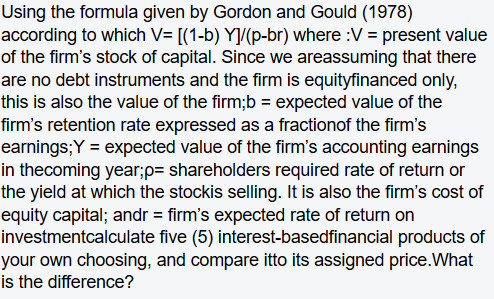
Using the formula given by Gordon and Gould (1978) according to which V= [(1-b) Y)/(p-br) where :V = present value of the firm's stock of capital. Since we areassuming that there are no debt instruments and the firm is equityfinanced only, this is also the value of the firm;b = expected value of the firm's retention rate expressed as a fractionof the firm's earnings;Y = expected value of the firm's accounting earnings in thecoming year;p=shareholders required rate of return or the yield at which the stockis selling. It is also the firm's cost of equity capital; andr = firm's expected rate of return on investmentcalculate five (5) interest-basedfinancial products of your own choosing, and compare itto its assigned price. What is the difference? Using the formula given by Gordon and Gould (1978) according to which V= [(1-b) Y)/(p-br) where :V = present value of the firm's stock of capital. Since we areassuming that there are no debt instruments and the firm is equityfinanced only, this is also the value of the firm;b = expected value of the firm's retention rate expressed as a fractionof the firm's earnings;Y = expected value of the firm's accounting earnings in thecoming year;p=shareholders required rate of return or the yield at which the stockis selling. It is also the firm's cost of equity capital; andr = firm's expected rate of return on investmentcalculate five (5) interest-basedfinancial products of your own choosing, and compare itto its assigned price. What is the difference
Step by Step Solution
There are 3 Steps involved in it

Get step-by-step solutions from verified subject matter experts