Question: using the imformation i provided write a 2 page case study based on robin hood and the assigment that was given It was in the
using the imformation i provided write a 2 page case study based on robin hood and "the assigment" that was given
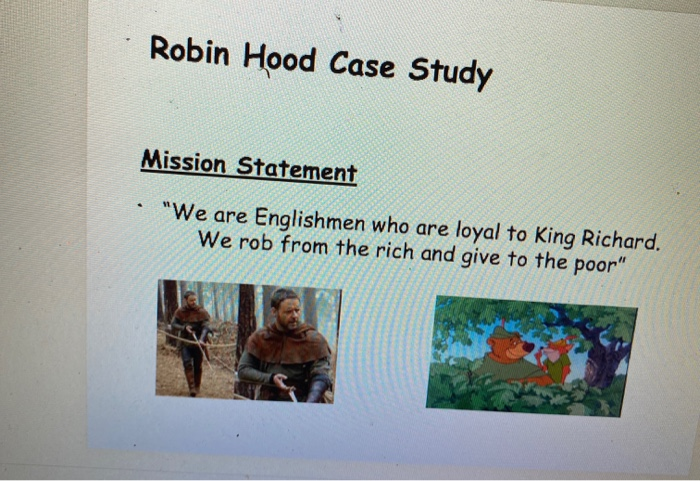
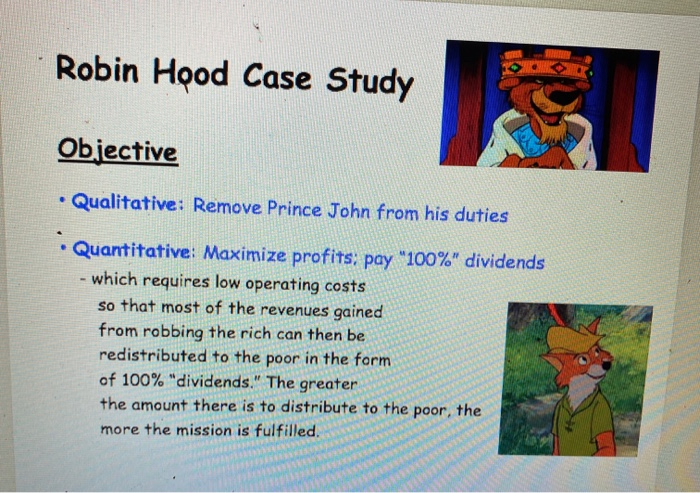
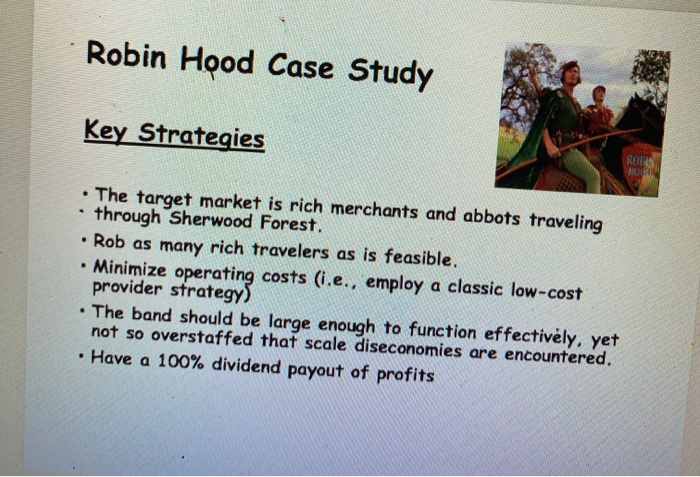
It was in the spring of the second year of his insur- rection against the High Sheriff of Nottingham that Robin Hood took a walk in Sherwood Forest. As he walked, he pondered the progress of the campaign. the disposition of his forces, the Sheriff's recent moves, and the options that confronted him. The revolt against the Sheriff had begun as a per- sonal crusade. It erupted out of Robin's conflict with the Sheriff and his administration. However, alone Robin Hood could do little. He therefore sought allies, men with grievances and a deep sense of jus- tice. Later he welcomed all who came, asking few questions and demanding only a willingness to serve. Strength, he believed, lay in numbers. He spent the first year forging the group into a disciplined band, united in enmity against the Sheriff and willing to live outside the law. The band's organi- zation was simple. Robin ruled supreme, making all important decisions. He delegated specific tasks to his lieutenants. Will Scarlett was in charge of intelli- gence and scouting. His main job was to shadow the Sheriff and his men, always alert to their next move. He also collected information on the travel plans of rich merchants and tax collectors. Little John kept discipline among the men and saw to it that their archery was at the high peak that their profession demanded. Scarlett took care of the finances, con verting loot to cash, paying shares of the take, and finding suitable hiding places for the surplus. Finally, Much the Miller's son had the difficult task of provi- sioning the ever increasing band of Merry Men. The increasing size of the band was a source of satisfaction for Robin, but also a source of con- cern. The fame of his Merry Men was spreading. and new recruits were pouring in from every cor- ner of England. As the band grew larger, their small bivouac became a major encampment. Between raids the men milled about, talking and playing games. Vigilance was in decline, and discipline was becoming harder to enforce. "Why," Robin reflected, "I don't know half the men I run into these days." The growing band was also beginning to exceed the food capacity of the forest. Game was becoming scarce, and supplies had to be obtained from outly- ing villages. The cost of buying food was beginning to drain the band's financial reserves at the very moment when revenues were in decline. Travelers. especially those with the most to lose were now giving the forest a wide berth. This was costly and inconvenient to them, but it was preferable to having all their goods confiscated. Robin believed that the time had come for the Merry Men to change their policy of outright confis- cation of goods to one of a fixed transit tax. His lieu tenants strongly resisted this idea. They were proud of the Merry Men's famous motto: "Rob the rich and give to the poor." "The farmers and the towns- people, they argued, "are our most important allies. How can we tax them, and still hope for their help in our fight against the Sheriff?" Copyright 1991.Joseph Case 10 Robin Hood 34 Robin wondered how long the Merry Men could keep to the ways and methods of their early days. The Sheriff was growing stronger and becoming bet- ter organized. He now had the money and the men and was beginning to harass the band, probing for its weaknesses. The tide of events was beginning to turn against the Merry Men. Robin felt that the campaign must be decisively concluded before the Sheriff had a chance to deliver a mortal blow. "But how," he won- dered, "could this be done?" Robin had often entertained the possibility of killing the Sheriff, but the chances for this seemed increasingly remote. Besides, killing the Sheriff might satisfy his personal thirst for revenge, but it would not improve the situation. Robin had hoped that the perpetual state of unrest and the Sheriff's failure to collect taxes would lead to his removal from office. Instead, the Sheriff used his political con nections to obtain reinforcement. He had powerful friends at court and was well regarded by the regent, Prince John. Prince John was vicious and volatile. He was con sumed by his unpopularity among the people, who wanted the imprisoned King Richard back. He also lived in constant fear of the barons, who had first given him the regency but were now beginning to dis- pute his claim to the throne. Several of these barons had set out to collect the ransom that would release King Richard the Lionheart from his jail in Austria. Robin was invited to join the conspiracy in return for future amnesty. It was a dangerous proposition. Provincial banditry was one thing, court intrigue another. Prince John had spies everywhere, and he was known for his vindictiveness. If the conspirators' plan failed, the pursuit would be relentless and retri- butions swift. The sound of the supper horn startled Robin from his thoughts. There was the smell of roasting veni- s on in the air. Nothing was resolved or settled. Robin headed for camp promising himself that he would give these problems his utmost attention after tomor row's raid. Robin Hood Case Study Mission Statement "We are Englishmen who are loyal to King Richard. We rob from the rich and give to the poor" Robin Hood Case Study Objective Qualitative: Remove Prince John from his duties Quantitative: Maximize profits: pay "100%" dividends - which requires low operating costs so that most of the revenues gained from robbing the rich can then be redistributed to the poor in the form of 100% "dividends." The greater the amount there is to distribute to the poor, the more the mission is fulfilled. Robin Hood Case Study Key Strategies ROPA HUU The target market is rich merchants and abbots traveling through Sherwood Forest. Rob as many rich travelers as is feasible. Minimize operating costs (.e., employ a classic low-cost provider strategy) The band should be large enough to function effectively, yet not so overstaffed that scale diseconomies are encountered. Have a 100% dividend payout of profits . Robin Hood Case Study? The Assignment Since you are Robin Hood's most trusted advisors and are most knowledgeable about crafting and implementing effective strategies, he has called upon you to advise him on how to proceed in light of the current situation ... uy next Week, Robin Hood expects you read the attached 2 - page "Situation Analysis" to get updated on the current situation and then provide him with .. ... a recommendation that includes the following: 1) a revised SWOT analysis 2) a new set of performance objectives 3) strategies for the next three years Notes Comments : - MacBook Robin Hood Case Study Situation Analysis External Environment You know how it got started ... Internal Environment You know the key personnel









 Study Help