







Question: Using the information for Projects A and B, answer the following questions. i. What accept/reject decisions should be made and why? (5 marks) ii.
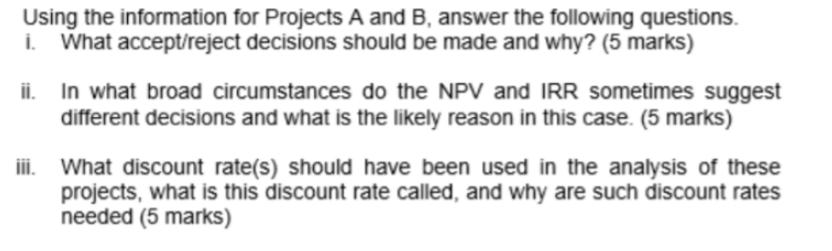

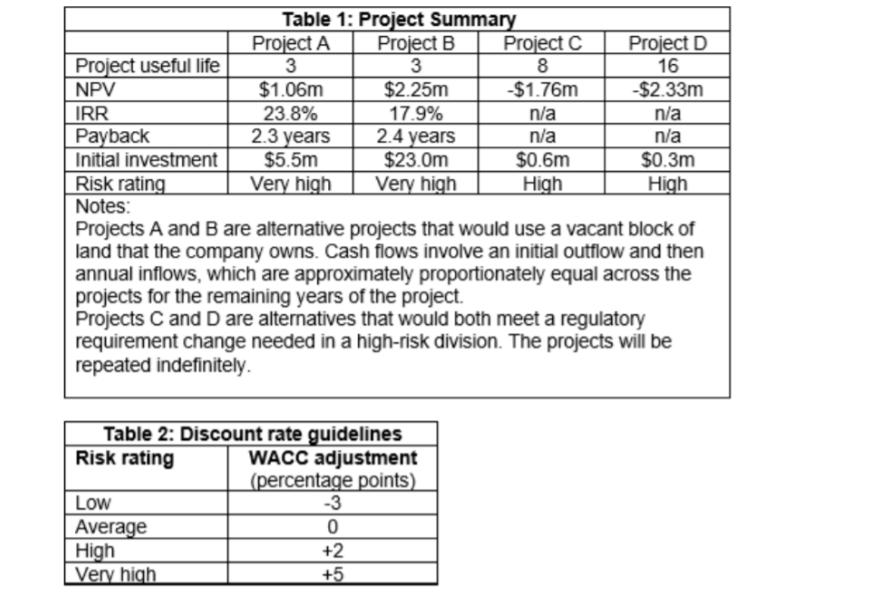
Using the information for Projects A and B, answer the following questions. i. What accept/reject decisions should be made and why? (5 marks) ii. In what broad circumstances do the NPV and IRR sometimes suggest different decisions and what is the likely reason in this case. (5 marks) What discount rate(s) should have been used in the analysis of these projects, what is this discount rate called, and why are such discount rates needed (5 marks) (b) Using the information for Projects C and D, what accept/reject decisions should be made and why? (10 marks) Project useful life NPV IRR Table 1: Project Summary Project B 3 $2.25m 17.9% Project A 3 $1.06m 23.8% Low Average High Very high 2.3 years $5.5m Very high Payback Initial investment Risk rating Notes: Projects A and B are alternative projects that would use a vacant block of land that the company owns. Cash flows involve an initial outflow and then annual inflows, which are approximately proportionately equal across the projects for the remaining years of the project. Projects C and D are alternatives that would both meet a regulatory requirement change needed in a high-risk division. The projects will be repeated indefinitely. 2.4 years $23.0m Very high Table 2: Discount rate guidelines Risk rating WACC adjustment (percentage points) -3 0 +2 +5 Project C 8 -$1.76m n/a n/a $0.6m High Project D 16 -$2.33m n/a n/a $0.3m High
Step by Step Solution
3.39 Rating (149 Votes )
There are 3 Steps involved in it
i AcceptReject Decisions for Projects A and B For Project A The NPV is 106 million indicating a positive net present value This suggests that the project is expected to generate more cash inflows than ... View full answer

Get step-by-step solutions from verified subject matter experts
 Study Help