







Question: Using this information for your class definition: class Sequence public: // TYPEDEFS and MEMBER CONSTANTS typedef value_type; typedef std::size_t size_type; static const size type CAPACITY
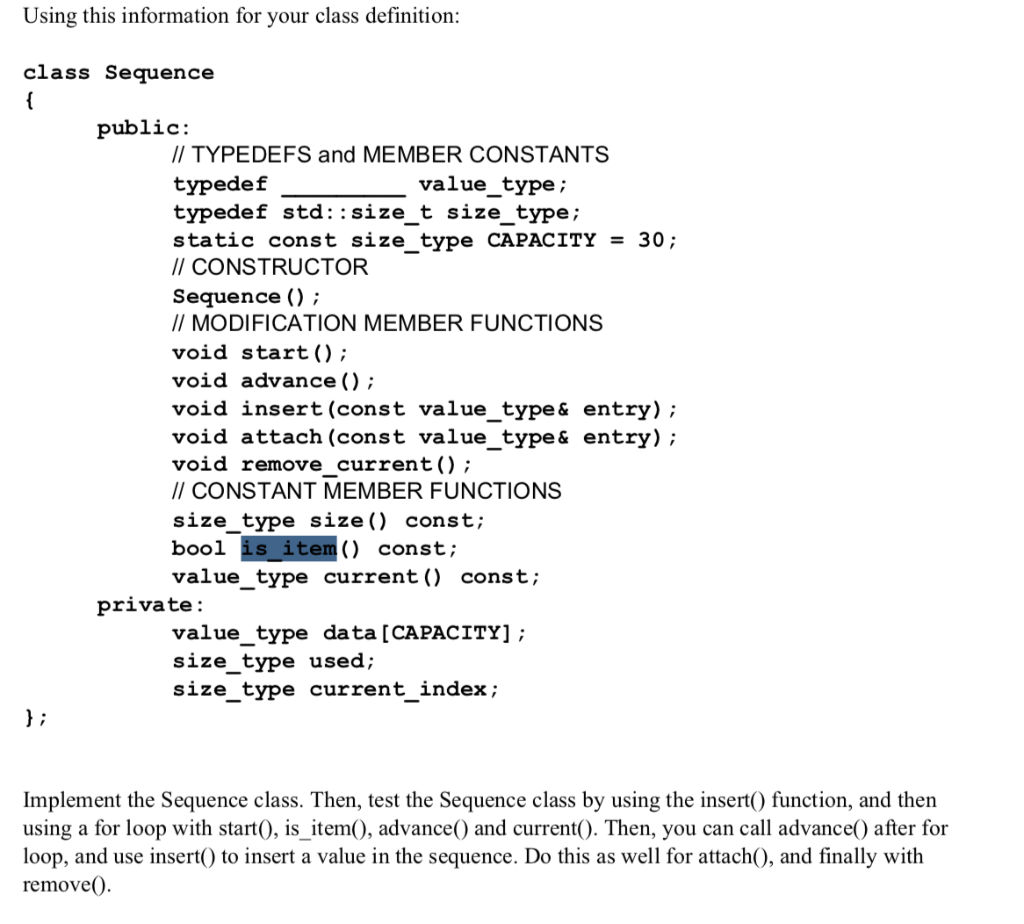
Using this information for your class definition: class Sequence public: // TYPEDEFS and MEMBER CONSTANTS typedef value_type; typedef std::size_t size_type; static const size type CAPACITY = 30; I/ CONSTRUCTOR Sequence(); I/ MODIFICATION MEMBER FUNCTIONS void start(); void advance(); void insert (const value_type & entry); void attach (const value_type & entry); void remove current(); I/ CONSTANT MEMBER FUNCTIONS size_type size () const; bool is_item() const; value_type current() const; private: value_type data [CAPACITY] ; size_type used; size_type current_index; Implement the Sequence class. Then, test the Sequence class by using the insert() function, and then using a for loop with start(), is_item(), advance() and current(). Then, you can call advance() after for loop, and use insert() to insert a value in the sequence. Do this as well for attach(), and finally with remove()
Step by Step Solution
There are 3 Steps involved in it

Get step-by-step solutions from verified subject matter experts
 Study Help