







Question: Using what you know about biconditionals, determine whether (p E q) E r is logically equivalent to p E (q = r). ' Yes, because
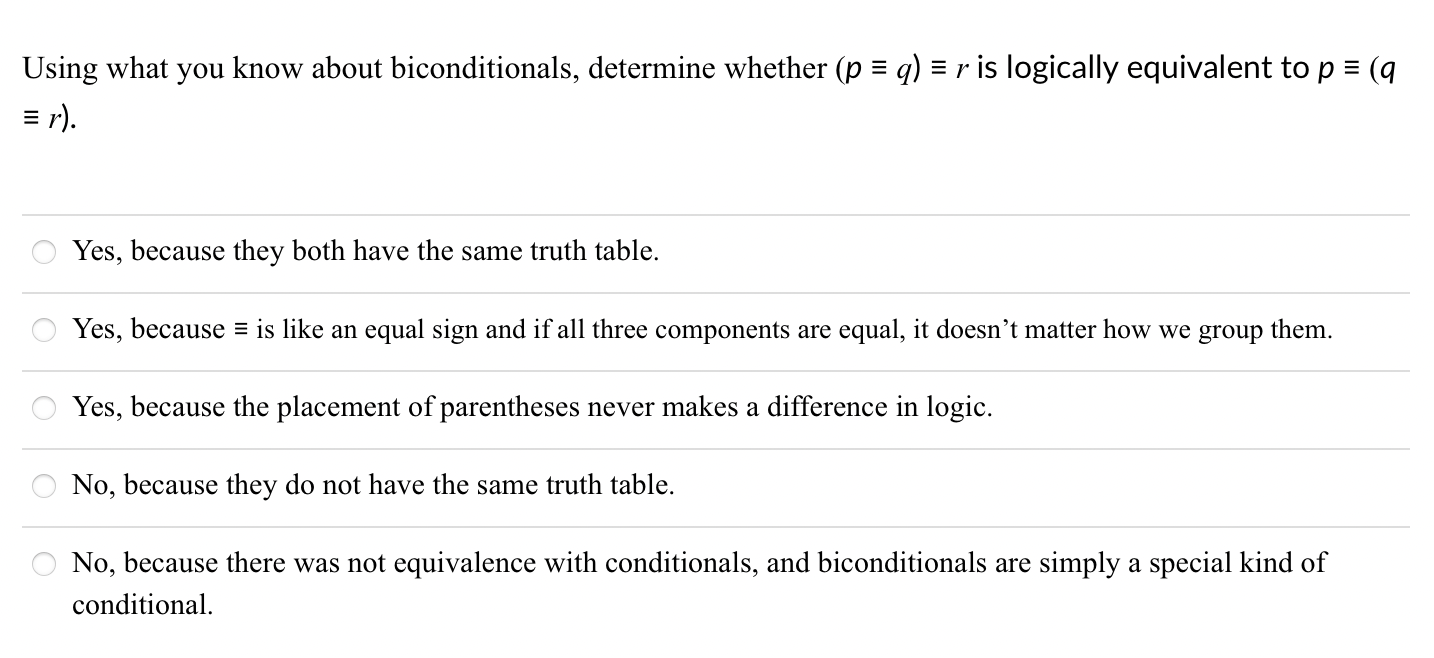
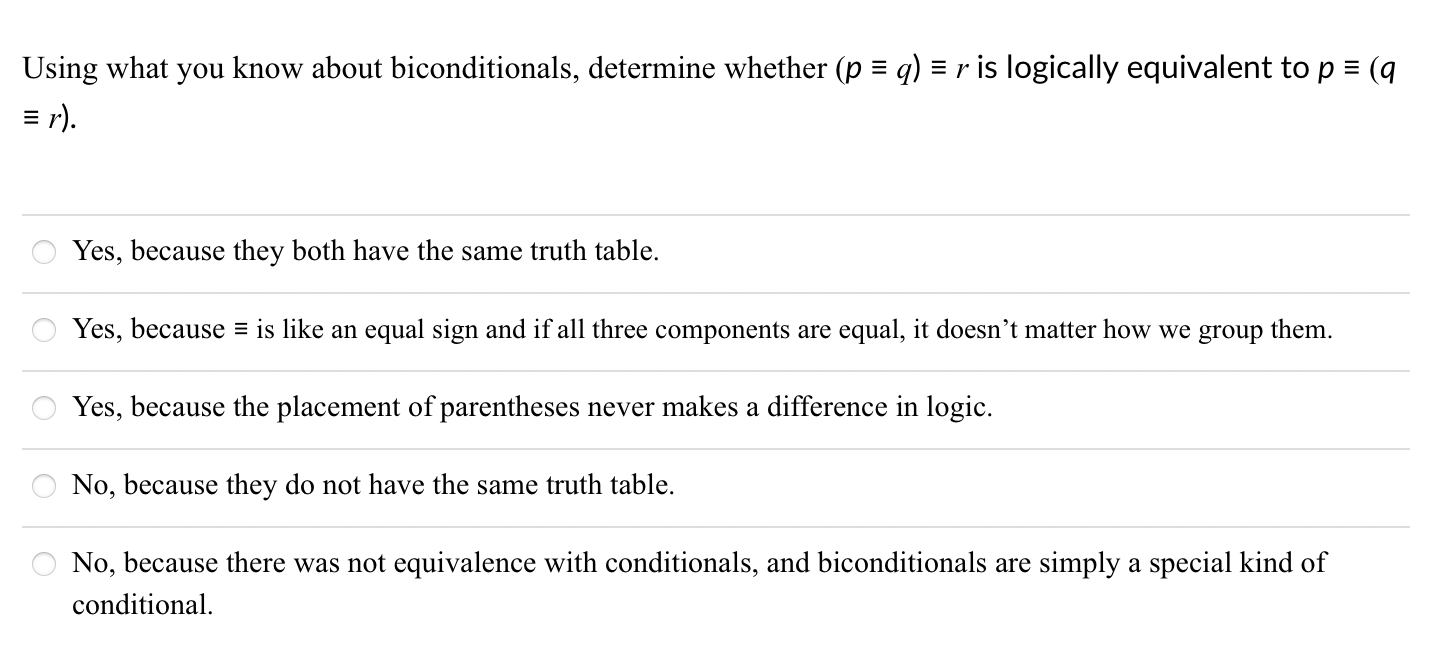
Using what you know about biconditionals, determine whether (p E q) E r is logically equivalent to p E (q = r). ' Yes, because they both have the same truth table. Yes, because E is like an equal sign and if all three components are equal, it doesn't matter how we group them. Yes, because the placement of parentheses never makes a difference in logic. No, because they do not have the same truth table. " No, because there was not equivalence with conditionals, and biconditionals are simply a special kind of conditional
Step by Step Solution
There are 3 Steps involved in it
1 Expert Approved Answer
Step: 1 Unlock

Question Has Been Solved by an Expert!
Get step-by-step solutions from verified subject matter experts
Step: 2 Unlock
Step: 3 Unlock
 Study Help