Question: uy Mallory Millsap : Jun 10 7:22pm | Last reply Jun 15 10pm Doris's concern about secondhand smoke exposure during pregnancy is valid. While a
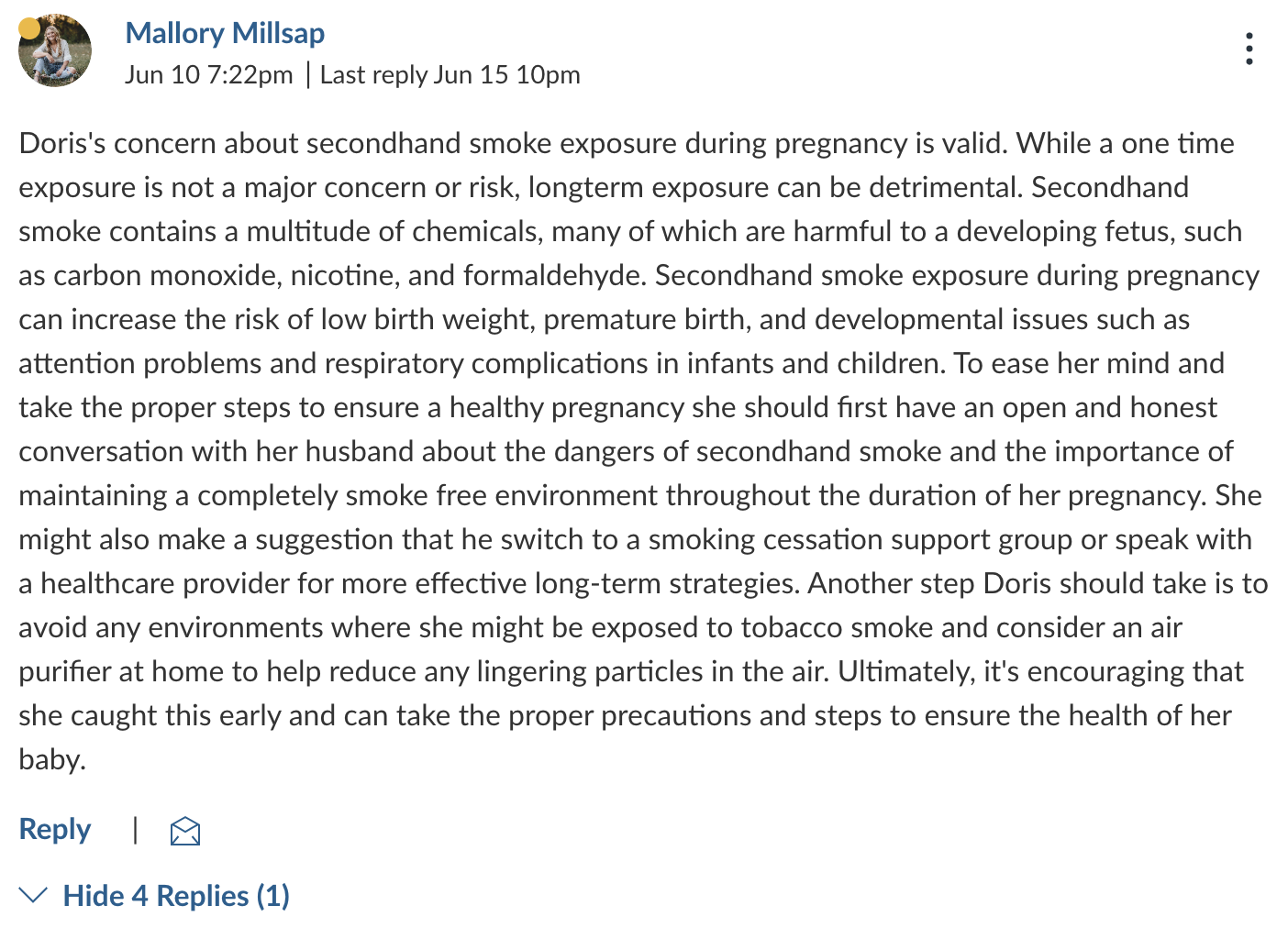
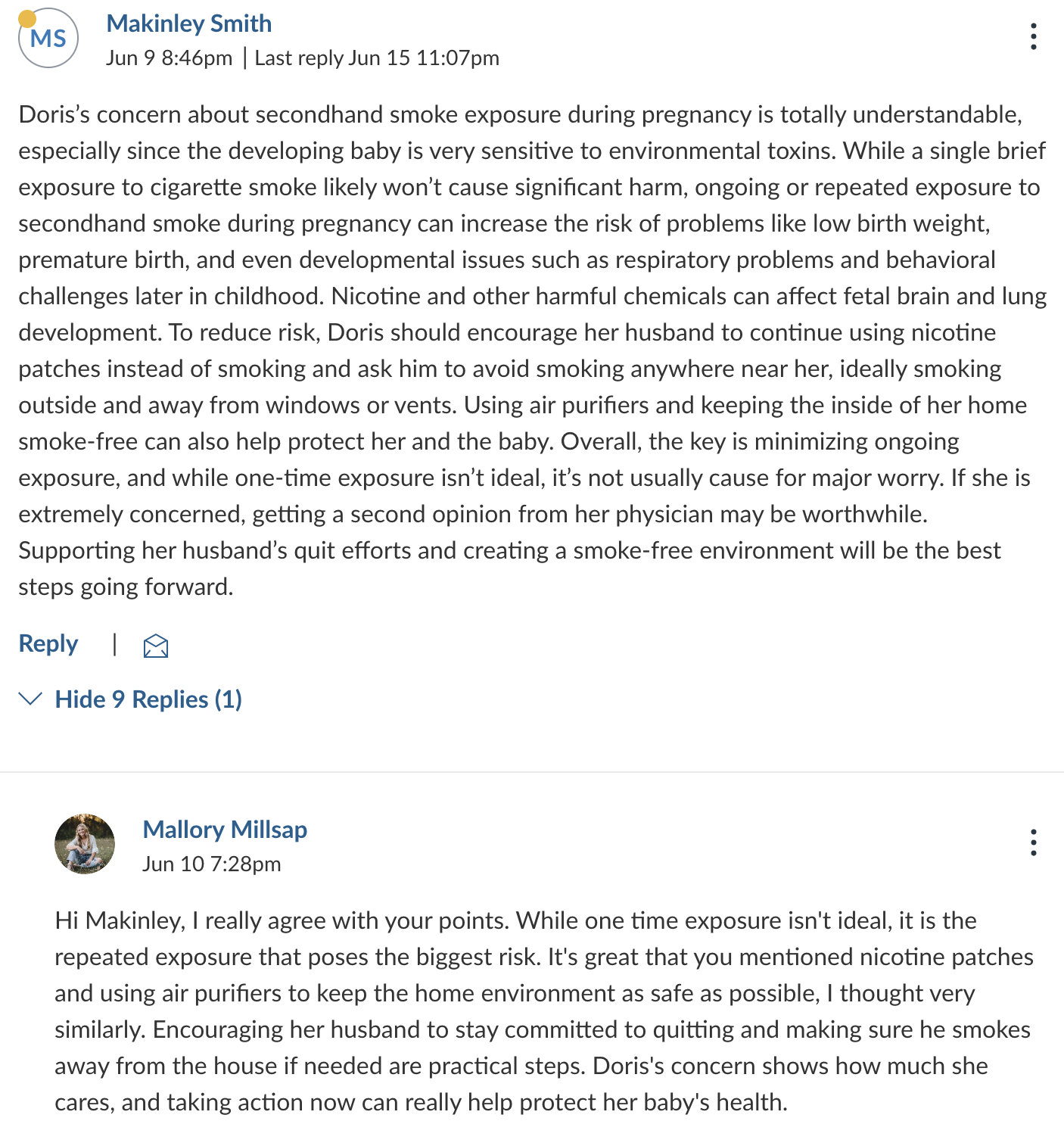
uy Mallory Millsap : Jun 10 7:22pm | Last reply Jun 15 10pm Doris's concern about secondhand smoke exposure during pregnancy is valid. While a one time exposure is not a major concern or risk, longterm exposure can be detrimental. Secondhand smoke contains a multitude of chemicals, many of which are harmful to a developing fetus, such as carbon monoxide, nicotine, and formaldehyde. Secondhand smoke exposure during pregnancy can increase the risk of low birth weight, premature birth, and developmental issues such as attention problems and respiratory complications in infants and children. To ease her mind and take the proper steps to ensure a healthy pregnancy she should first have an open and honest conversation with her husband about the dangers of secondhand smoke and the importance of maintaining a completely smoke free environment throughout the duration of her pregnancy. She might also make a suggestion that he switch to a smoking cessation support group or speak with a healthcare provider for more effective long-term strategies. Another step Doris should take is to avoid any environments where she might be exposed to tobacco smoke and consider an air purifier at home to help reduce any lingering particles in the air. Ultimately, it's encouraging that she caught this early and can take the proper precautions and steps to ensure the health of her baby. Reply | \\' Hide 4 Replies (1) fs) Makinley Smith . Jun 9 8:46pm | Last reply Jun 15 11:07pm Doris's concern about secondhand smoke exposure during pregnancy is totally understandable, especially since the developing baby is very sensitive to environmental toxins. While a single brief exposure to cigarette smoke likely won't cause significant harm, ongoing or repeated exposure to secondhand smoke during pregnancy can increase the risk of problems like low birth weight, premature birth, and even developmental issues such as respiratory problems and behavioral challenges later in childhood. Nicotine and other harmful chemicals can affect fetal brain and lung development. To reduce risk, Doris should encourage her husband to continue using nicotine patches instead of smoking and ask him to avoid smoking anywhere near her, ideally smoking outside and away from windows or vents. Using air purifiers and keeping the inside of her home smoke-free can also help protect her and the baby. Overall, the key is minimizing ongoing exposure, and while one-time exposure isn't ideal, it's not usually cause for major worry. If she is extremely concerned, getting a second opinion from her physician may be worthwhile. Supporting her husband's quit efforts and creating a smoke-free environment will be the best steps going forward. Reply | & \\' Hide 9 Replies (1) A Mallory Millsap : @ Jun 10 7:28pm Hi Makinley, | really agree with your points. While one time exposure isn't ideal, it is the repeated exposure that poses the biggest risk. It's great that you mentioned nicotine patches and using air purifiers to keep the home environment as safe as possible, | thought very similarly. Encouraging her husband to stay committed to quitting and making sure he smokes away from the house if needed are practical steps. Doris's concern shows how much she cares, and taking action now can really help protect her baby's health
Step by Step Solution
There are 3 Steps involved in it
1 Expert Approved Answer
Step: 1 Unlock
Question Has Been Solved by an Expert!
Get step-by-step solutions from verified subject matter experts
Step: 2 Unlock
Step: 3 Unlock
Students Have Also Explored These Related Accounting Questions!