



Question: V. Positioning and Branding: -Positioning Strategy: - Define the desired positioning of the product or brand in the minds of the target audience. - Branding
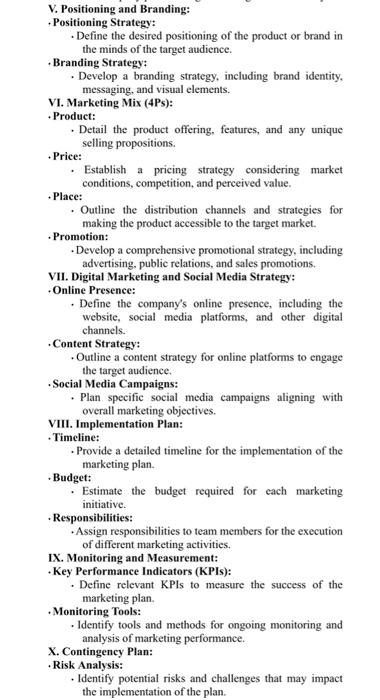
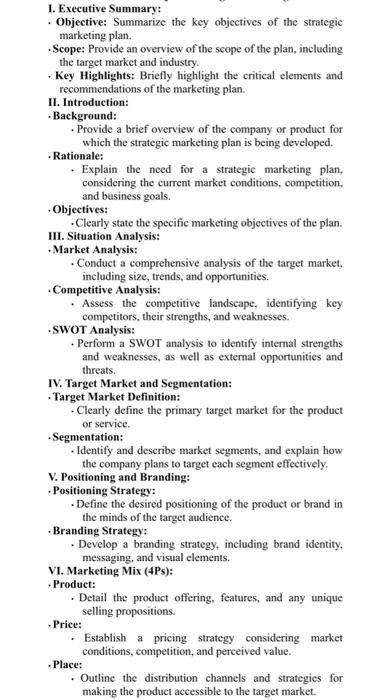
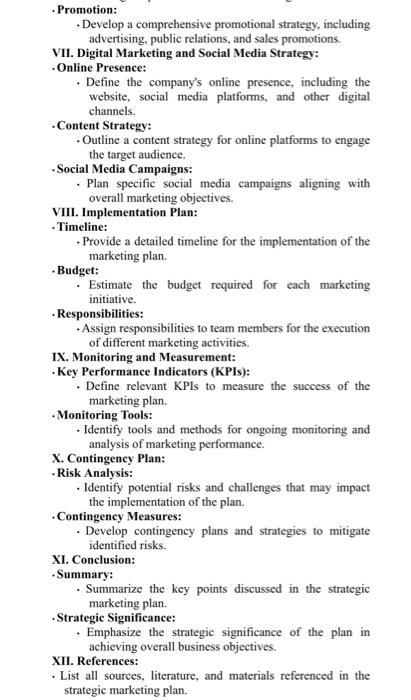
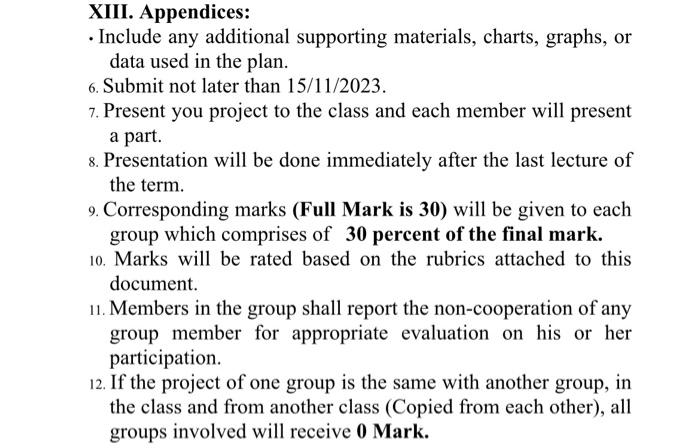
V. Positioning and Branding: -Positioning Strategy: - Define the desired positioning of the product or brand in the minds of the target audience. - Branding Strategy: - Develop a branding strategy, including brand identity, messaging, and visual elements. VI. Marketing Mix (4Ps): +Product: - Detail the product offering, features, and any unique selling propositions. +Price: - Establish a pricing strategy considering market conditions, competition, and perceived value. -Place: - Outline the distribution channels and strategies for making the product accessible to the target market. -Promotion: - Develop a comprehensive promotional strategy, including advertising, public relations, and sales promotions. VII. Digital Marketing and Social Media Strategy: -Online Presence: - Define the company's online presence, including the website, social media platforms, and other digital channels. -Content Strategy: - Outline a content strategy for online platforms to engage the target audience. -Social Media Campaigns: - Plan specific social media campaigns aligning with overall marketing objectives. VIII. Implementation Plan: . Timeline: - Provide a detailed timeline for the implementation of the marketing plan. -Budget: - Estimate the budget required for each marketing initiative. -Responsibilities: -Assign responsibilities to team members for the execution of different marketing activities. IX. Monitoring and Measurement: -Key Performance Indicators (KPIs): - Define relevant KPIs to measure the success of the marketing plan. -Monitoring Tools: - Identify tools and methods for ongoing monitoring and analysis of marketing performance. X. Contingency Plan: . Risk Analysis: - Identify potential risks and challenges that may impact the implementation of the plan. - Objective: Summarize the key objectives of the strategic marketing plan. -Scope: Provide an overview of the scope of the plan, including the target market and industry. - Key Highlights: Briefly highlight the critical elements and recommendations of the marketing plan. II. Introduction: -Background: - Provide a brief overview of the company or product for which the strategic marketing plan is being developed. -Rationale: - Explain the need for a strategic marketing plan, considering the current market conditions, competition, and business goals. -Objectives: - Clearly state the specific marketing objectives of the plan. III. Situation Analysis: -Market Analysis: - Conduct a comprehensive analysis of the target market, including size, trends, and opportunities. -Competitive Analysis: - Assess the competitive landscape, identifying key competitors, their strengths, and weaknesses. -SWOT Analysis: - Perform a SWOT analysis to identify intemal strengths and weaknesses, as well as external opportunities and threats. IV. Target Market and Segmentation: - Target Market Definition: - Clearly define the primary target market for the product or service. -Segmentation: - Identify and describe market segments, and explain how the company plans to target each segment effectively. V. Positioning and Branding: -Positioning Strategy: - Define the desired positioning of the product or brand in the minds of the target audience. -Branding Strategy: - Develop a branding strategy, including brand identity, messaging, and visual elements. VI. Marketing Mix (4Ps): -Product: - Detail the product offering, features, and any unique selling propositions. .Price: - Establish a pricing strategy considering market conditions, competition, and perceived value. -Place: - Outline the distribution channels and strategies for making the product accessible to the target market. -Promotion: - Develop a comprehensive promotional strategy, including advertising, public relations, and sales promotions. VII. Digital Marketing and Social Media Strategy: -Online Presence: - Define the company's online presence, including the website, social media platforms, and other digital channels. -Content Strategy: - Outline a content strategy for online platforms to engage the target audience. -Social Media Campaigns: - Plan specific social media campaigns aligning with overall marketing objectives. VIII. Implementation Plan: -Timeline: -Provide a detailed timeline for the implementation of the marketing plan. -Budget: - Estimate the budget required for each marketing initiative. -Responsibilities: -Assign responsibilities to team members for the execution of different marketing activities. IX. Monitoring and Measurement: - Key Performance Indicators (KPIs): - Define relevant KPIs to measure the success of the marketing plan. -Monitoring Tools: - Identify tools and methods for ongoing monitoring and analysis of marketing performance. X. Contingency Plan: - Risk Analysis: - Identify potential risks and challenges that may impact the implementation of the plan. .Contingency Measures: - Develop contingency plans and strategies to mitigate identified risks. XI. Conclusion: -Summary: - Summarize the key points discussed in the strategic marketing plan. -Strategic Significance: - Emphasize the strategic significance of the plan in achieving overall business objectives. XII. References: - List all sources, literature, and materials referenced in the strategic marketing plan. - Include any additional supporting materials, charts, graphs, or data used in the plan. 6. Submit not later than 15/11/2023. 7. Present you project to the class and each member will present a part. 8. Presentation will be done immediately after the last lecture of the term. 9. Corresponding marks (Full Mark is 30) will be given to each group which comprises of 30 percent of the final mark. 10. Marks will be rated based on the rubrics attached to this document. 11. Members in the group shall report the non-cooperation of any group member for appropriate evaluation on his or her participation. 12. If the project of one group is the same with another group, in the class and from another class (Copied from each other), all groups involved will receive 0 Mark
Step by Step Solution
There are 3 Steps involved in it

Get step-by-step solutions from verified subject matter experts