







Question: Vigenre Cipher In cryptography, a shift cipher, also known as Caesar's cipher, is named after Julius Caesar (13 July 100 BC - 15 March 44
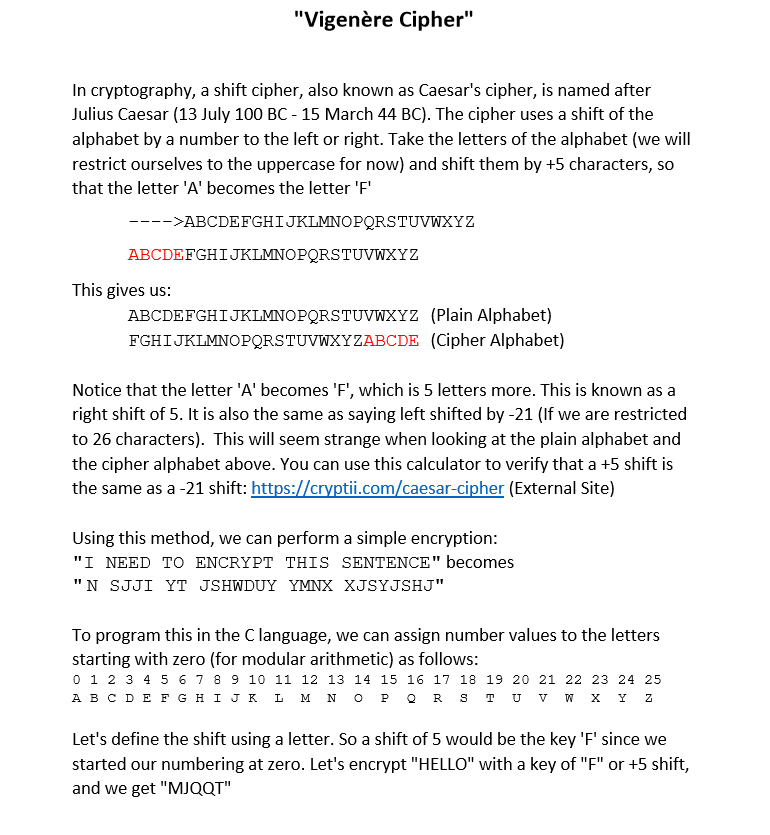
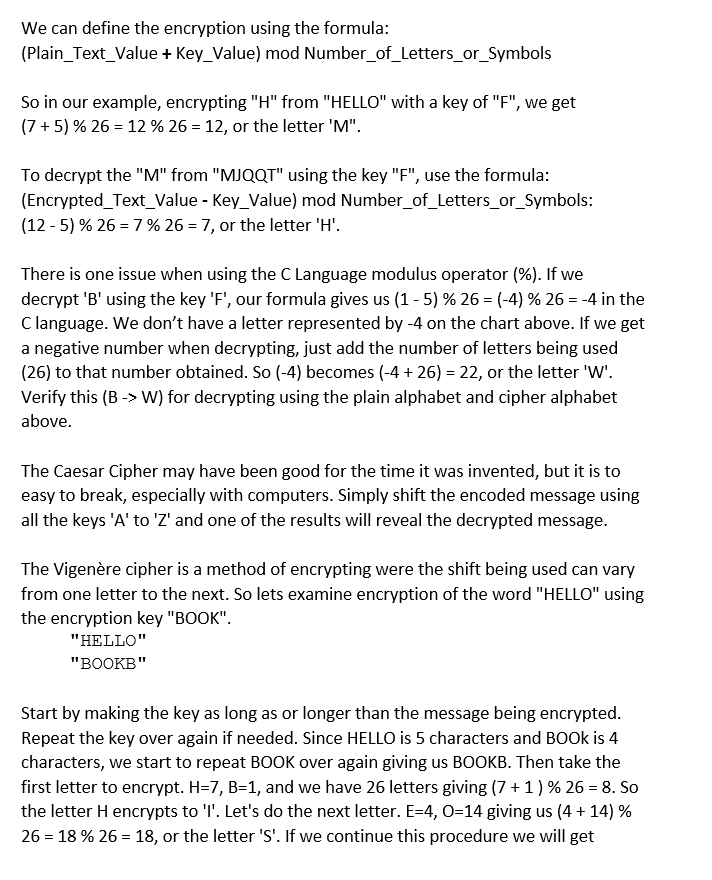
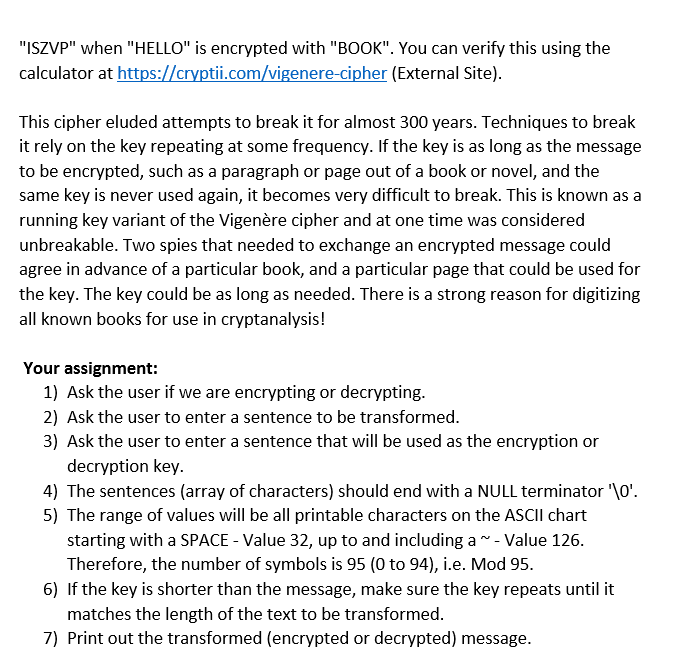
"Vigenre Cipher" In cryptography, a shift cipher, also known as Caesar's cipher, is named after Julius Caesar (13 July 100 BC - 15 March 44 BC). The cipher uses a shift of the alphabet by a number to the left or right. Take the letters of the alphabet (we will restrict ourselves to the uppercase for now) and shift them by +5 characters, so that the letter 'A' becomes the letter 'F ABCDEFGHIJKLMNOPQRSTUVWXYZ ABCDEFGHIJKLMNOPORSTUVWXYZ This gives us: ABCDEFGHIJKLMNOPQRSTUVWXYZ (Plain Alphabet) FGHIJKLMNOPQRSTUVWXYZABCDE (Cipher Alphabet) Notice that the letter 'A' becomes 'F', which is 5 letters more. This is known as a right shift of 5. It is also the same as saying left shifted by -21 (If we are restricted to 26 characters). This will seem strange when looking at the plain alphabet and the cipher alphabet above. You can use this calculator to verify that a +5 shift is the same as a -21 shift: https://cryptii.com/caesar-cipher (External Site) Using this method, we can perform a simple encryption: "I NEED TO ENCRYPT THIS SENTENCE" becomes To program this in the C language, we can assign number values to the letters starting with zero (for modular arithmetic) as follows: 0 1 2 3 45678 9 10 11 12 13 14 15 16 17 18 19 20 21 22 23 24 25 Let's define the shift using a letter. So a shift of 5 would be the key 'F' since we started our numbering at zero. Let's encrypt "HELLO" with a key of "F" or +5 shift, and we get "MJQQT
Step by Step Solution
There are 3 Steps involved in it

Get step-by-step solutions from verified subject matter experts
 Study Help