







Question: Virtualization is a technique that allows a guest operating system to run as a normal, non-privileged user-level application on top of a different host operating
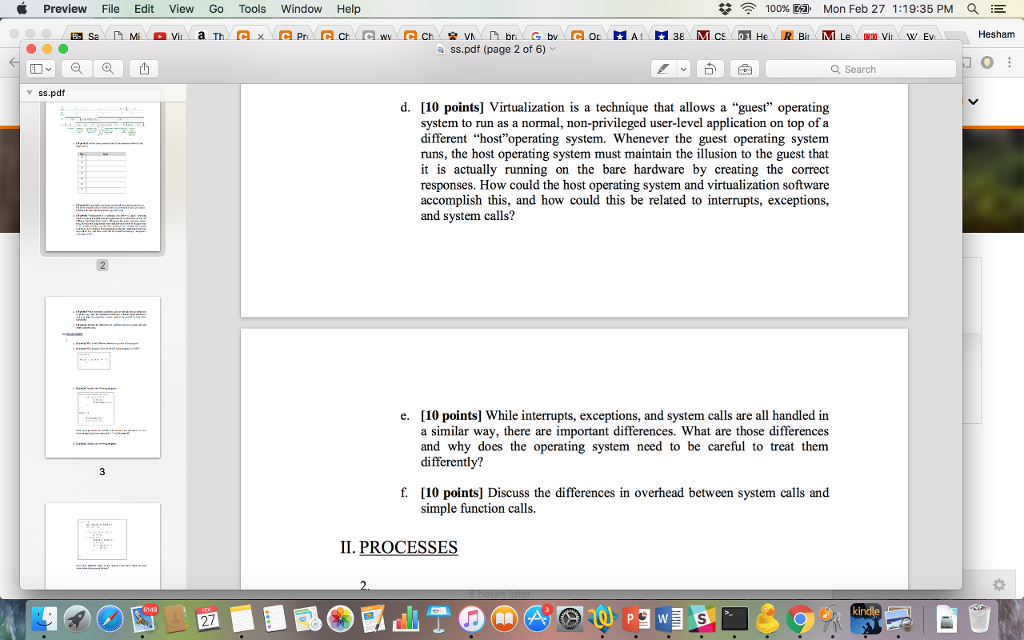
Virtualization is a technique that allows a "guest" operating system to run as a normal, non-privileged user-level application on top of a different "host "operating system. Whenever the guest operating system runs, the host operating system must maintain the illusion to the guest that it is actually running on the bare hardware by creating the correct responses. How could the host operating system and virtualization software accomplish this, and how could this be related to interrupts, exceptions, and system calls? While interrupts, exceptions, and system calls are all handled in a similar way, there are important differences. What are those differences and why does the operating system need to be careful to treat them differently? Discuss the differences in overhead between system calls and simple function calls
Step by Step Solution
There are 3 Steps involved in it

Get step-by-step solutions from verified subject matter experts
 Study Help