







Question: void syscall(void) { int num; struct proc *curproc = myproc(); num = curproc->tf->eax; if(num > && num tf->eax = syscalls[num](); } else { cprintf(%d %s:
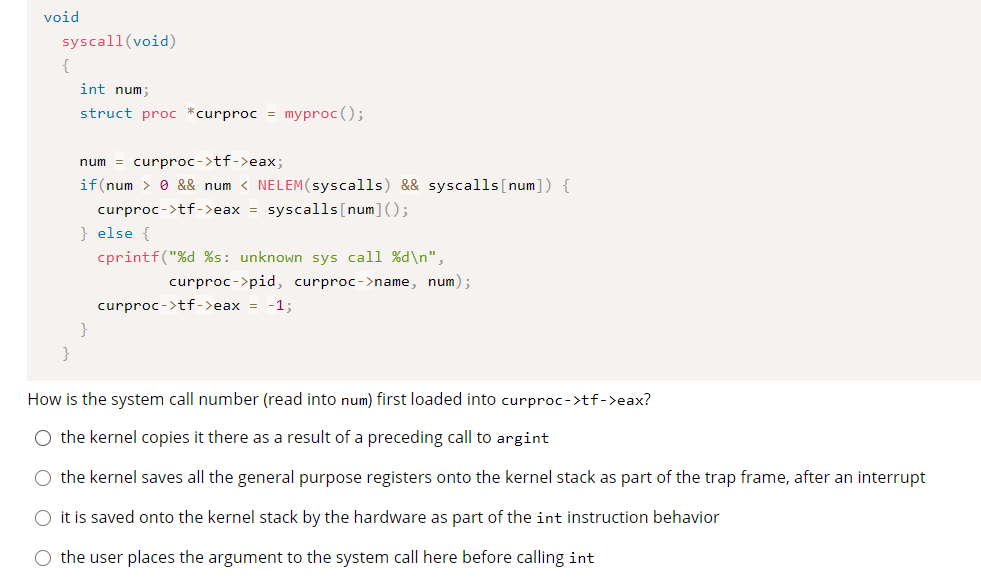
void syscall(void) { int num; struct proc *curproc = myproc(); num = curproc->tf->eax; if(num > && num tf->eax = syscalls[num](); } else { cprintf("%d %s: unknown sys call %d ", curproc->pid, curproc->name, num); curproc->tf->eax = -1; } How is the system call number (read into num) first loaded into curproc->tf-Seax? the kernel copies it there as a result of a preceding call to argint the kernel saves all the general purpose registers onto the kernel stack as part of the trap frame, after an interrupt O it is saved onto the kernel stack by the hardware as part of the int instruction behavior the user places the argument to the system call here before calling int
Step by Step Solution
There are 3 Steps involved in it

Get step-by-step solutions from verified subject matter experts
 Study Help