







Question: We are no e to read. ters on inference, and we're about to move on The next part of this book to using statistics when
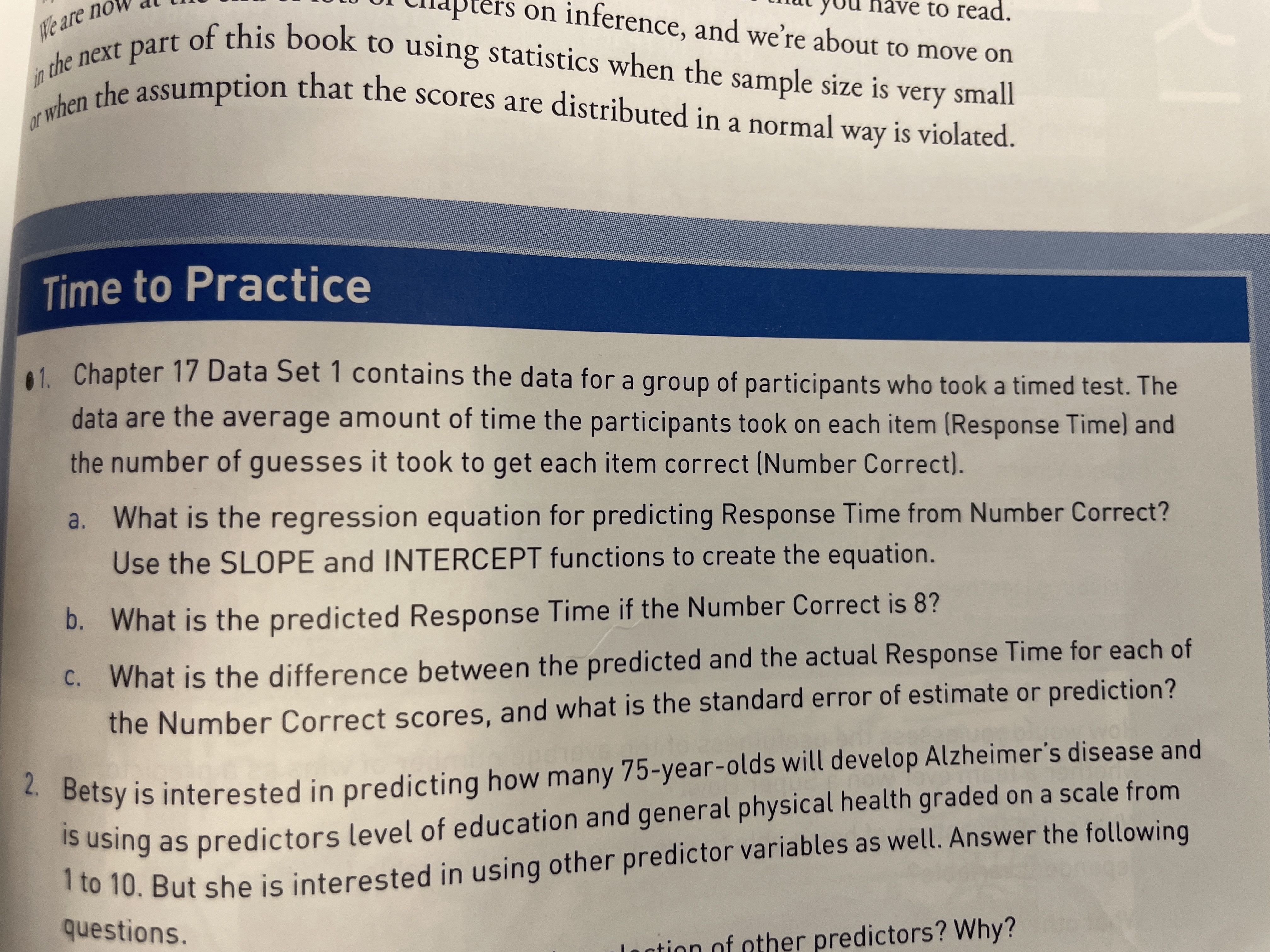
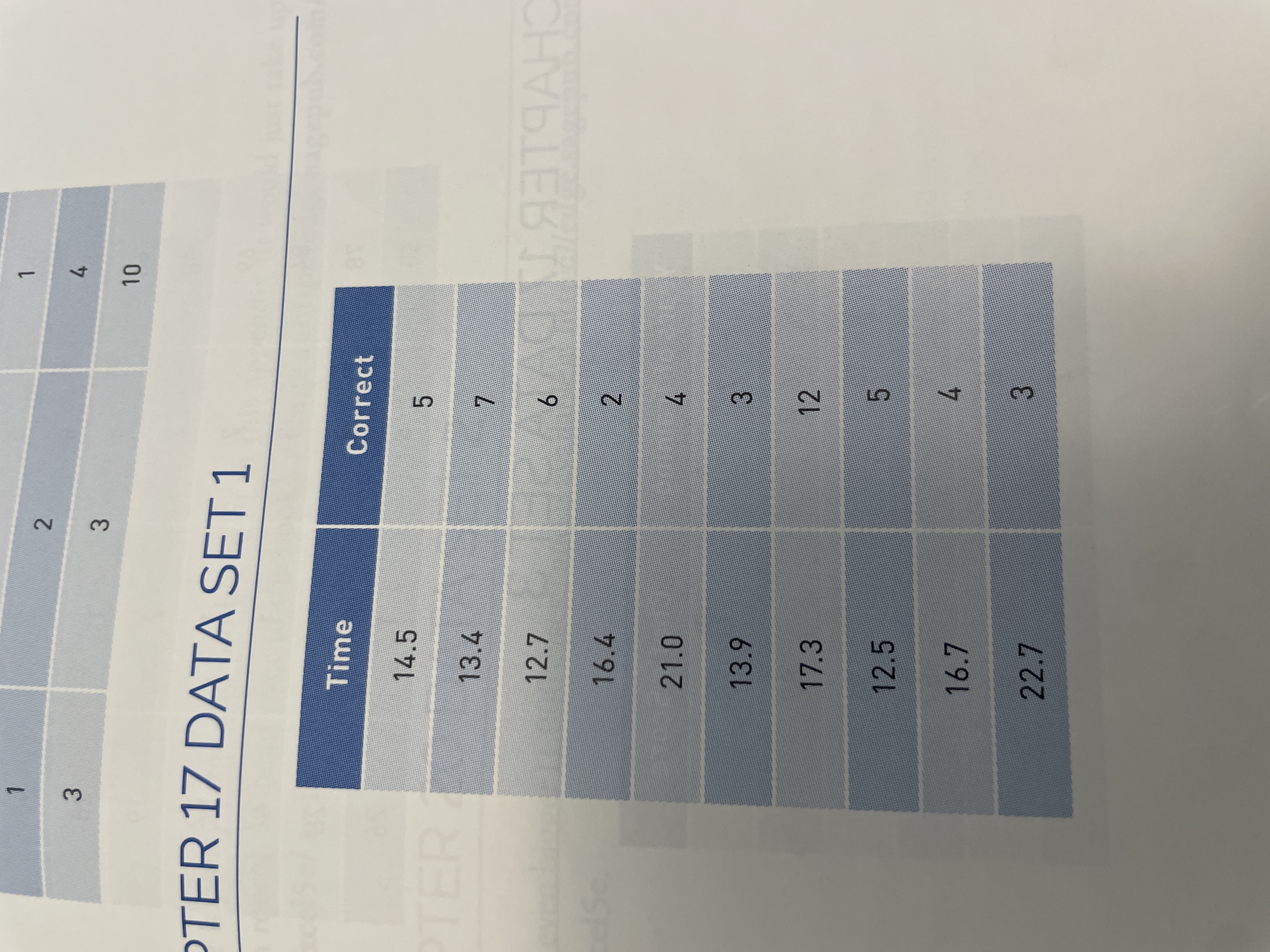
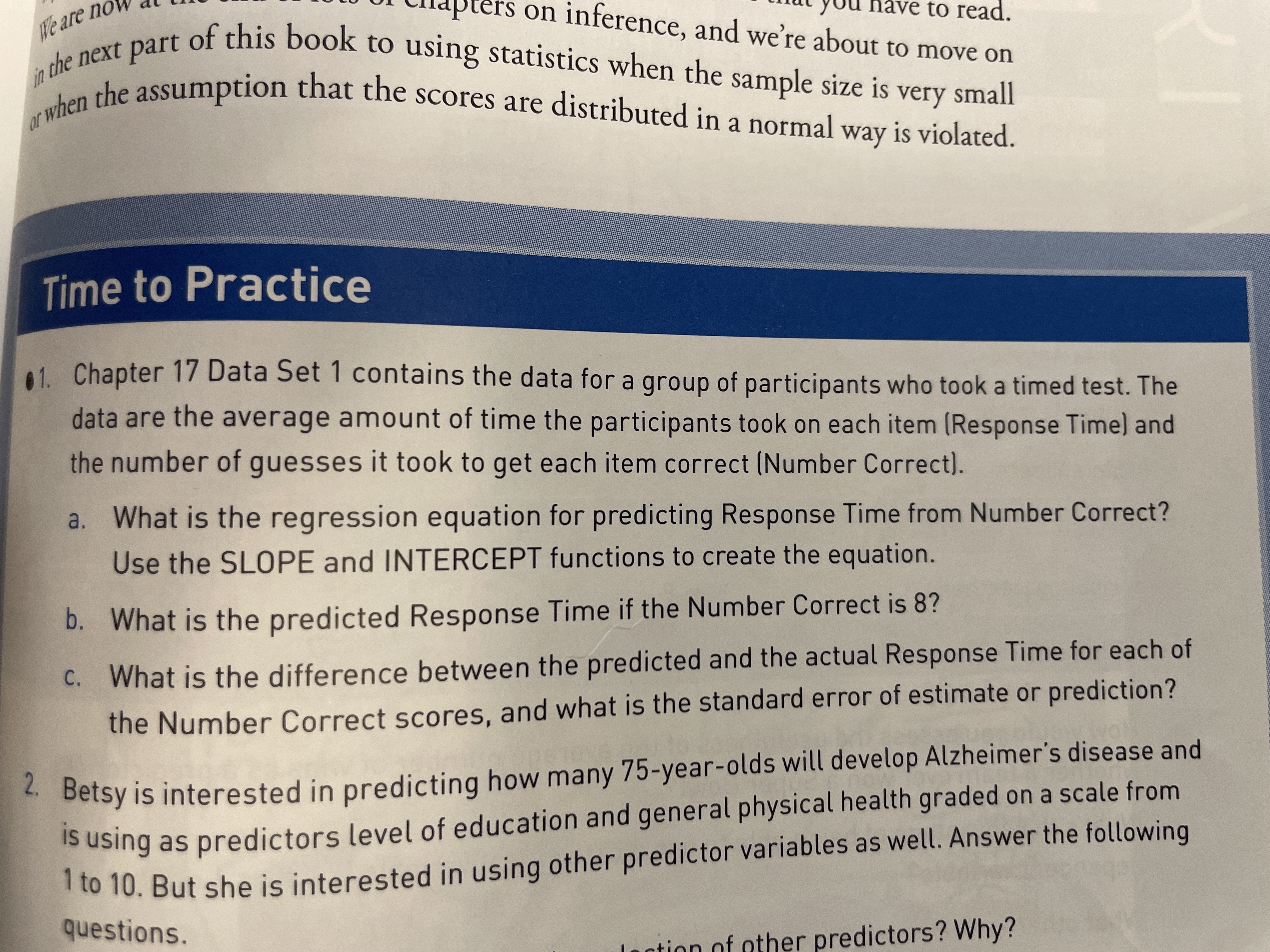
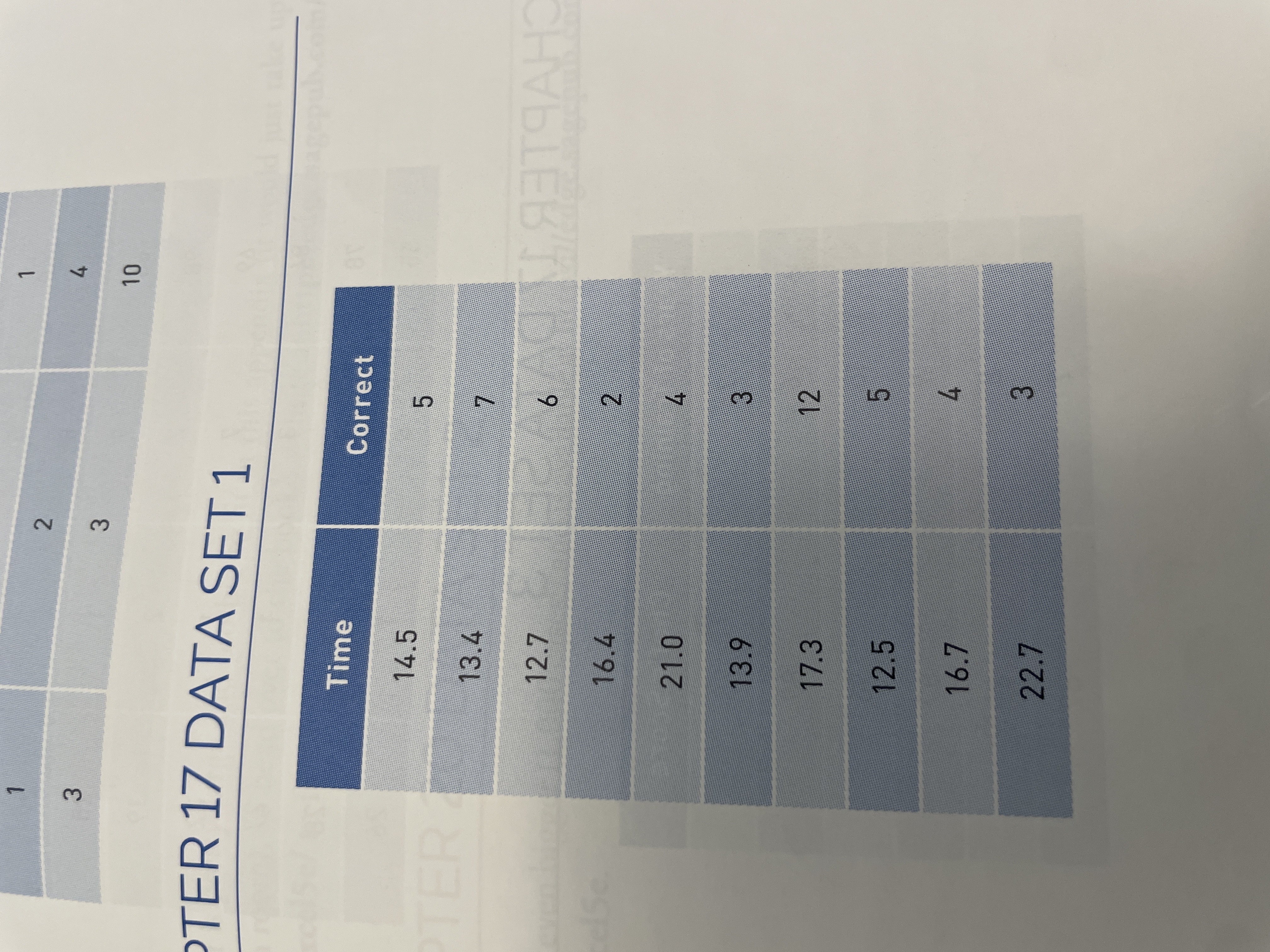
We are no e to read. ters on inference, and we're about to move on The next part of this book to using statistics when the sample size is very small when the assumption that the scores are distributed in a normal way is violated. Time to Practice 1. Chapter 17 Data Set 1 contains the data for a group of participants who took a timed test. The data are the average amount of time the participants took on each item (Response Time] and the number of guesses it took to get each item correct (Number Correct]. a. What is the regression equation for predicting Response Time from Number Correct? Use the SLOPE and INTERCEPT functions to create the equation. b. What is the predicted Response Time if the Number Correct is 8? c. What is the difference between the predicted and the actual Response Time for each of the Number Correct scores, and what is the standard error of estimate or prediction? 2. Betsy is interested in predicting how many 75-year-olds will develop Alzheimer's disease and is using as predictors level of education and general physical health graded on a scale from 1 to 10. But she is interested in using other predictor variables as well. Answer the following questions. other predictors? Why?N 3 3 10 TER 17 DATA SET 1 Time Correct 14.5 TER 5 13.4 12.7 6 SETAHO 16.4 21.0 13.9 3 17.3 12 12.5 16.7 4 22.7
Step by Step Solution
There are 3 Steps involved in it

Get step-by-step solutions from verified subject matter experts
 Study Help