







Question: We can also multiply two polynomials. The general rule is that each term in the first polynomial has to multiply each term in the second
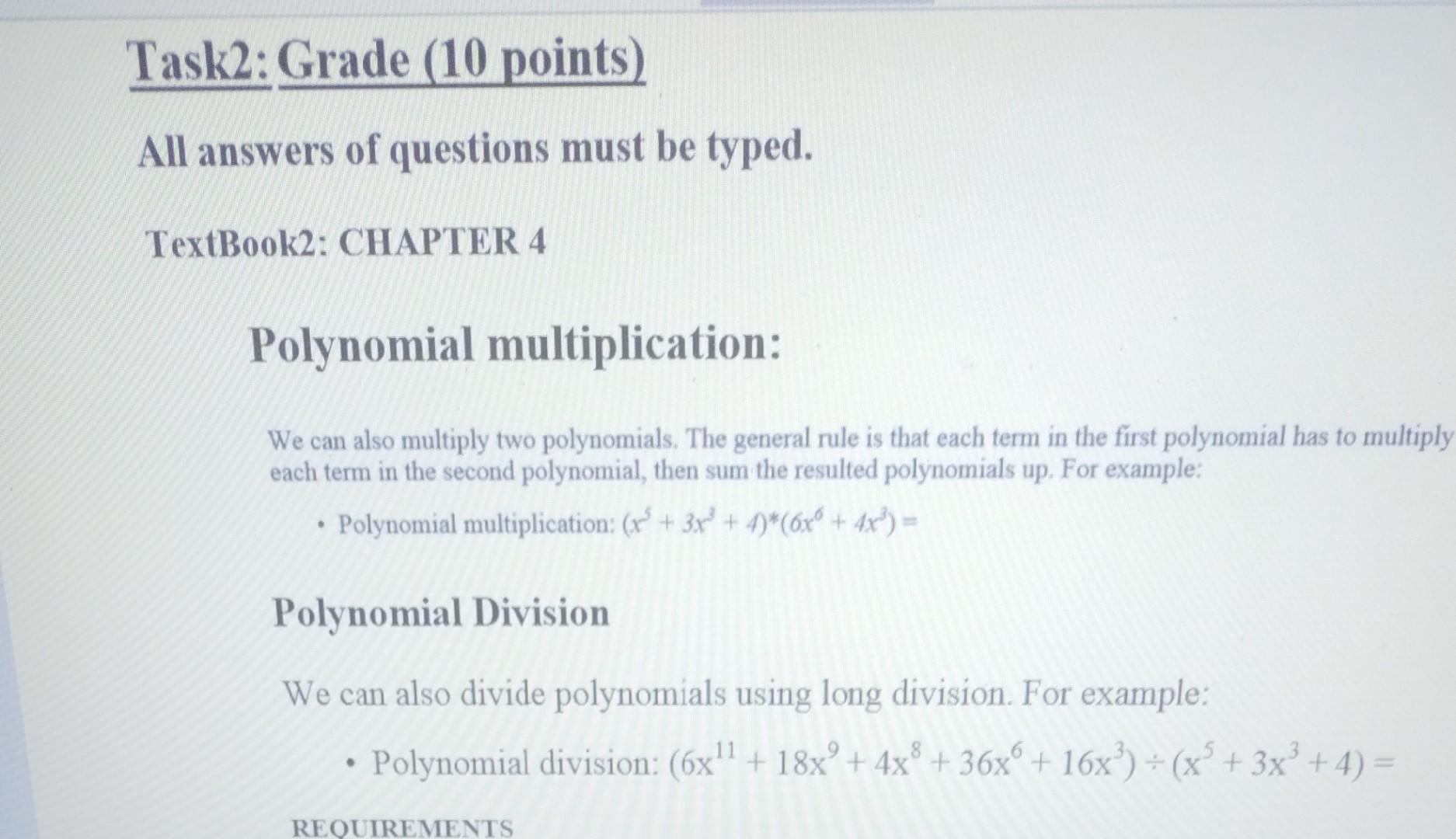
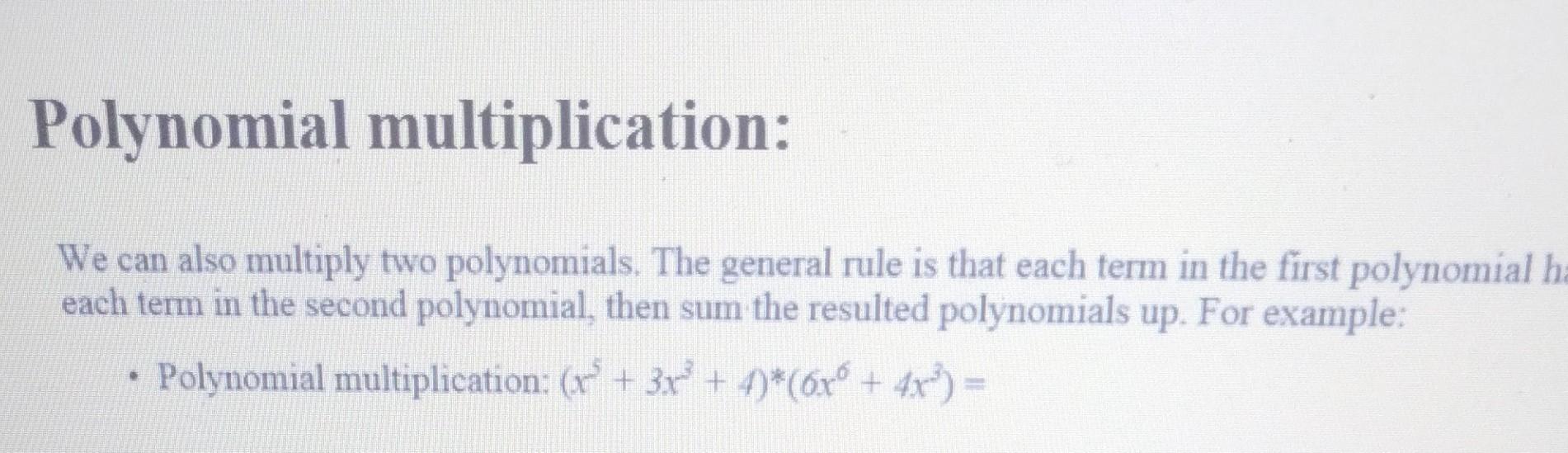
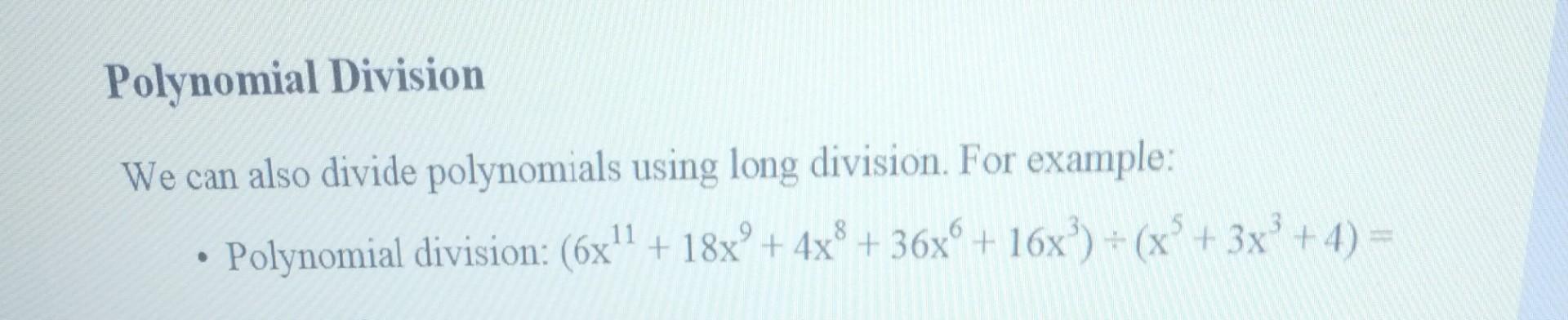
We can also multiply two polynomials. The general rule is that each term in the first polynomial has to multiply each term in the second polynomial, then sum the resulted polynomials up. For example: - Polynomial multiplication: (x5+3x3+4)(6x6+4x3)= Polynomial Division We can also divide polynomials using long division. For example: - Polynomial division: (6x11+18x9+4x8+36x6+16x3)(x5+3x3+4)= Polynomial multiplication: We can also multiply two polynomials. The general rule is that each term in the first polynomial . each term in the second polynomial, then sum the resulted polynomials up. For example: - Polynomial multiplication: (x5+3x3+4)(6x6+4x3)= Polynomial Division We can also divide polynomials using long division. For example: - Polynomial division: (6x11+18x9+4x8+36x6+16x3)(x5+3x3+4)=
Step by Step Solution
There are 3 Steps involved in it

Get step-by-step solutions from verified subject matter experts
 Study Help