







Question: We define a redundant node in a singly-linked list to be a node w data value matches with the data value of a previous node
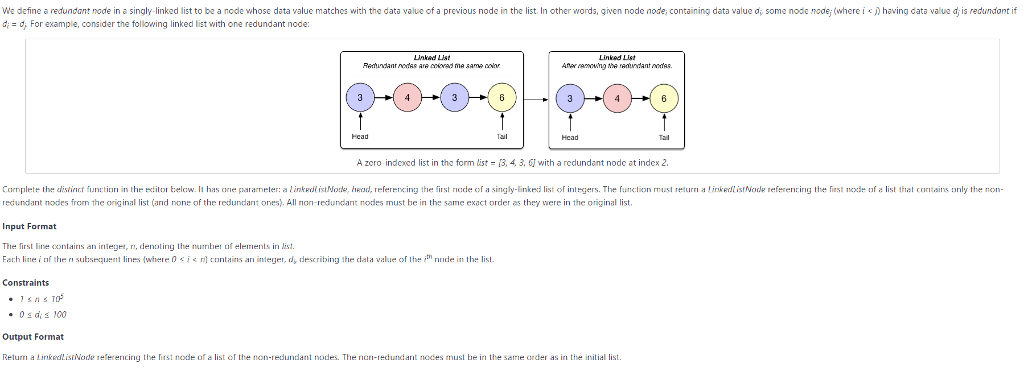
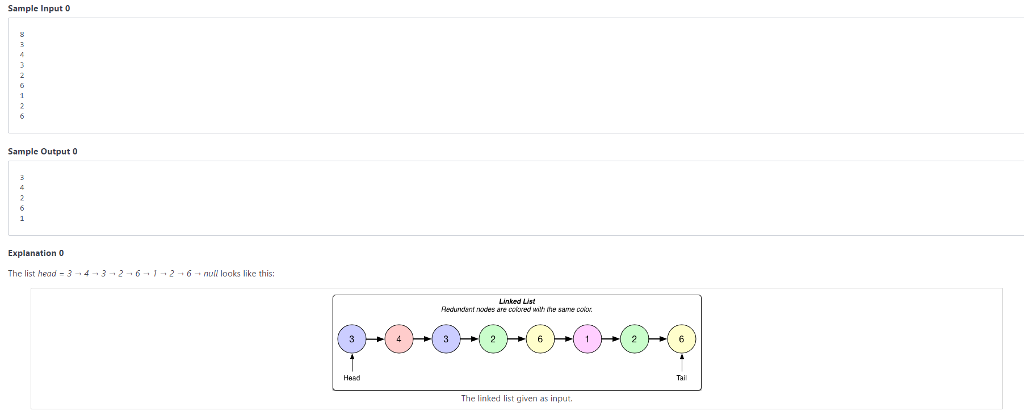
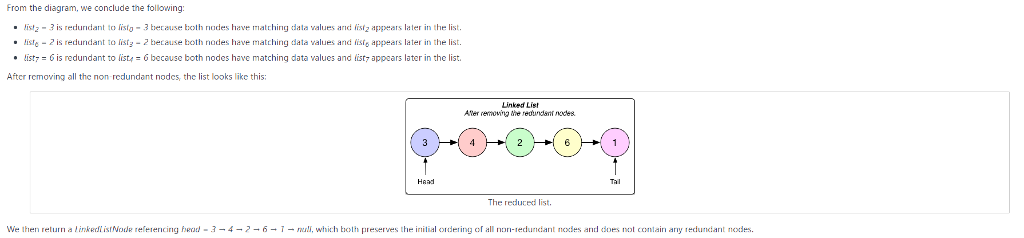
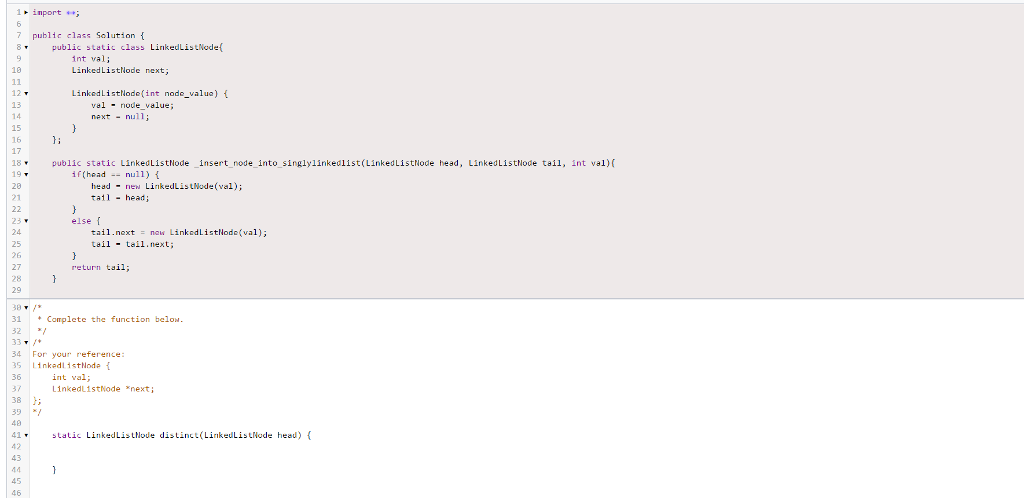
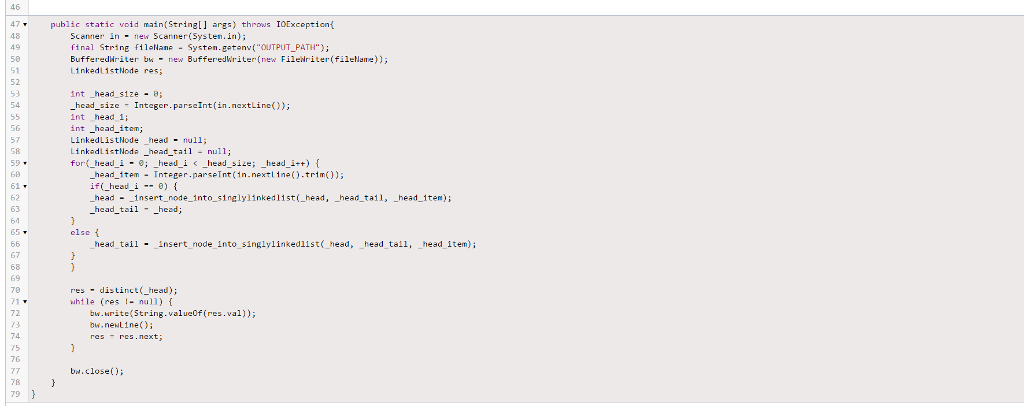
We define a redundant node in a singly-linked list to be a node w data value matches with the data value of a previous node in the list. In other words, given node node containing data value ai some node nodej (where i i) having data value d is redundant if hose di d. For example, consider the following linked list with one redundant node A zero indexed list in the form list 13, 4, 3, with a redundant node at index 2. Complete the distinct functiun in the rditor below. It has Curie paranneler: a Linkedi isINode, h referencing the first de linked list of integers. The function must return a LinkRdlistwode referen g the first node nfa list thatCOrtains only the non- redundant no des from the original list (and none of the redundant ones). All non-redundant nodes must be in the same exact order as they were in the original list. Input Format The first line oonlains an integrer, n, denpling line number of elements in list. Fach line inf the n subsequent lines (where si
Step by Step Solution
There are 3 Steps involved in it

Get step-by-step solutions from verified subject matter experts
 Study Help