







Question: We had a cart on an elevated ramp attached with a friction block. The mass of the cart is 289.2 g (or 0.2892 kg), the
We had a cart on an elevated ramp attached with a friction block. The mass of the cart is 289.2 g (or 0.2892 kg), the elevation between the desk and the ramp is 13.5cm (or 0.135m), and the mass of the friction block is 127.2 g (or 0.1272 kg). The length of the ramp/track is roughly 100cm.
Our lab had the following questions:
1. What is the static friction when the cart on the ramp is not moving? Provide an analysis to support your answer.
2. In the case of a cart remain stationary on the ramp, does the static friction depend on how hard you press the friction block?
3. Use the fact that the change in the mechanical energy is equal to the work done by friction over a distance to find the value of the friction force acting on the cart.
4. Use the electronic balance to find the mass of the friction block (as I stated above, its mass is 127.2g), and then find the coefficient of friction between the friction block and the track.
How do I go about answering these questions?
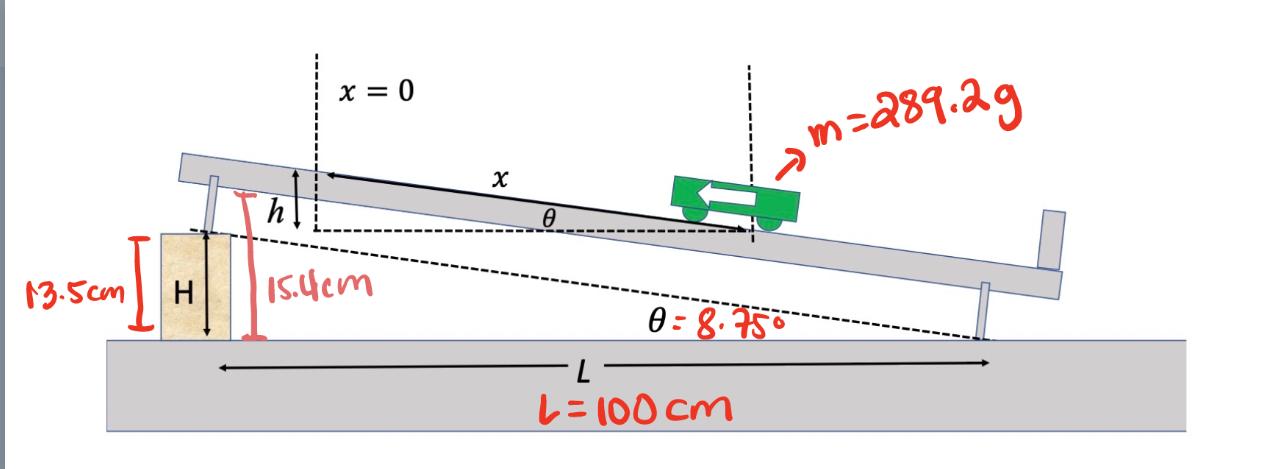
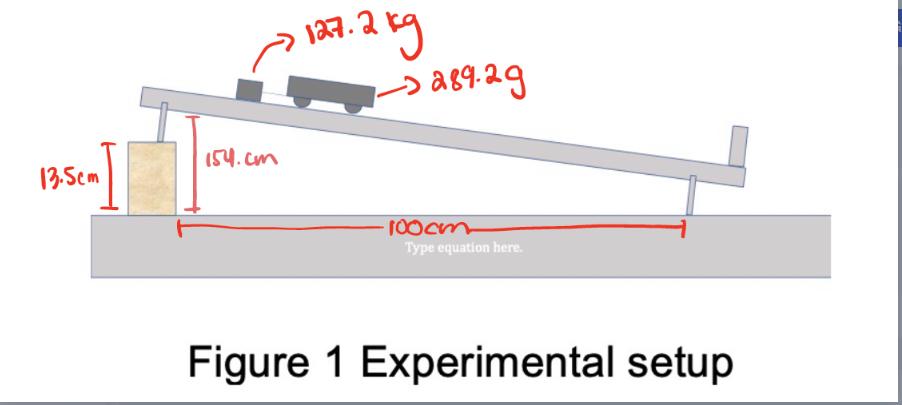
13.5cm H h X = isdem 0 x 0 K 08.75 L L=100cm m=289.2g
Step by Step Solution
There are 3 Steps involved in it
Lets go through each question one by one 1 To find the static friction when the cart on the ramp is not moving we need to understand that static frict... View full answer

Get step-by-step solutions from verified subject matter experts
 Study Help