







Question: We have access to a database on 10 different products according to 6 attributes. Product 1 2 3 5 7 8 9 10 A1 12.1
We have access to a database on 10 different products according to 6 attributes. Product 1 2 3 5 7 8 9 10 A1 12.1 0.8 2.3 5.8 35.4 3.5 14.2 2.1 4.5 10 A2 0.03 0.45 0.3 0.46 0.67 0.008 0.01 0.45 1.5 0.93 A3 800 234 456 780 1900 908 1600 156 347 1089 A4 4 120 83 6 2 38 5 80 12 7 AS 0.89 0.18 0.32 0.66 1.67 0.06 0.98 0.12 0.54 1.09 A6 100090 1900000 1233000 156000 45679 900000 126890 1489090 356999 234890 The aim of this exam is to use machine learning tools to extract strategic information from this database. To do so, you first implement a data-reduction strategy Question 1: You start by standardizing your data. Fill in the table below for Attribute 1 and Attribute 2.
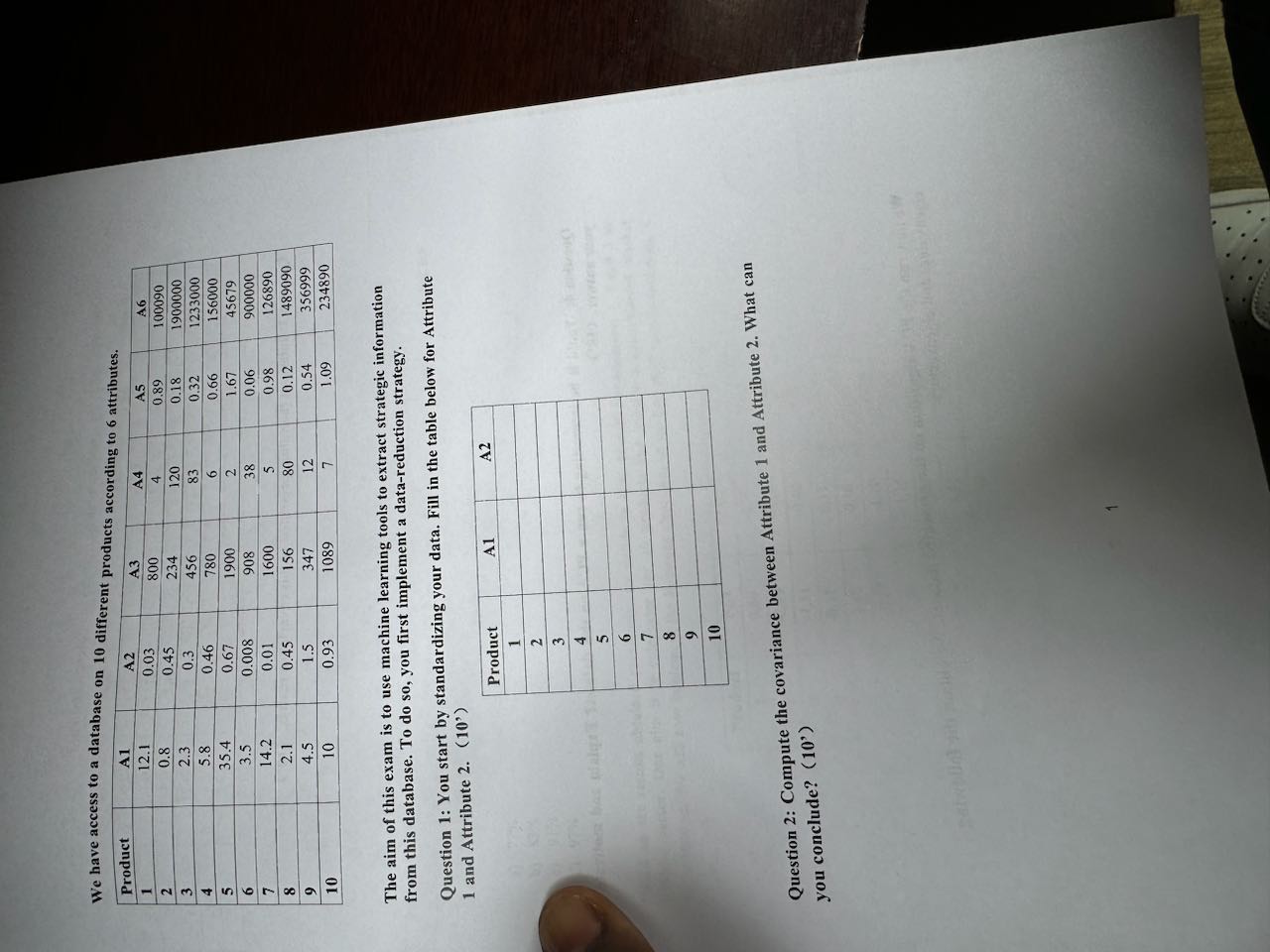
We have access to a database on 10 different products according to 6 attributes. Product A2 12.1 A3 0.03 A4 A5 2 0.8 800 A6 3.45 4 0.89 100090 3 2.3 234 120 0.3 0.18 1900000 5.8 456 4 83 0.46 0.32 1233000 780 5 35.4 6 0.66 0.67 156000 1900 2 6 3.5 1.67 45679 0.008 908 38 7 0.06 900000 14.2 0.01 1600 5 0.98 126890 8 2.1 0.45 156 80 0.12 1489090 9 4.5 1.5 347 12 0.54 356999 10 10 0.93 1089 7 1.09 234890 The aim of this exam is to use machine learning tools to extract strategic information from this database. To do so, you first implement a data-reduction strategy. Question 1: You start by standardizing your data. Fill in the table below for Attribute 1 and Attribute 2. (10') Product Al A2 3 4 5 6 7 8 9 10 Question 2: Compute the covariance between Attribute 1 and Attribute 2. What can you conclude? (10')
Step by Step Solution
There are 3 Steps involved in it

Get step-by-step solutions from verified subject matter experts
 Study Help