







Question: We have two mass storage devices, A and B with the same specs. Each can store N bits, but read / write operations are slow
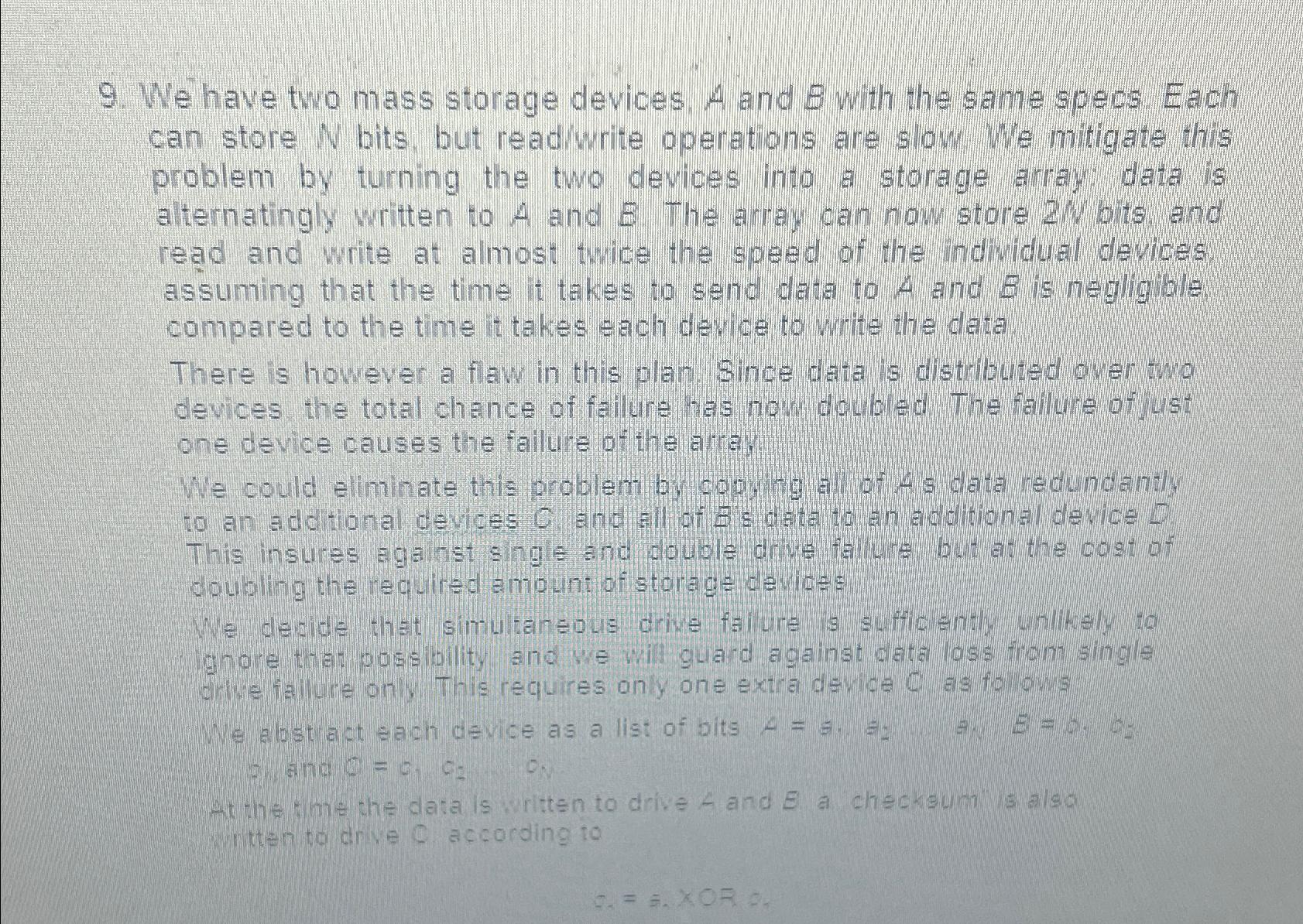
We have two mass storage devices, A and with the same specs. Each can store bits, but readwrite operations are slow We mitigate this problen by turning the two devices into a storage array: data is alternatingly written to A and The array can now store bits and. read and write at almost twice the speed of the individual devices. assuming that the time it takes to send data to A and is neglighble compared to the time it takes each device to write the data.
There is however a flaw in this plan. Since data is distributed ower two devices the total chance of failure has now doubled The flailure of glust. one device causes the failure of the arre,
We could eliminate this problen by coophing al of A s data redundantly. to an additional devices and sill of is clata to an additional device This insures against single and double drive flilure but at the cost of doubling the required ampunt of storage devices
We decide that simultaneous drive faiure is sufficiently unikely to ighore that possibility and we will guard against data loss from single chlive fallure only. This requires only one extra device as fo lows shand
At the the the data is witten to drive A and a checkern is also intten to drve according to
Step by Step Solution
There are 3 Steps involved in it
1 Expert Approved Answer
Step: 1 Unlock

Question Has Been Solved by an Expert!
Get step-by-step solutions from verified subject matter experts
Step: 2 Unlock
Step: 3 Unlock
 Study Help