







Question: Week 7 - Computer Network Defense INSTRUCTIONS: READ CAREFULLY. Read and review the article at the end of this assignment BEFORE starting the exercise.
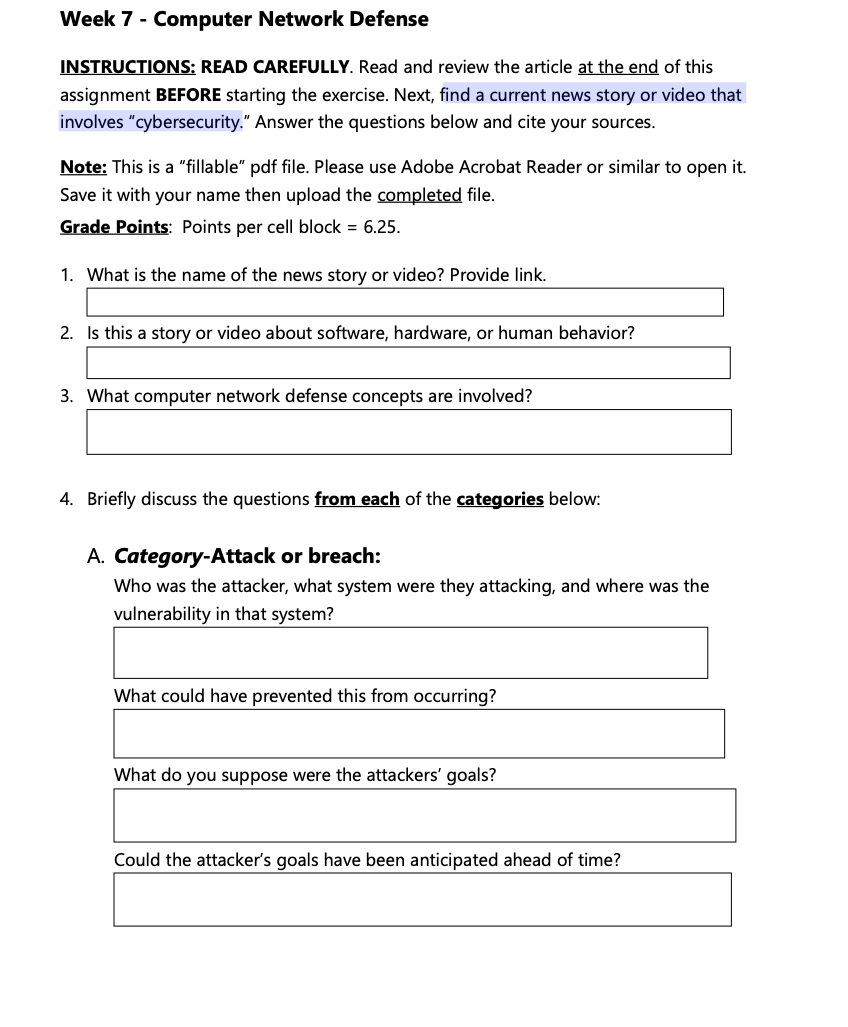
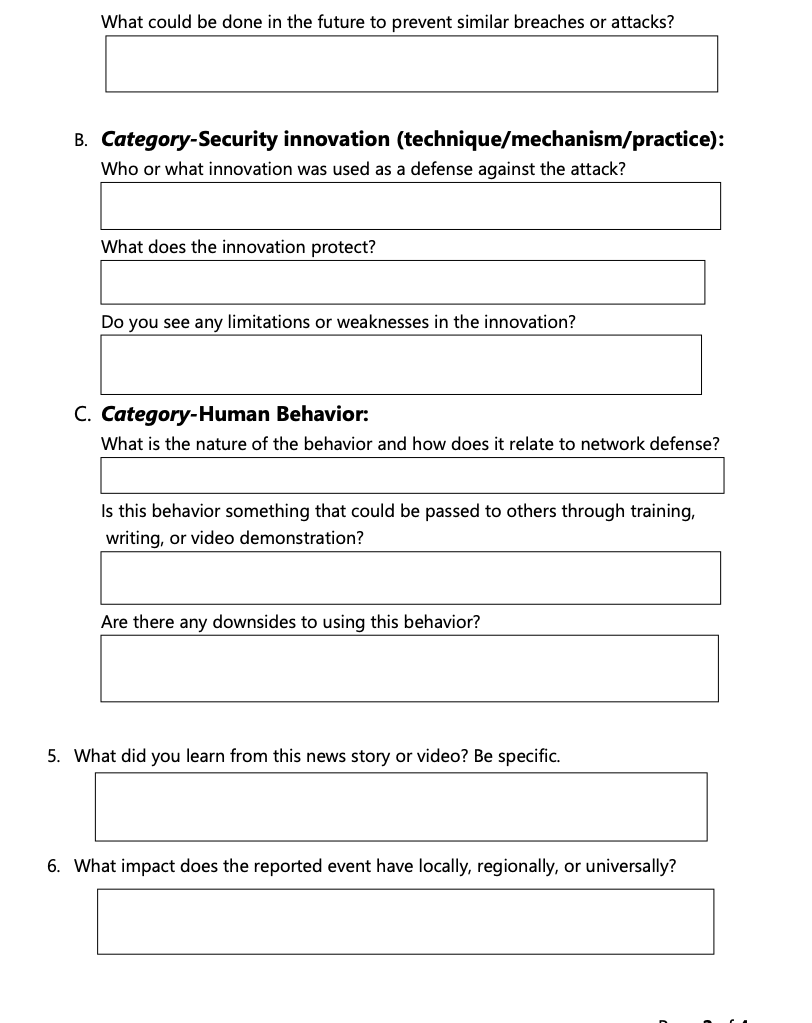
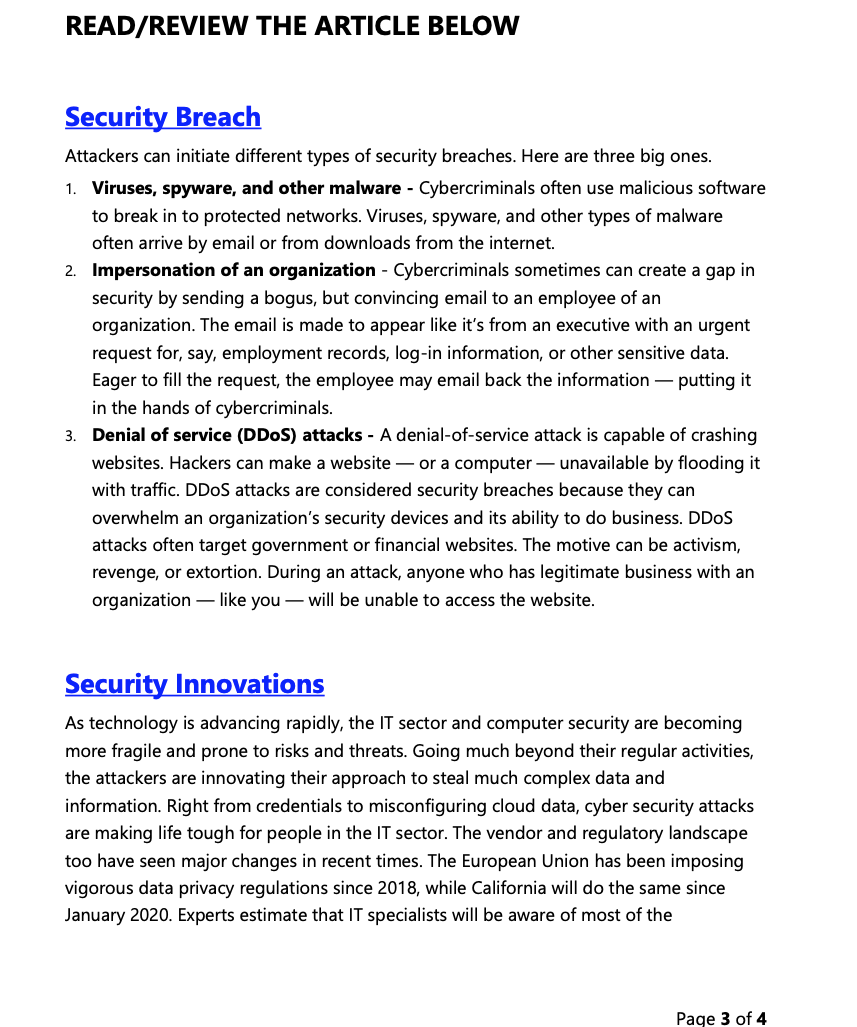
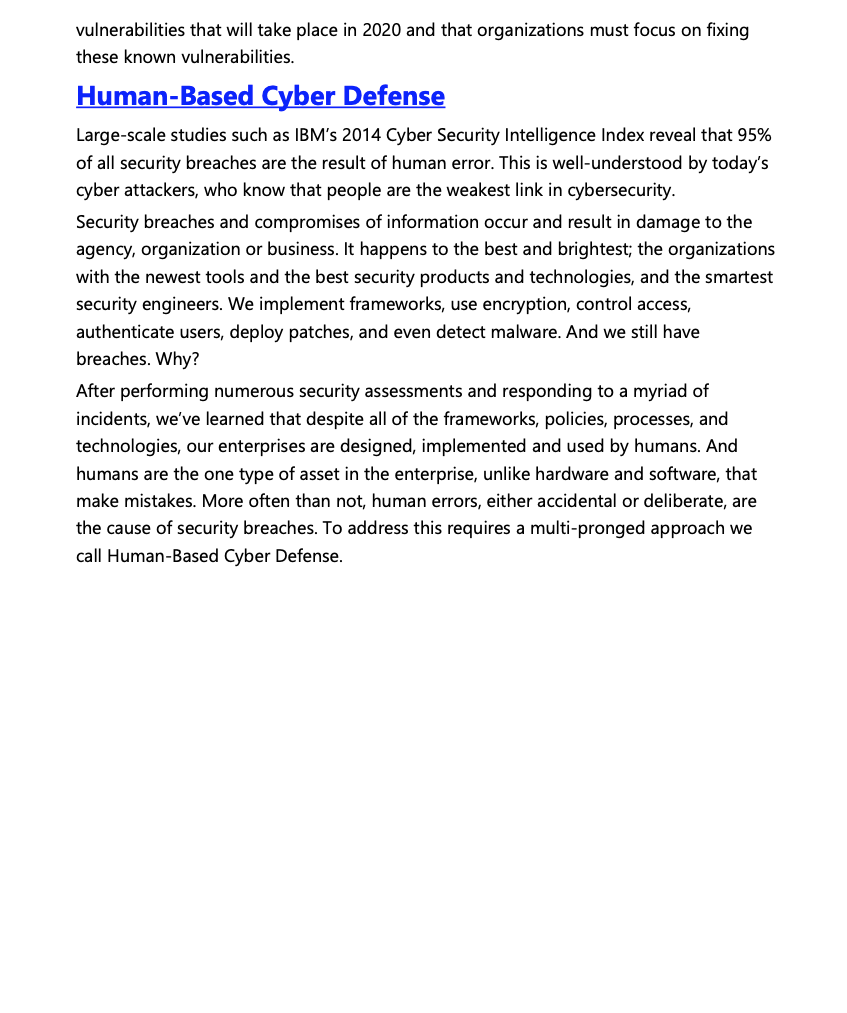
Week 7 - Computer Network Defense INSTRUCTIONS: READ CAREFULLY. Read and review the article at the end of this assignment BEFORE starting the exercise. Next, find a current news story or video that involves "cybersecurity." Answer the questions below and cite your sources. Note: This is a "fillable" pdf file. Please use Adobe Acrobat Reader or similar to open it. Save it with your name then upload the completed file. Grade Points: Points per cell block = 6.25. 1. What is the name of the news story or video? Provide link. 2. Is this a story or video about software, hardware, or human behavior? 3. What computer network defense concepts are involved? 4. Briefly discuss the questions from each of the categories below: A. Category-Attack or breach: Who was the attacker, what system were they attacking, and where was the vulnerability in that system? What could have prevented this from occurring? What do you suppose were the attackers' goals? Could the attacker's goals have been anticipated ahead of time? What could be done in the future to prevent similar breaches or attacks? B. Category-Security innovation (technique/mechanism/practice): Who or what innovation was used as a defense against the attack? What does the innovation protect? Do you see any limitations or weaknesses in the innovation? C. Category-Human Behavior: What is the nature of the behavior and how does it relate to network defense? Is this behavior something that could be passed to others through training, writing, or video demonstration? Are there any downsides to using this behavior? 5. What did you learn from this news story or video? Be specific. 6. What impact does the reported event have locally, regionally, or universally? READ/REVIEW THE ARTICLE BELOW Security Breach Attackers can initiate different types of security breaches. Here are three big ones. 1. Viruses, spyware, and other malware - Cybercriminals often use malicious software to break in to protected networks. Viruses, spyware, and other types of malware often arrive by email or from downloads from the internet. 2. Impersonation of an organization - Cybercriminals sometimes can create a gap in security by sending a bogus, but convincing email to an employee of an organization. The email is made to appear like it's from an executive with an urgent request for, say, employment records, log-in information, or other sensitive data. Eager to fill the request, the employee may email back the information - putting it in the hands of cybercriminals. 3. Denial of service (DDoS) attacks - A denial-of-service attack is capable of crashing website can make a website or a computer- unav by flooding it with traffic. DDoS attacks are considered security breaches because they can overwhelm an organization's security devices and its ability to do business. DDoS attacks often target government or financial websites. The motive can be activism, revenge, or extortion. During an attack, anyone who has legitimate business with an organization like you will be unable to access the website. Security Innovations As technology is advancing rapidly, the IT sector and computer security are becoming more fragile and prone to risks and threats. Going much beyond their regular activities, the attackers are innovating their approach to steal much complex data and information. Right from credentials to misconfiguring cloud data, cyber security attacks are making life tough for people in the IT sector. The vendor and regulatory landscape too have seen major changes in recent times. The European Union has been imposing vigorous data privacy regulations since 2018, while California will do the same since January 2020. Experts estimate that IT specialists will be aware of most of the Page 3 of 4 vulnerabilities that will take place in 2020 and that organizations must focus on fixing these known vulnerabilities. Human-Based Cyber Defense Large-scale studies such as IBM's 2014 Cyber Security Intelligence Index reveal that 95% of all security breaches are the result of human error. This is well-understood by today's cyber attackers, who know that people are the weakest link in cybersecurity. Security breaches and compromises of information occur and result in damage to the agency, organization or business. It happens to the best and brightest; the organizations with the newest tools and the best security products and technologies, and the smartest security engineers. We implement frameworks, use encryption, control access, authenticate users, deploy patches, and even detect malware. And we still have breaches. Why? After performing numerous security assessments and responding to a myriad of incidents, we've learned that despite all of the frameworks, policies, processes, and technologies, our enterprises are designed, implemented and used by humans. And humans are the one type of asset in the enterprise, unlike hardware and software, that make mistakes. More often than not, human errors, either accidental or deliberate, are the cause of security breaches. To address this requires a multi-pronged approach we call Human-Based Cyber Defense.
Step by Step Solution
There are 3 Steps involved in it

Get step-by-step solutions from verified subject matter experts
 Study Help