







Question: What does it have to be Which option is better: receive S140,000 now or $50,000, $25,000, $55,000, $10,000, and S30,000, respectively, over the next five
 What does it have to be
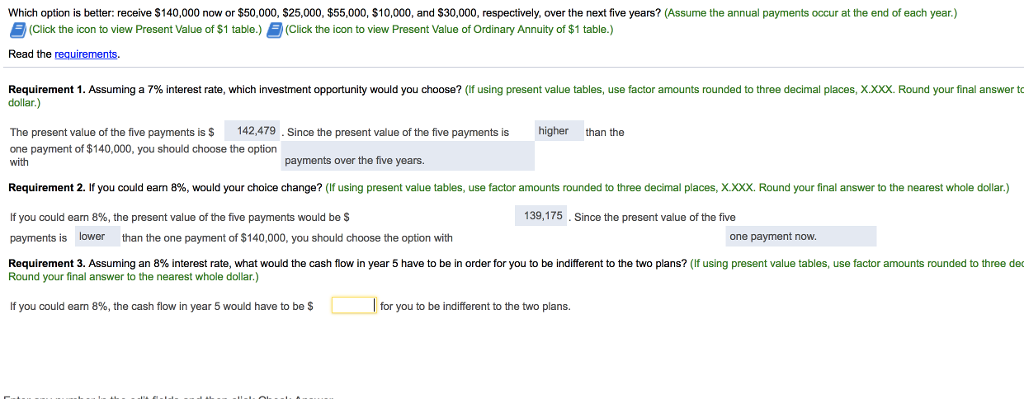
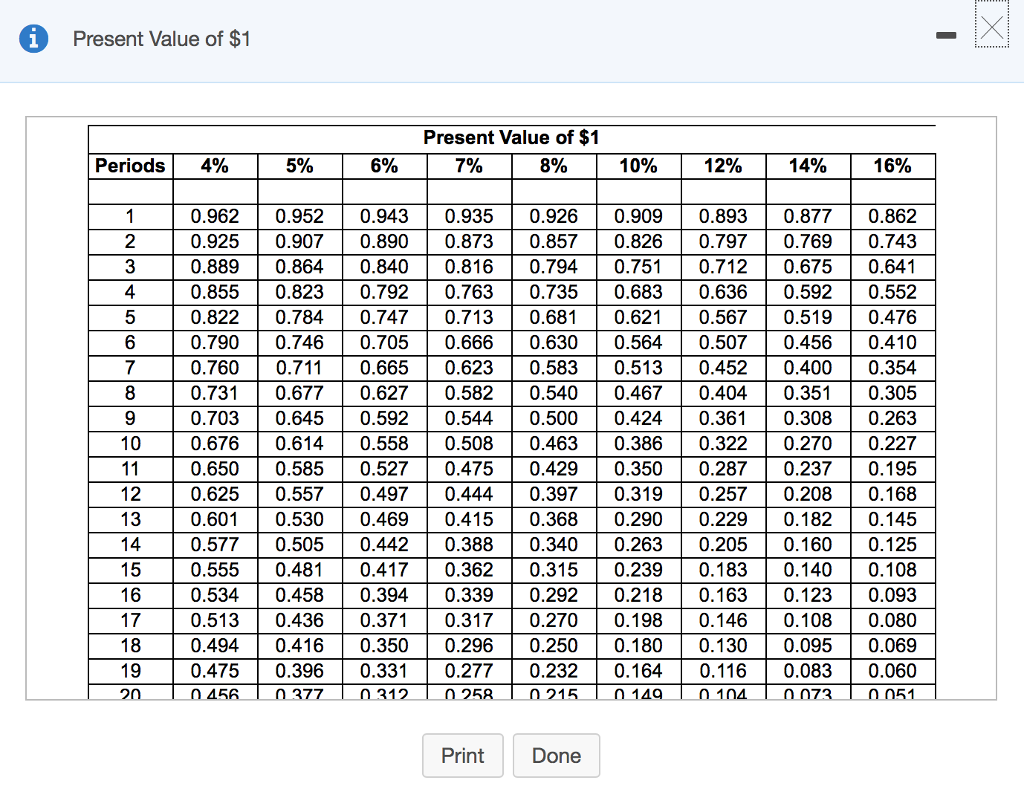
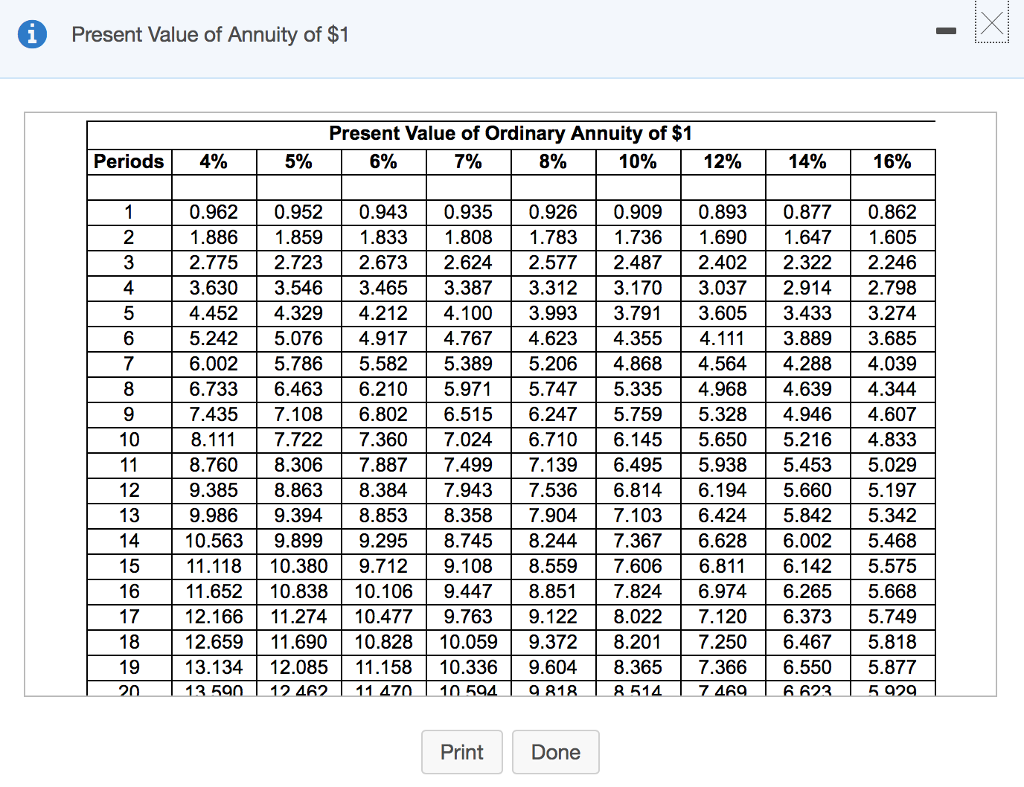
Which option is better: receive S140,000 now or $50,000, $25,000, $55,000, $10,000, and S30,000, respectively, over the next five years? (Assume the annual payments occur at the end of each year.) (Click the icon to view Present Value of $1 table.)(Click the icon to view Present Value of Ordinary Annuity of $1 table.) Read the requirements. Assuming a 7% interest rate, which investment o y would ou choose? present value C Requirement dollar.) ur us ables use actor amounts rounded to ree decima places, ound your na answer The present value of the five payments is $ 142.479. Since the present value of the five payments is higher than the one payment of $140,000, you should choose the option payments over the five years. with Requirement 2 lf ou could earn 8%, would your choice change? If using present value tables, se factor amounts rounded to hree decimal places, X XXX Round your final answer to the nearest whole dollar. If you could earn 8%, the present value of the five payments would be s payments is lower than the one payment of $140,000, you should choose the option with Requirement 3, Assuming an 8% interest rate, what would the cash flow in year 5 have to be in order for you to be indifferent to the two plans? f using present value tables use factor amounts rounded to three de 139,175.Since the present value of the five one payment now. Round your final answer to the nearest whole dollar.) lf you could earn 8%, the cash flow in year 5 would have to be S for you to be indifferent to the two plans
Step by Step Solution
There are 3 Steps involved in it

Get step-by-step solutions from verified subject matter experts
 Study Help