







Question: What factors presented in the readings for this module do you think are most important in creating a positive and nurturing organization culture? Why did
What factors presented in the readings for this module do you think are most important in creating a positive and nurturing organization culture? Why did you choose those factors rather than others? Drawing on your reading and some personal experience, share your own perception of what an organizations employees should value and how newcomers can become aware of those values. 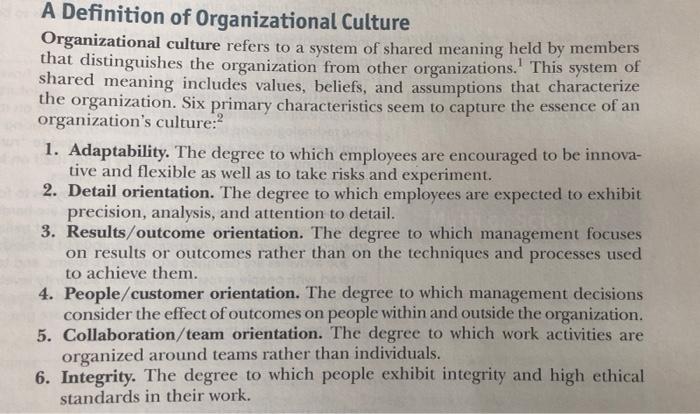
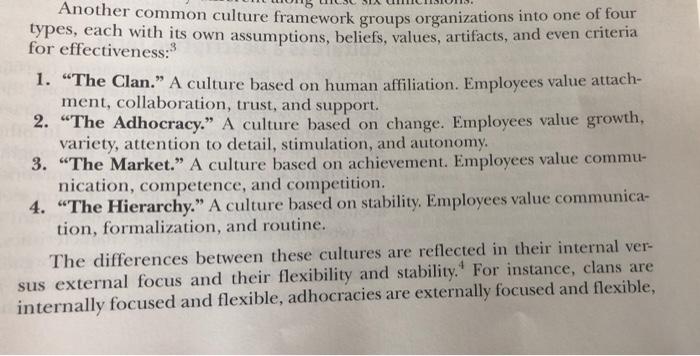
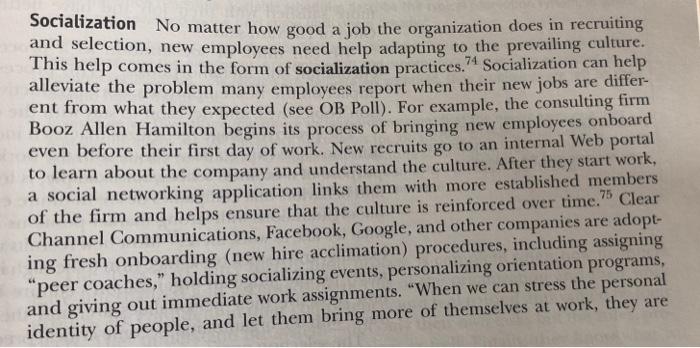
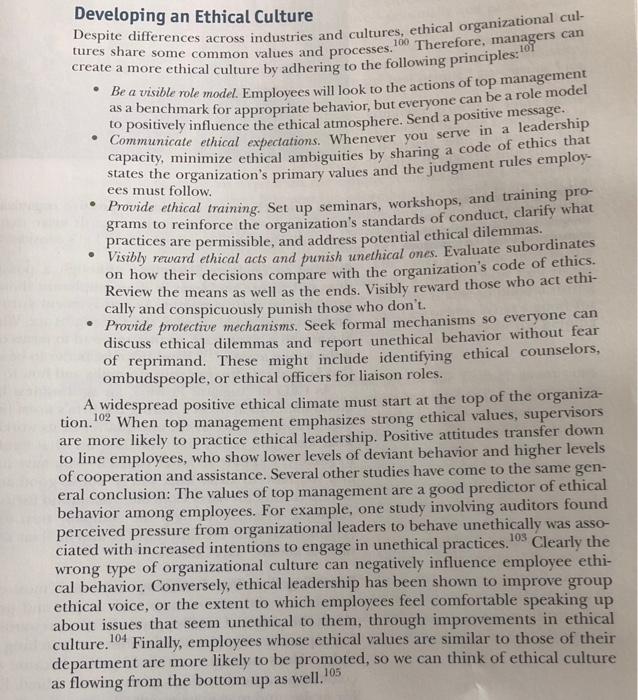
A Definition of Organizational Culture Organizational culture refers to a system of shared meaning held by members that distinguishes the organization from other organizations. This system of shared meaning includes values, beliefs, and assumptions that characterize the organization. Six primary characteristics seem to capture the essence of an organization's culture:2 1. Adaptability. The degree to which employees are encouraged to be innova- tive and flexible as well as to take risks and experiment. 2. Detail orientation. The degree to which employees are expected to exhibit precision, analysis, and attention to detail. 3. Results/outcome orientation. The degree to which management focuses on results or outcomes rather than on the techniques and processes used to achieve them. 4. People/customer orientation. The degree to which management decisions consider the effect of outcomes on people within and outside the organization. 5. Collaboration/team orientation. The degree to which work activities are organized around teams rather than individuals. 6. Integrity. The degree to which people exhibit integrity and high ethical standards in their work. Another common culture framework groups organizations into one of four types, each with its own assumptions, beliefs, values, artifacts, and even criteria for effectiveness: 1. The Clan." A culture based on human affiliation. Employees value attach- ment, collaboration, trust, and support. 2. The Adhocracy. A culture based on change. Employees value growth, variety, attention to detail, stimulation, and autonomy. 3. "The Market." A culture based on achievement. Employees value commu- nication, competence, and competition. 4. "The Hierarchy." A culture based on stability. Employees value communica- tion, formalization, and routine. The differences between these cultures are reflected in their internal ver- sus external focus and their flexibility and stability. For instance, clans are internally focused and flexible, adhocracies are externally focused and flexible, Socialization No matter how good a job the organization does in recruiting and selection, new employees need help adapting to the prevailing culture. This help comes in the form of socialization practices. Socialization can help alleviate the problem many employees report when their new jobs are differ- ent from what they expected (see OB Poli). For example, the consulting firm Booz Allen Hamilton begins its process of bringing new employees onboard even before their first day of work. New recruits go to an internal Web portal to learn about the company and understand the culture. After they start work, a social networking application links them with more established members of the firm and helps ensure that the culture is reinforced over time." Clear Channel Communications, Facebook, Google, and other companies are adopt- ing fresh onboarding (new hire acclimation) procedures, including assigning "peer coaches," holding socializing events, personalizing orientation programs, and giving out immediate work assignments. "When we can stress the personal identity of people, and let them bring more of themselves at work, they are Developing an Ethical Culture Despite differences across industries and cultures, ethical organizational cul- create a more ethical culture by adhering to the following principles: 07 Be a visible role model. Employees will look to the actions of top management as a benchmark for appropriate behavior, but everyone can be a role model to positively influence the ethical atmosphere. Send a positive message. Communicate ethical expectations. Whenever you serve in a leadership capacity, minimize ethical ambiguities by sharing a code of ethics that states the organization's primary values and the judgment rules employ- ees must follow. Provide ethical training. Set up seminars, workshops, and training pro- grams to reinforce the organization's standards of conduct, clarify what practices are permissible, and address potential ethical dilemmas. Visibly reward ethical acts and punish unethical ones. Evaluate subordinates on how their decisions compare with the organization's code of ethics. Review the means as well as the ends. Visibly reward those who act ethi- cally and conspicuously punish those who don't. Provide protective mechanisms. Seek formal mechanisms so everyone can discuss ethical dilemmas and report unethical behavior without fear of reprimand. These might include identifying ethical counselors, ombudspeople, or ethical officers for liaison roles. A widespread positive ethical climate must start at the top of the organiza- tion. 102 When top management emphasizes strong ethical values, supervisors are more likely to practice ethical leadership. Positive attitudes transfer down to line employees, who show lower levels of deviant behavior and higher levels of cooperation and assistance. Several other studies have come to the same gen- eral conclusion: The values of top management are a good predictor of ethical behavior among employees. For example, one study involving auditors found perceived pressure from organizational leaders to behave unethically was asso- ciated with increased intentions to engage in unethical practices. Clearly the wrong type of organizational culture can negatively influence employee ethi- cal behavior. Conversely, ethical leadership has been shown to improve group ethical voice, or the extent to which employees feel comfortable speaking up about issues that seem unethical to them, through improvements in ethical Finally, employees whose ethical values are similar to those of their department are more likely to be promoted, so we can think of ethical culture as flowing from the bottom up as well. culture. 104 105
Step by Step Solution
There are 3 Steps involved in it
1 Expert Approved Answer
Step: 1 Unlock

Question Has Been Solved by an Expert!
Get step-by-step solutions from verified subject matter experts
Step: 2 Unlock
Step: 3 Unlock
 Study Help