Question: What is a White Paper? In this assignment, you will write a white paper. White papers are similar to research papers/ lab reports, in that
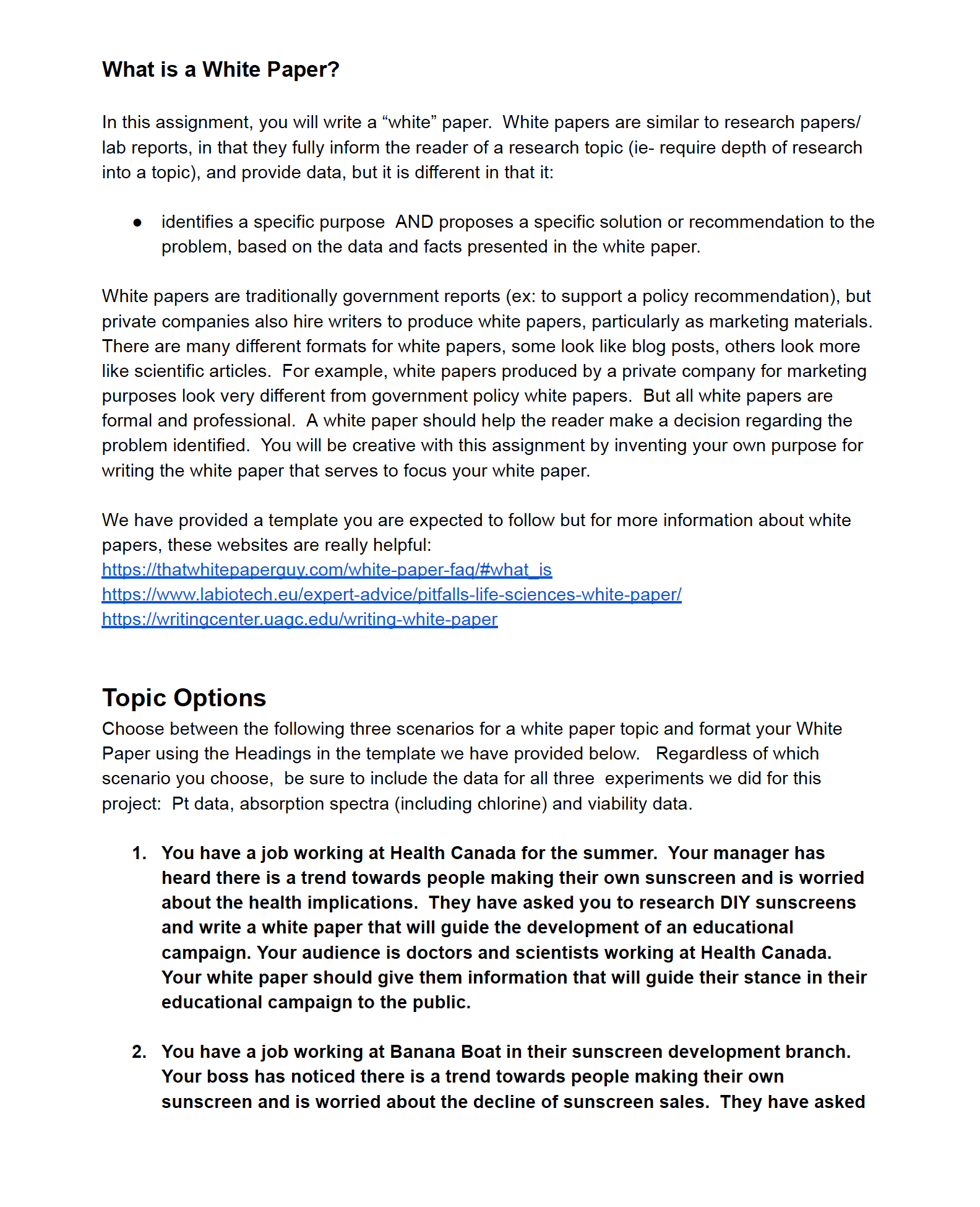
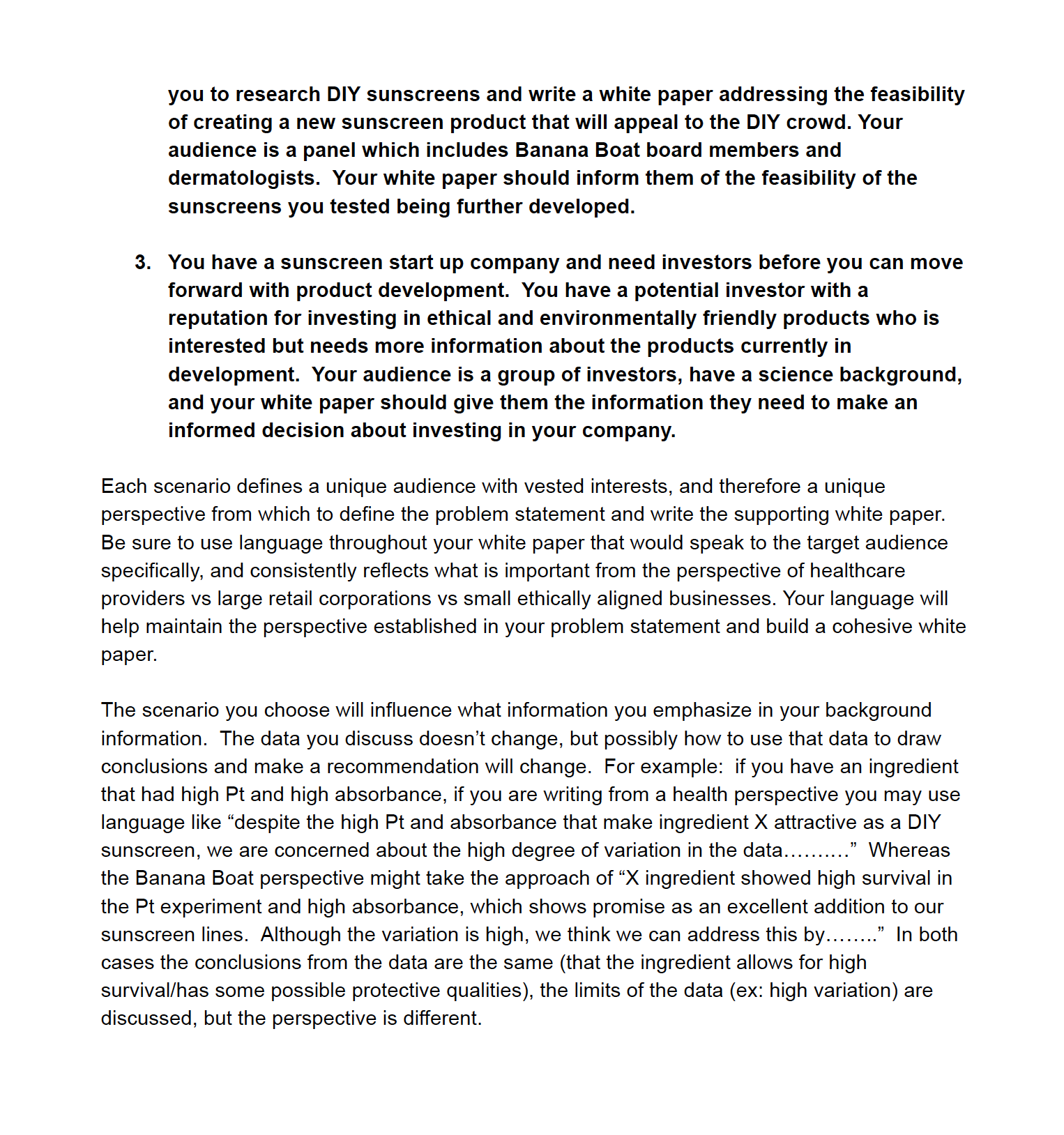
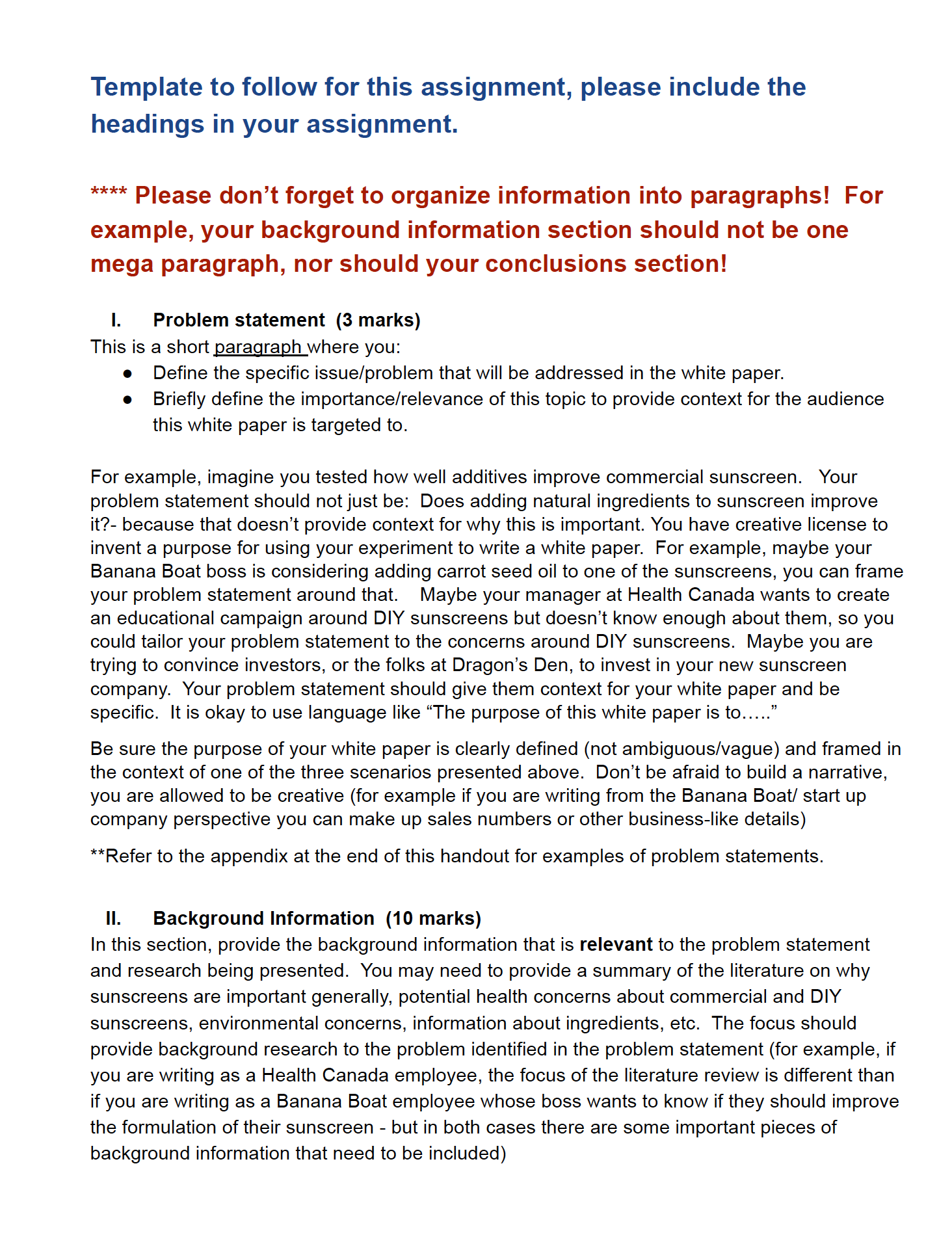
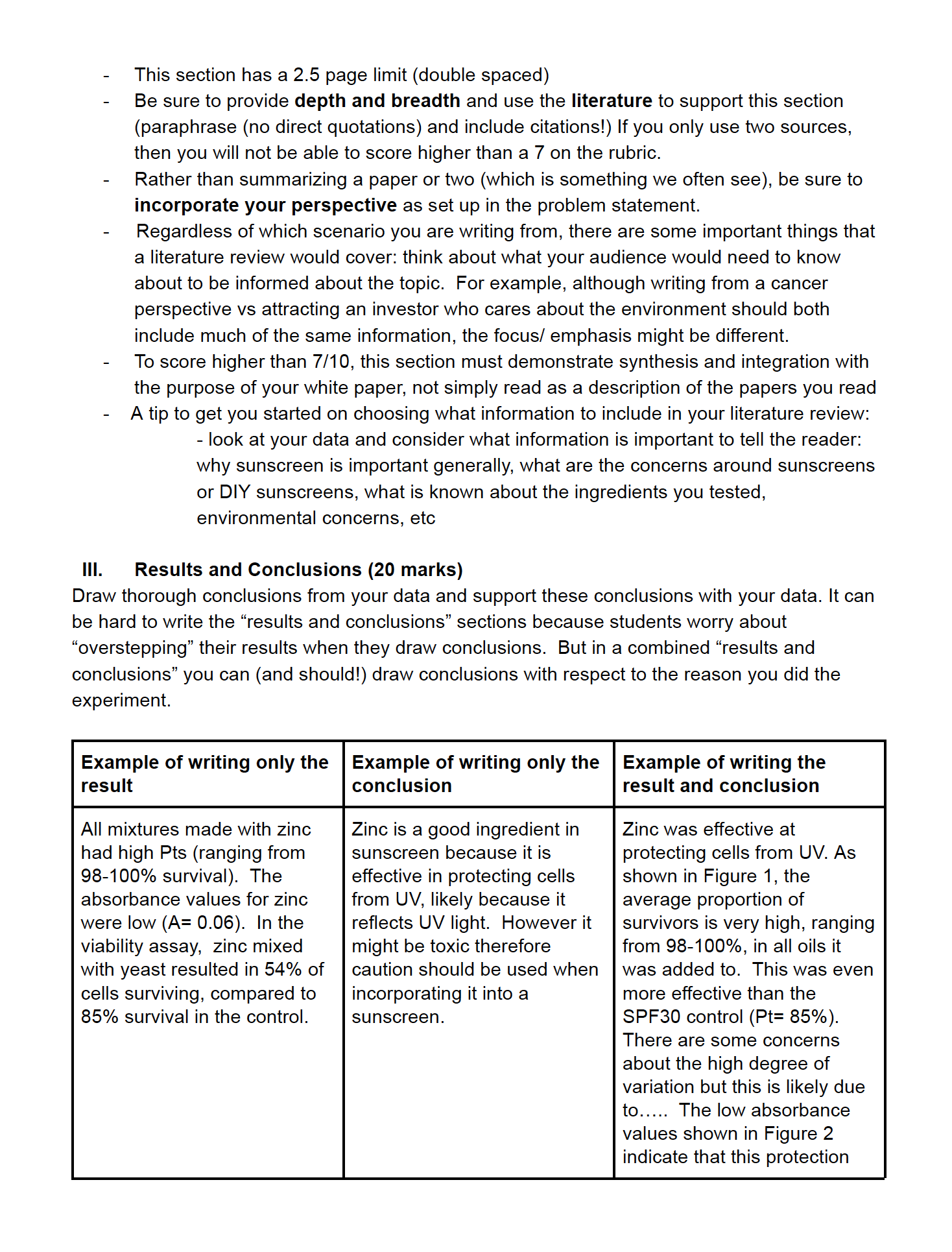
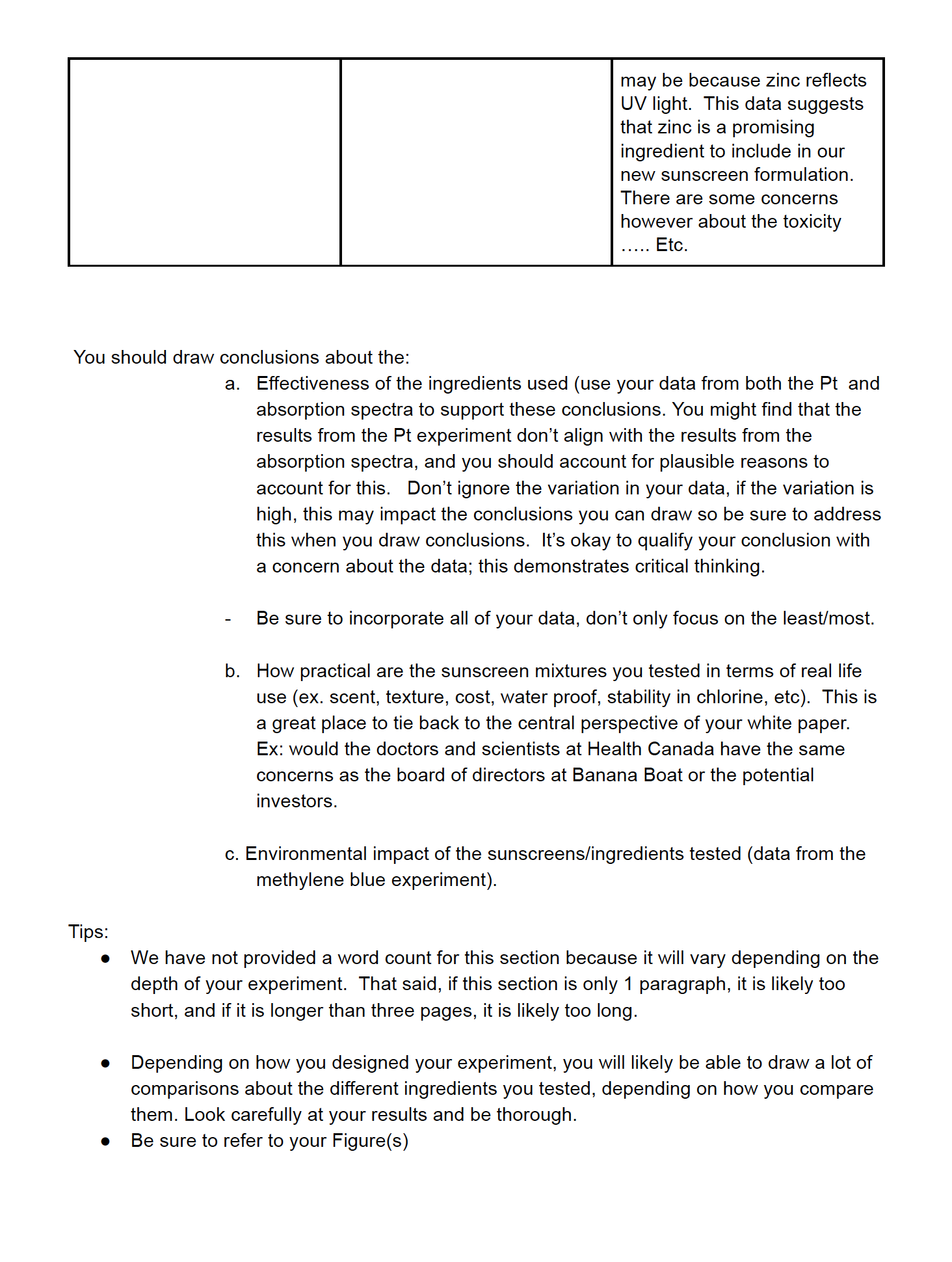
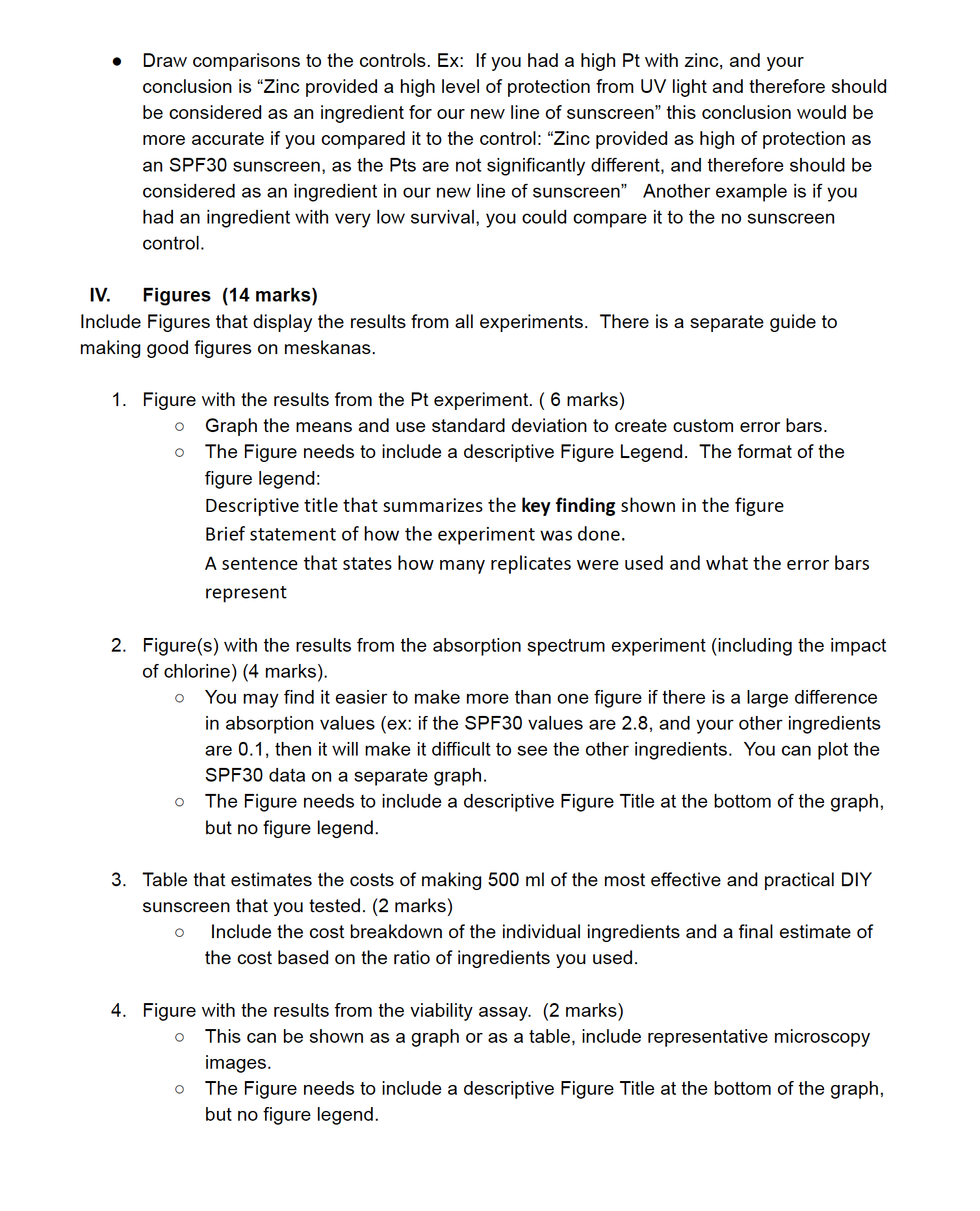
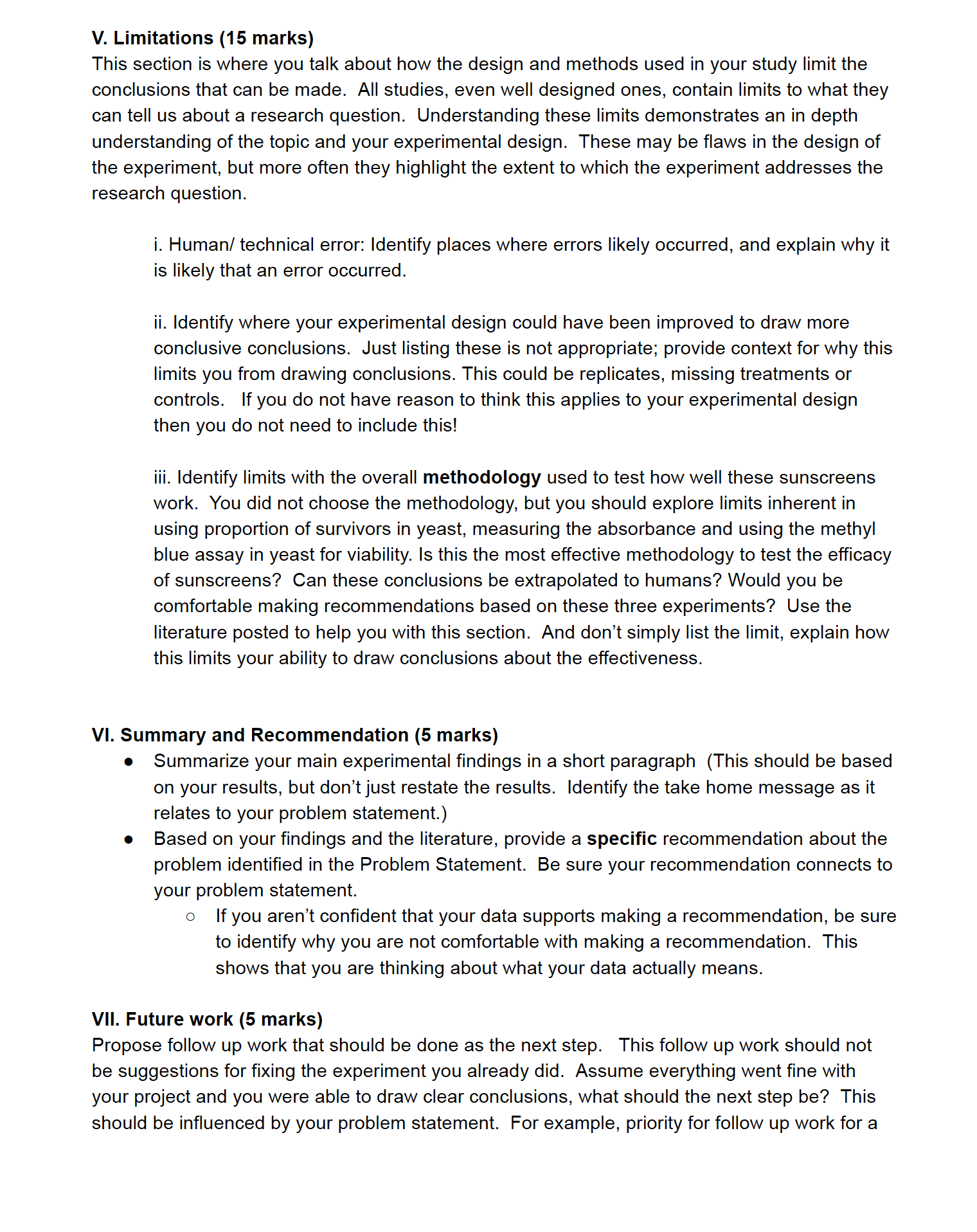
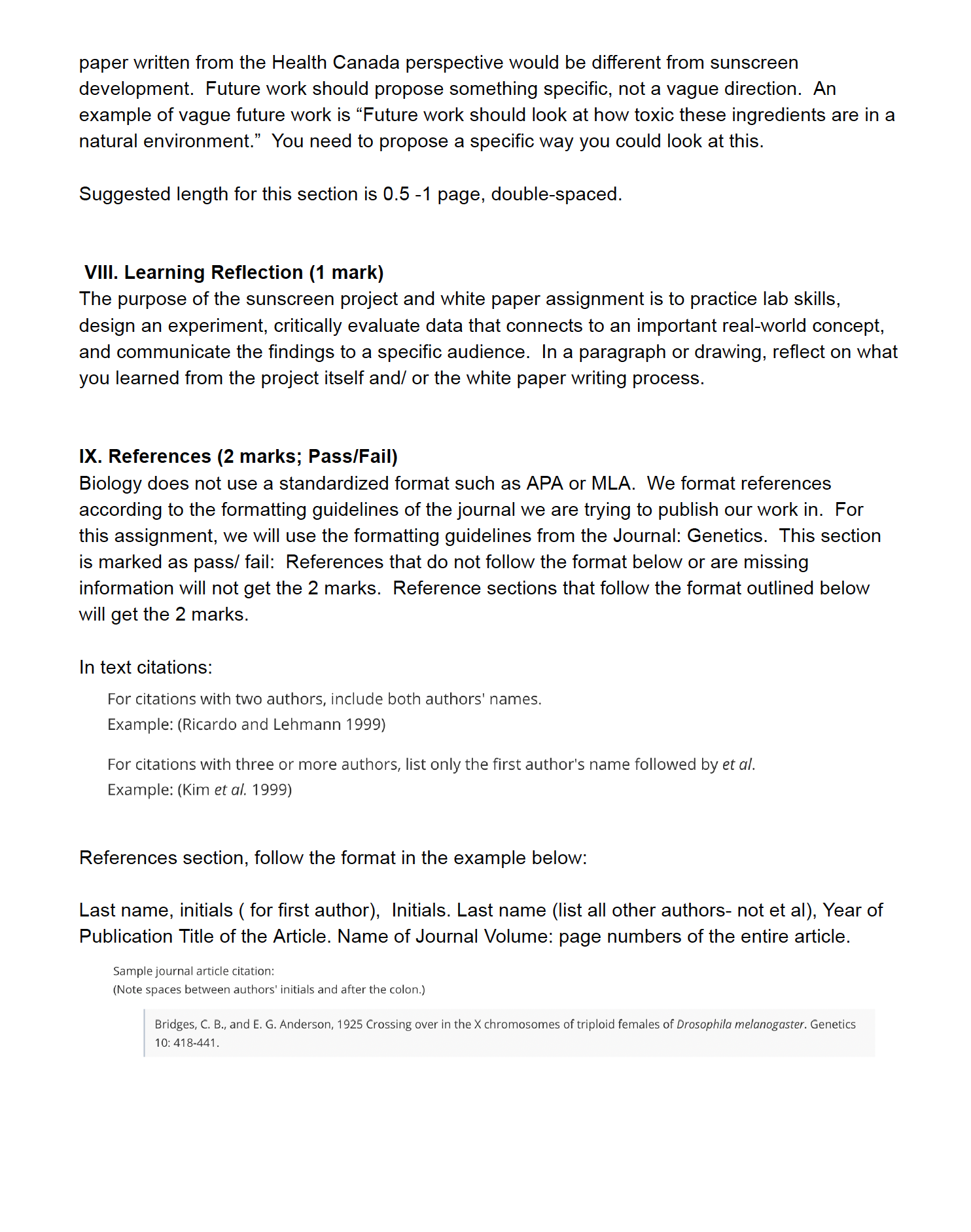
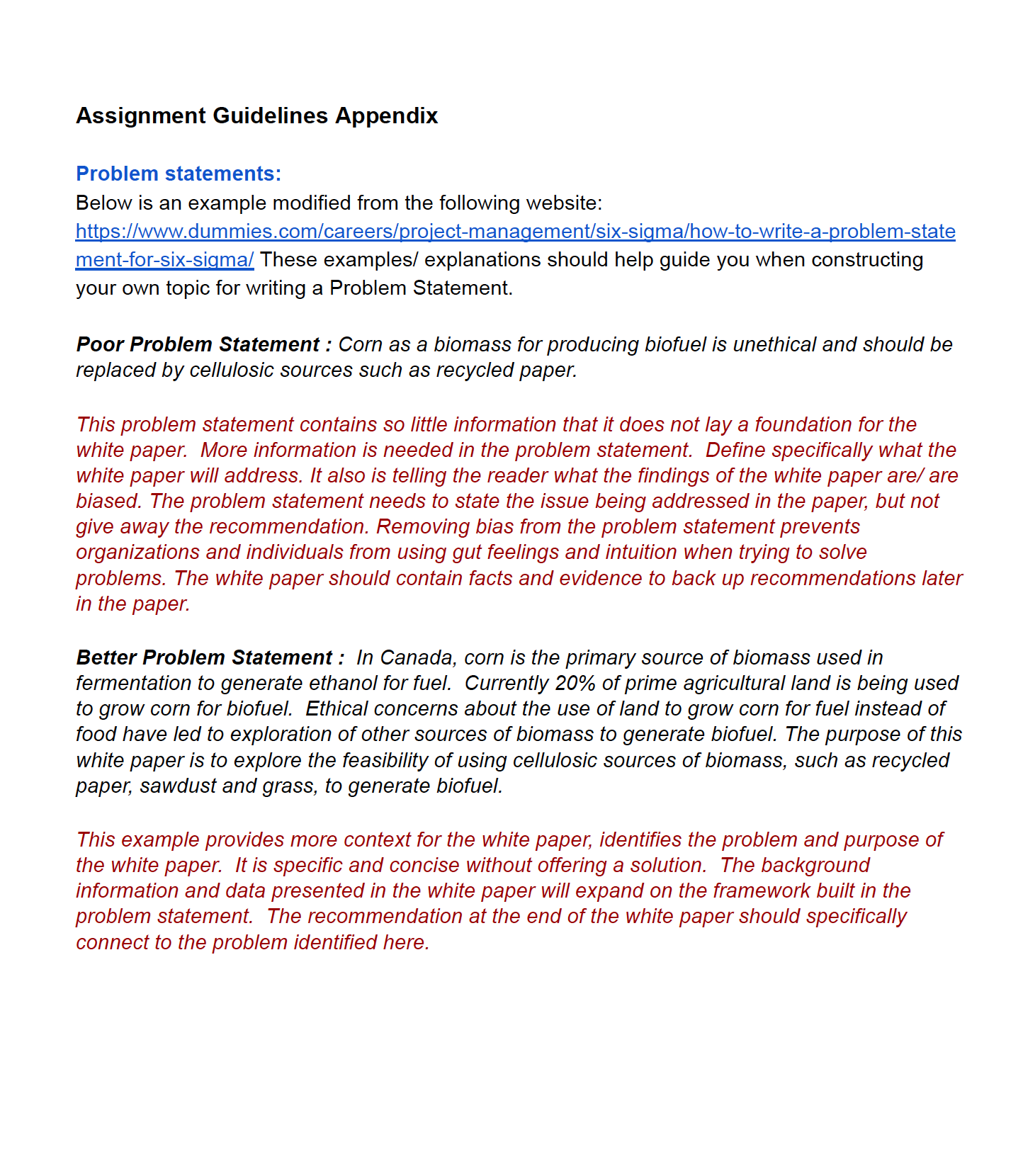
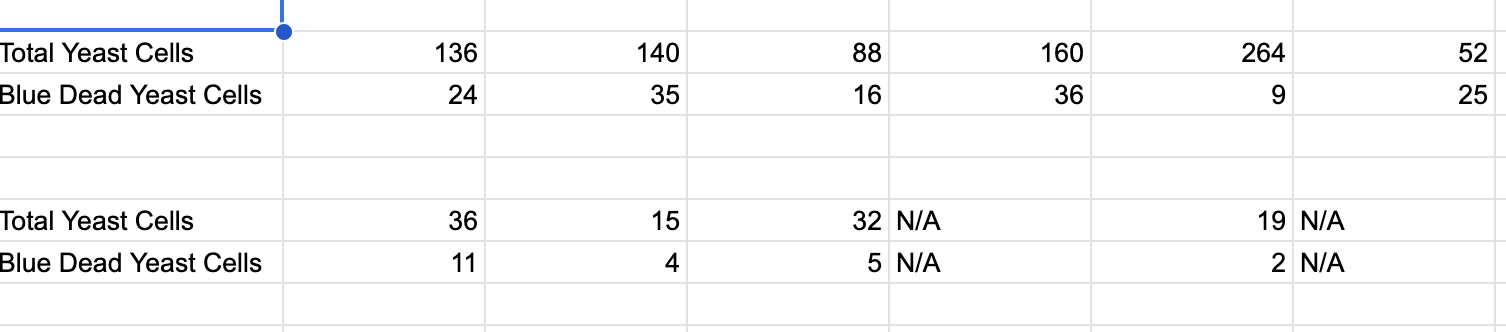
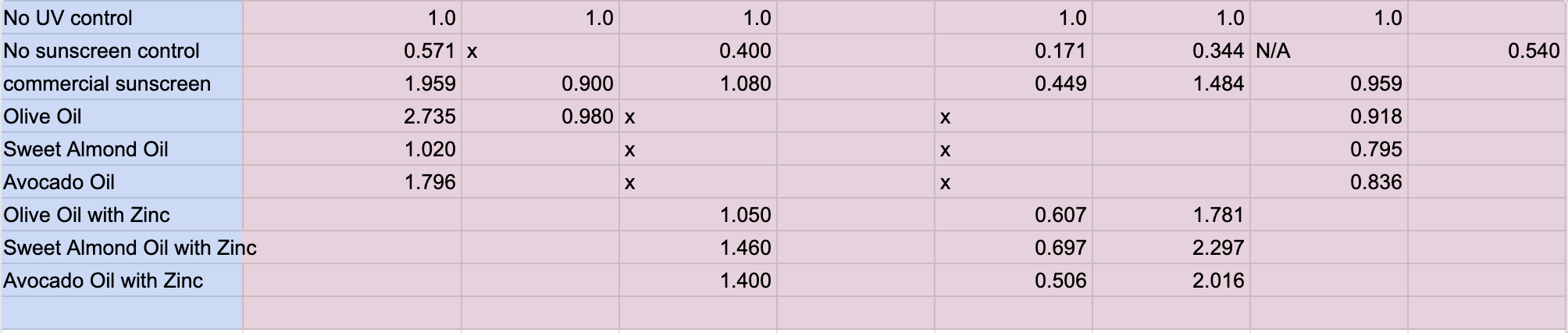
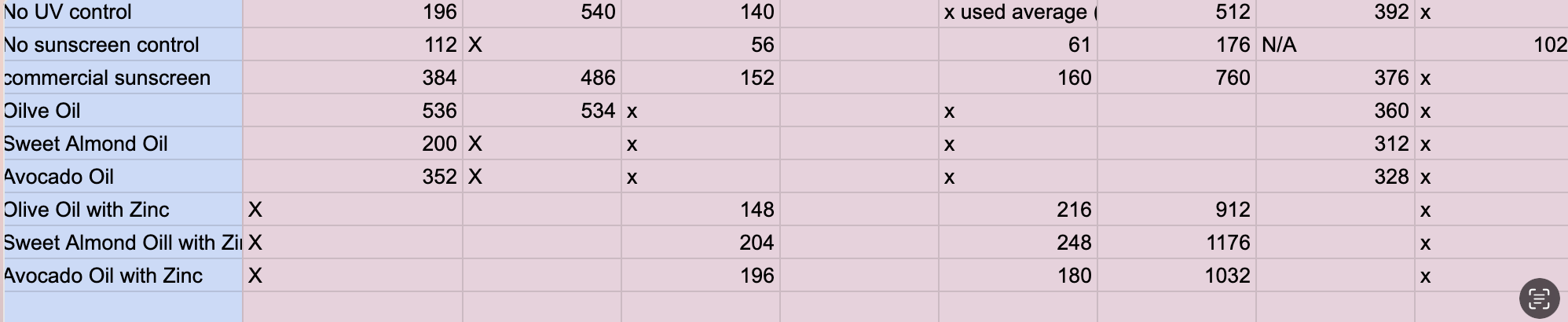
What is a White Paper? In this assignment, you will write a \"white\" paper. White papers are similar to research papers/ lab reports, in that they fully inform the reader of a research topic (ie- require depth of research into a topic), and provide data, but it is different in that it: e identifies a specific purpose AND proposes a specific solution or recommendation to the problem, based on the data and facts presented in the white paper. White papers are traditionally government reports (ex: to support a policy recommendation), but private companies also hire writers to produce white papers, particularly as marketing materials. There are many different formats for white papers, some look like blog posts, others look more like scientific articles. For example, white papers produced by a private company for marketing purposes look very different from government policy white papers. But all white papers are formal and professional. A white paper should help the reader make a decision regarding the problem identified. You will be creative with this assignment by inventing your own purpose for writing the white paper that serves to focus your white paper. We have provided a template you are expected to follow but for more information about white papers, these websites are really helpful; https://thatwhitepaperguy.com/white-paper-fag/#what_is https://www.labiotech.eu/expert-advice/pitfalls-life-sciences-white-paper/ https://writingcenter.uagc.edu/writing-white-paper Topic Options Choose between the following three scenarios for a white paper topic and format your White Paper using the Headings in the template we have provided below. Regardless of which scenario you choose, be sure to include the data for all three experiments we did for this project: Pt data, absorption spectra (including chlorine) and viability data. 1. You have a job working at Health Canada for the summer. Your manager has heard there is a trend towards people making their own sunscreen and is worried about the health implications. They have asked you to research DIY sunscreens and write a white paper that will guide the development of an educational campaign. Your audience is doctors and scientists working at Health Canada. Your white paper should give them information that will guide their stance in their educational campaign to the public. 2. You have a job working at Banana Boat in their sunscreen development branch. Your boss has noticed there is a trend towards people making their own sunscreen and is worried about the decline of sunscreen sales. They have asked you to research DIY sunscreens and write a white paper addressing the feasibility of creating a new sunscreen product that will appeal to the DIY crowd. Your audience is a panel which includes Banana Boat board members and dermatologists. Your white paper should inform them of the feasibility of the sunscreens you tested being further developed. 3. You have a sunscreen start up company and need investors before you can move forward with product development. You have a potential investor with a reputation for investing in ethical and environmentally friendly products who is interested but needs more information about the products currently in development. Your audience is a group of investors, have a science background, and your white paper should give them the information they need to make an informed decision about investing in your company. Each scenario defines a unique audience with vested interests, and therefore a unique perspective from which to define the problem statement and write the supporting white paper. Be sure to use language throughout your white paper that would speak to the target audience specifically, and consistently reflects what is important from the perspective of healthcare providers vs large retail corporations vs small ethically aligned businesses. Your language will help maintain the perspective established in your problem statement and build a cohesive white paper. The scenario you choose will influence what information you emphasize in your background information. The data you discuss doesn''t change, but possibly how to use that data to draw conclusions and make a recommendation will change. For example: if you have an ingredient that had high Pt and high absorbance, if you are writing from a health perspective you may use language like \"despite the high Pt and absorbance that make ingredient X attractive as a DIY sunscreen, we are concerned about the high degree of variation in the data.......... " Whereas the Banana Boat perspective might take the approach of \"X ingredient showed high survival in the Pt experiment and high absorbance, which shows promise as an excellent addition to our sunscreen lines. Although the variation is high, we think we can address this by........ " In both cases the conclusions from the data are the same (that the ingredient allows for high survival/has some possible protective qualities), the limits of the data (ex: high variation) are discussed, but the perspective is different. Template to follow for this assignment, please include the headings in your assighnment. **** Please don't forget to organize information into paragraphs! For example, your background information section should not be one mega paragraph, nor should your conclusions section! . Problem statement (3 marks) This is a short paragraph where you: e Define the specific issue/problem that will be addressed in the white paper. e Briefly define the importance/relevance of this topic to provide context for the audience this white paper is targeted to. For example, imagine you tested how well additives improve commercial sunscreen. Your problem statement should not just be: Does adding natural ingredients to sunscreen improve it?- because that doesn't provide context for why this is important. You have creative license to invent a purpose for using your experiment to write a white paper. For example, maybe your Banana Boat boss is considering adding carrot seed oil to one of the sunscreens, you can frame your problem statement around that. Maybe your manager at Health Canada wants to create an educational campaign around DIY sunscreens but doesn't know enough about them, so you could tailor your problem statement to the concerns around DIY sunscreens. Maybe you are trying to convince investors, or the folks at Dragon's Den, to invest in your new sunscreen company. Your problem statement should give them context for your white paper and be specific. It is okay to use language like \"The purpose of this white paper is to.....\" Be sure the purpose of your white paper is clearly defined (not ambiguous/vague) and framed in the context of one of the three scenarios presented above. Don't be afraid to build a narrative, you are allowed to be creative (for example if you are writing from the Banana Boat/ start up company perspective you can make up sales numbers or other business-like details) **Refer to the appendix at the end of this handout for examples of problem statements. Il. Background Information (10 marks) In this section, provide the background information that is relevant to the problem statement and research being presented. You may need to provide a summary of the literature on why sunscreens are important generally, potential health concerns about commercial and DIY sunscreens, environmental concerns, information about ingredients, etc. The focus should provide background research to the problem identified in the problem statement (for example, if you are writing as a Health Canada employee, the focus of the literature review is different than if you are writing as a Banana Boat employee whose boss wants to know if they should improve the formulation of their sunscreen - but in both cases there are some important pieces of background information that need to be included) - This section has a 2.5 page limit (double spaced) - Be sure to provide depth and breadth and use the literature to support this section (paraphrase (no direct quotations) and include citations!) If you only use two sources, then you will not be able to score higher than a 7 on the rubric. - Rather than summarizing a paper or two (which is something we often see), be sure to incorporate your perspective as set up in the problem statement. - Regardless of which scenario you are writing from, there are some important things that a literature review would cover: think about what your audience would need to know about to be informed about the topic. For example, although writing from a cancer perspective vs attracting an investor who cares about the environment should both include much of the same information, the focus/ emphasis might be different. - To score higher than 7/10, this section must demonstrate synthesis and integration with the purpose of your white paper, not simply read as a description of the papers you read - A'tip to get you started on choosing what information to include in your literature review: - look at your data and consider what information is important to tell the reader: why sunscreen is important generally, what are the concerns around sunscreens or DIY sunscreens, what is known about the ingredients you tested, environmental concerns, etc lll. Results and Conclusions (20 marks) Draw thorough conclusions from your data and support these conclusions with your data. It can be hard to write the \"results and conclusions\" sections because students worry about \"overstepping\" their results when they draw conclusions. But in a combined \"results and conclusions\" you can (and should!) draw conclusions with respect to the reason you did the experiment. Example of writing only the | Example of writing only the | Example of writing the result conclusion result and conclusion All mixtures made with zinc Zinc is a good ingredient in Zinc was effective at had high Pts (ranging from sunscreen because it is protecting cells from UV. As 98-100% survival). The effective in protecting cells shown in Figure 1, the absorbance values for zinc from UV, likely because it average proportion of were low (A= 0.06). In the reflects UV light. However it | survivors is very high, ranging viability assay, zinc mixed might be toxic therefore from 98-100%, in all oils it with yeast resulted in 54% of | caution should be used when | was added to. This was even cells surviving, compared to incorporating it into a more effective than the 85% survival in the control. sunscreen. SPF30 control (Pt= 85%). There are some concerns about the high degree of variation but this is likely due to..... The low absorbance values shown in Figure 2 indicate that this protection may be because zinc reflects UV light. This data suggests that zinc is a promising ingredient to include in our new sunscreen formulation. There are some concerns however about the toxicity ..... Etc. You should draw conclusions about the: a. Effectiveness of the ingredients used (use your data from both the Pt and absorption spectra to support these conclusions. You might find that the results from the Pt experiment don''t align with the results from the absorption spectra, and you should account for plausible reasons to account for this. Don't ignore the variation in your data, if the variation is high, this may impact the conclusions you can draw so be sure to address this when you draw conclusions. It's okay to qualify your conclusion with a concern about the data; this demonstrates critical thinking. - Be sure to incorporate all of your data, don't only focus on the least/most. b. How practical are the sunscreen mixtures you tested in terms of real life use (ex. scent, texture, cost, water proof, stability in chlorine, etc). This is a great place to tie back to the central perspective of your white paper. Ex: would the doctors and scientists at Health Canada have the same concerns as the board of directors at Banana Boat or the potential investors. c. Environmental impact of the sunscreens/ingredients tested (data from the methylene blue experiment). Tips: e We have not provided a word count for this section because it will vary depending on the depth of your experiment. That said, if this section is only 1 paragraph, it is likely too short, and if it is longer than three pages, it is likely too long. e Depending on how you designed your experiment, you will likely be able to draw a lot of comparisons about the different ingredients you tested, depending on how you compare them. Look carefully at your results and be thorough. e Be sure to refer to your Figure(s) e Draw comparisons to the controls. Ex: If you had a high Pt with zinc, and your conclusion is \"Zinc provided a high level of protection from UV light and therefore should be considered as an ingredient for our new line of sunscreen\" this conclusion would be more accurate if you compared it to the control: \"Zinc provided as high of protection as an SPF30 sunscreen, as the Pts are not significantly different, and therefore should be considered as an ingredient in our new line of sunscreen\" Another example is if you had an ingredient with very low survival, you could compare it to the no sunscreen control. IV. Figures (14 marks) Include Figures that display the results from all experiments. There is a separate guide to making good figures on meskanas. 1. Figure with the results from the Pt experiment. ( 6 marks) o Graph the means and use standard deviation to create custom error bars. o The Figure needs to include a descriptive Figure Legend. The format of the figure legend: Descriptive title that summarizes the key finding shown in the figure Brief statement of how the experiment was done. A sentence that states how many replicates were used and what the error bars represent 2. Figure(s) with the results from the absorption spectrum experiment (including the impact of chlorine) (4 marks). o You may find it easier to make more than one figure if there is a large difference in absorption values (ex: if the SPF30 values are 2.8, and your other ingredients are 0.1, then it will make it difficult to see the other ingredients. You can plot the SPF30 data on a separate graph. o The Figure needs to include a descriptive Figure Title at the bottom of the graph, but no figure legend. 3. Table that estimates the costs of making 500 ml of the most effective and practical DIY sunscreen that you tested. (2 marks) o Include the cost breakdown of the individual ingredients and a final estimate of the cost based on the ratio of ingredients you used. 4. Figure with the results from the viability assay. (2 marks) o This can be shown as a graph or as a table, include representative microscopy images. o The Figure needs to include a descriptive Figure Title at the bottom of the graph, but no figure legend. V. Limitations (15 marks) This section is where you talk about how the design and methods used in your study limit the conclusions that can be made. All studies, even well designed ones, contain limits to what they can tell us about a research question. Understanding these limits demonstrates an in depth understanding of the topic and your experimental design. These may be flaws in the design of the experiment, but more often they highlight the extent to which the experiment addresses the research question. i. Human/ technical error: Identify places where errors likely occurred, and explain why it is likely that an error occurred. ii. Identify where your experimental design could have been improved to draw more conclusive conclusions. Just listing these is not appropriate; provide context for why this limits you from drawing conclusions. This could be replicates, missing treatments or controls. If you do not have reason to think this applies to your experimental design then you do not need to include this! iii. Identify limits with the overall methodology used to test how well these sunscreens work. You did not choose the methodology, but you should explore limits inherent in using proportion of survivors in yeast, measuring the absorbance and using the methyl blue assay in yeast for viability. Is this the most effective methodology to test the efficacy of sunscreens? Can these conclusions be extrapolated to humans? Would you be comfortable making recommendations based on these three experiments? Use the literature posted to help you with this section. And don't simply list the limit, explain how this limits your ability to draw conclusions about the effectiveness. VI. Summary and Recommendation (5 marks) e Summarize your main experimental findings in a short paragraph (This should be based on your results, but don''t just restate the results. Identify the take home message as it relates to your problem statement.) e Based on your findings and the literature, provide a specific recommendation about the problem identified in the Problem Statement. Be sure your recommendation connects to your problem statement. o If you aren't confident that your data supports making a recommendation, be sure to identify why you are not comfortable with making a recommendation. This shows that you are thinking about what your data actually means. VII. Future work (5 marks) Propose follow up work that should be done as the next step. This follow up work should not be suggestions for fixing the experiment you already did. Assume everything went fine with your project and you were able to draw clear conclusions, what should the next step be? This should be influenced by your problem statement. For example, priority for follow up work for a paper written from the Health Canada perspective would be different from sunscreen development. Future work should propose something specific, not a vague direction. An example of vague future work is \"Future work should look at how toxic these ingredients are in a natural environment.\" You need to propose a specific way you could look at this. Suggested length for this section is 0.5 -1 page, double-spaced. VIIl. Learning Reflection (1 mark) The purpose of the sunscreen project and white paper assignment is to practice lab skills, design an experiment, critically evaluate data that connects to an important real-world concept, and communicate the findings to a specific audience. In a paragraph or drawing, reflect on what you learned from the project itself and/ or the white paper writing process. IX. References (2 marks; Pass/Fail) Biology does not use a standardized format such as APA or MLA. We format references according to the formatting guidelines of the journal we are trying to publish our work in. For this assignment, we will use the formatting guidelines from the Journal: Genetics. This section is marked as pass/ fail: References that do not follow the format below or are missing information will not get the 2 marks. Reference sections that follow the format outlined below will get the 2 marks. In text citations: For citations with two authors, include both authors' names. Example: (Ricardo and Lehmann 1999) For citations with three or more authors, list only the first author's name followed by et al. Example: (Kim et al. 1999) References section, follow the format in the example below: Last name, initials ( for first author), Initials. Last name (list all other authors- not et al), Year of Publication Title of the Article. Name of Journal Volume: page numbers of the entire article. Sample journal article citation: (Note spaces between authors' initials and after the colon.) Bridges, C. B., and E. G. Anderson, 1925 Crossing over in the X chromosomes of triploid females of Drosophila melanogaster. Genetics 10: 418-441. Assignment Guidelines Appendix Problem statements: Below is an example modified from the following website: https:/imww.dummies.com/careers/project-management/six-sigma/how-to-write-a-problem-state ment-for-six-sigma/ These examples/ explanations should help guide you when constructing your own topic for writing a Problem Statement. Poor Problem Statement : Corn as a biomass for producing biofuel is unethical and should be replaced by cellulosic sources such as recycled paper. This problem statement contains so little information that it does not lay a foundation for the white paper. More information is needed in the problem statement. Define specifically what the white paper will address. It also is telling the reader what the findings of the white paper are/ are biased. The problem statement needs to state the issue being addressed in the paper, but not give away the recommendation. Removing bias from the problem statement prevents organizations and individuals from using gut feelings and intuition when trying to solve problems. The white paper should contain facts and evidence to back up recommendations later in the paper. Better Problem Statement : In Canada, corn is the primary source of biomass used in fermentation to generate ethanol for fuel. Currently 20% of prime agricultural land is being used to grow corn for biofuel. Ethical concerns about the use of land to grow corn for fuel instead of food have led to exploration of other sources of biomass to generate biofuel. The purpose of this white paper is to explore the feasibility of using cellulosic sources of biomass, such as recycled paper, sawdust and grass, to generate biofuel. This example provides more context for the white paper, identifies the problem and purpose of the white paper. It is specific and concise without offering a solution. The background information and data presented in the white paper will expand on the framework built in the problem statement. The recommendation at the end of the white paper should specifically connect to the problem identified here. Total Yeast Cells Blue Dead Yeast Cells Total Yeast Cells Blue Dead Yeast Cells 136 24 36 11 140 35 88 16 32 N/A 5 N/A 160 36 264 19 N/A 2 N/A 52 25 Sunscreen A325 A350 A375 Before Chlorine After Chlorine Before Chlorine After Chlorine Before Chlorine After Chlorine SPF 30 Control 3.547 3.088 3.568 1.889 2.308 0.594 Avocado Oil 0.352 0.41 0.202 0.251 0.138 0.154 Sweet Almond Oil 1.882 1.681 1.487 0.847 0.972 0.339 Olive Oil 0.253 0.297 0.18 0. 151 0.085 0.096No UV control 1.0 1.0 1.0 1.0 1.0 1.0 No sunscreen control 0.571 X 0.400 0. 171 0.344 N/A 0.540 commercial sunscreen 1.959 0.900 1.080 0.449 1.484 0.959 Olive Oil 2.735 0.980 x X 0.918 Sweet Almond Oil 1.020 X X 0.795 Avocado Oil 1.796 X X 0.836 Olive Oil with Zinc 1.050 0.607 1.781 Sweet Almond Oil with Zinc 1.460 0.697 2.297 Avocado Oil with Zinc 1.400 0.506 2.016No UV control 196 540 140 x used average ( 512 392 X No sunscreen control 112 X 56 61 176 N/A 102 commercial sunscreen 384 486 152 160 760 376 X Dilve Oil 536 534 X X 360 x Sweet Almond Oil 200 X X X 312 X Avocado Oil 352 X X X 328 X Olive Oil with Zinc X 148 216 912 X Sweet Almond Oill with Zil X 204 248 1176 X Avocado Oil with Zinc X 196 180 1032 X
Step by Step Solution
There are 3 Steps involved in it
1 Expert Approved Answer
Step: 1 Unlock
Question Has Been Solved by an Expert!
Get step-by-step solutions from verified subject matter experts
Step: 2 Unlock
Step: 3 Unlock
Students Have Also Explored These Related Business Writing Questions!










 Study Help