







Question: what is the dependent and independent variable in this problem ? Memory is fallible, and when we recall episodic events, the very act of retrieving
what is the dependent and independent variable in this problem ?
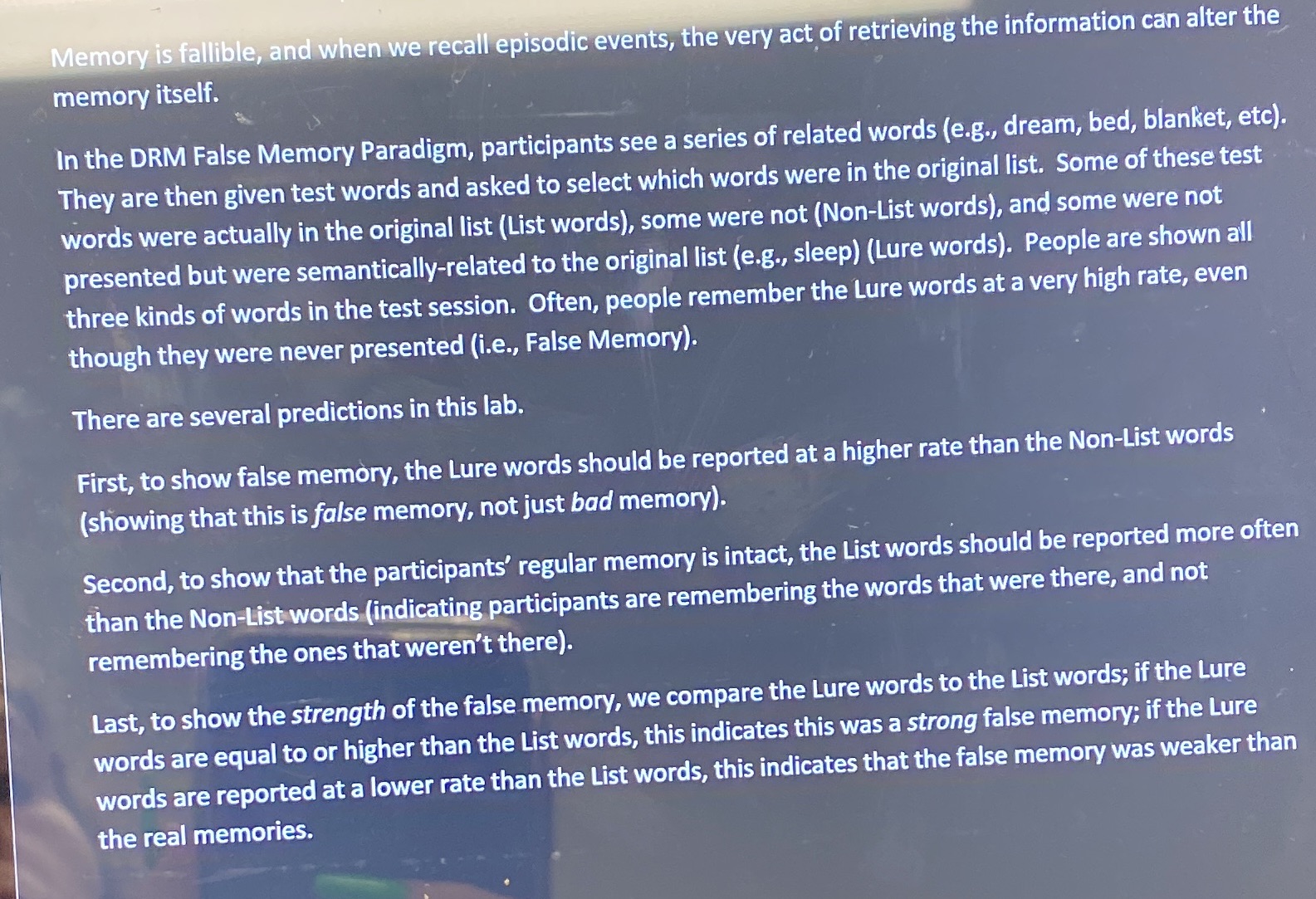
Memory is fallible, and when we recall episodic events, the very act of retrieving the information can alter the memory itself. In the DRM False Memory Paradigm, participants see a series of related words (e.g., dream, bed, blanket, etc). They are then given test words and asked to select which words were in the original list. Some of these test words were actually in the original list (List words), some were not (Non-List words), and some were not presented but were semantically-related to the original list (e.g., sleep) (Lure words). People are shown all three kinds of words in the test session. Often, people remember the Lure words at a very high rate, even though they were never presented (i.e., False Memory). There are several predictions in this lab. First, to show false memory, the Lure words should be reported at a higher rate than the Non-List words (showing that this is false memory, not just bad memory). Second, to show that the participants' regular memory is intact, the List words should be reported more often than the Non-List words (indicating participants are remembering the words that were there, and not remembering the ones that weren't there). Last, to show the strength of the false memory, we compare the Lure words to the List words; if the Lure words are equal to or higher than the List words, this indicates this was a strong false memory; if the Lure words are reported at a lower rate than the List words, this indicates that the false memory was weaker than the real memories
Step by Step Solution
There are 3 Steps involved in it

Get step-by-step solutions from verified subject matter experts
 Study Help