







Question: What is the null hypothesis & alternative hypothesis? Although empirical studies of motor development have tended to focus on physical and neurological factors, experiential factors
What is the null hypothesis & alternative hypothesis?
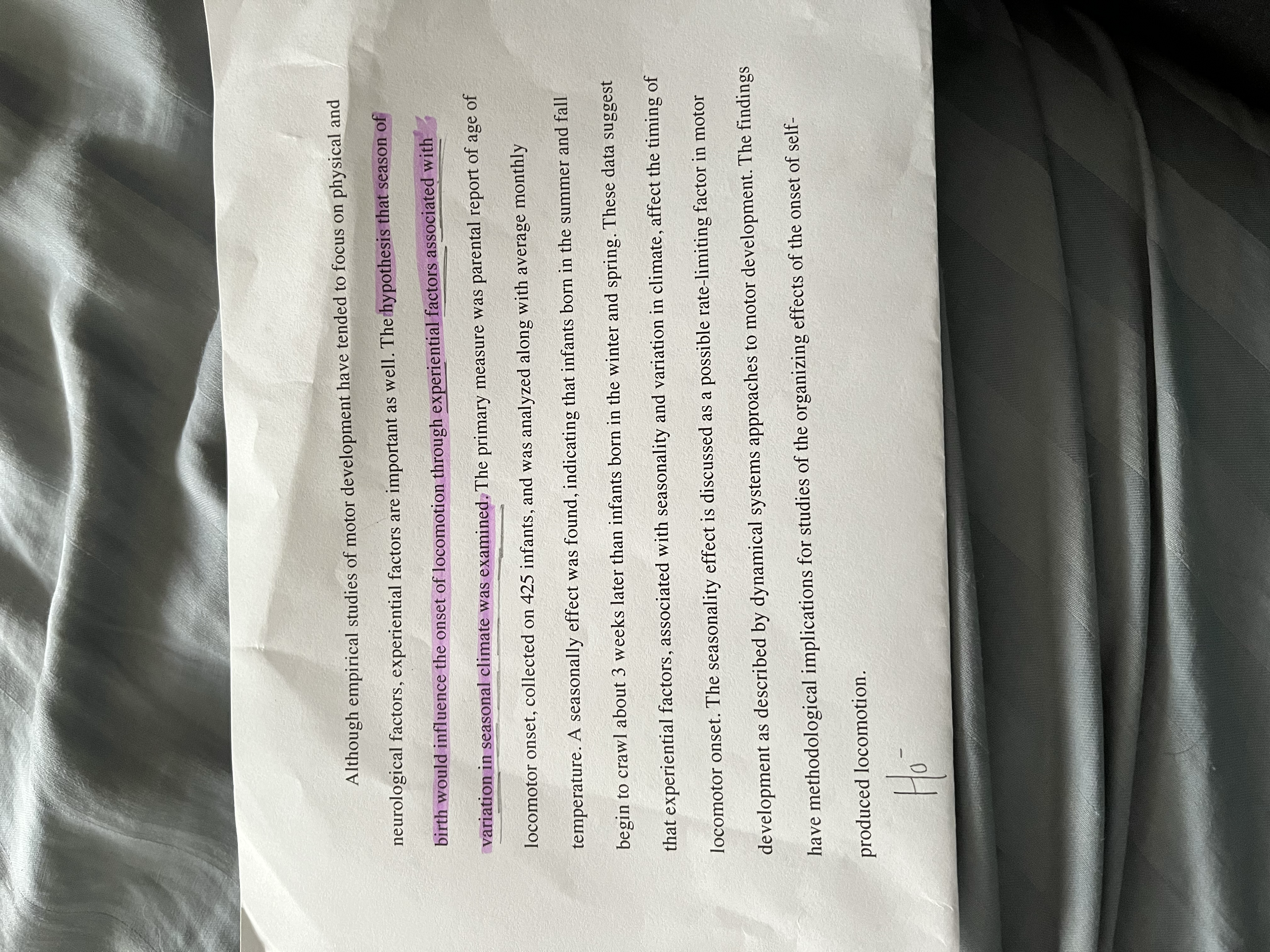
Although empirical studies of motor development have tended to focus on physical and neurological factors, experiential factors are important as well. The hypothesis that season of birth would influence the onset of locomotion through experiential factors associated with variation in seasonal climate was examined. The primary measure was parental report of age of locomotor onset, collected on 425 infants, and was analyzed along with average monthly temperature. A seasonally effect was found, indicating that infants born in the summer and fall begin to crawl about 3 weeks later than infants born in the winter and spring. These data suggest that experiential factors, associated with seasonality and variation in climate, affect the timing of locomotor onset. The seasonality effect is discussed as a possible rate-limiting factor in motor development as described by dynamical systems approaches to motor development. The findings have methodological implications for studies of the organizing effects of the onset of self- produced locomotion
Step by Step Solution
There are 3 Steps involved in it

Get step-by-step solutions from verified subject matter experts
 Study Help