







Question: What is the output of the following Python code? def printMax(a, b): if a >b: print(a, 'is maximum') elif a==b: print(a, 'is equal to', b)
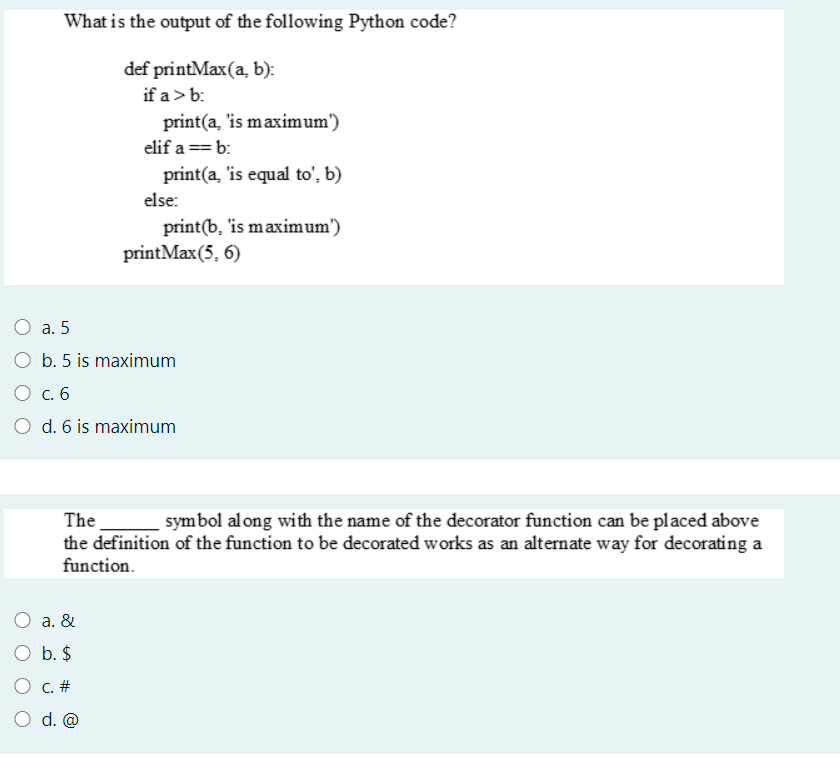
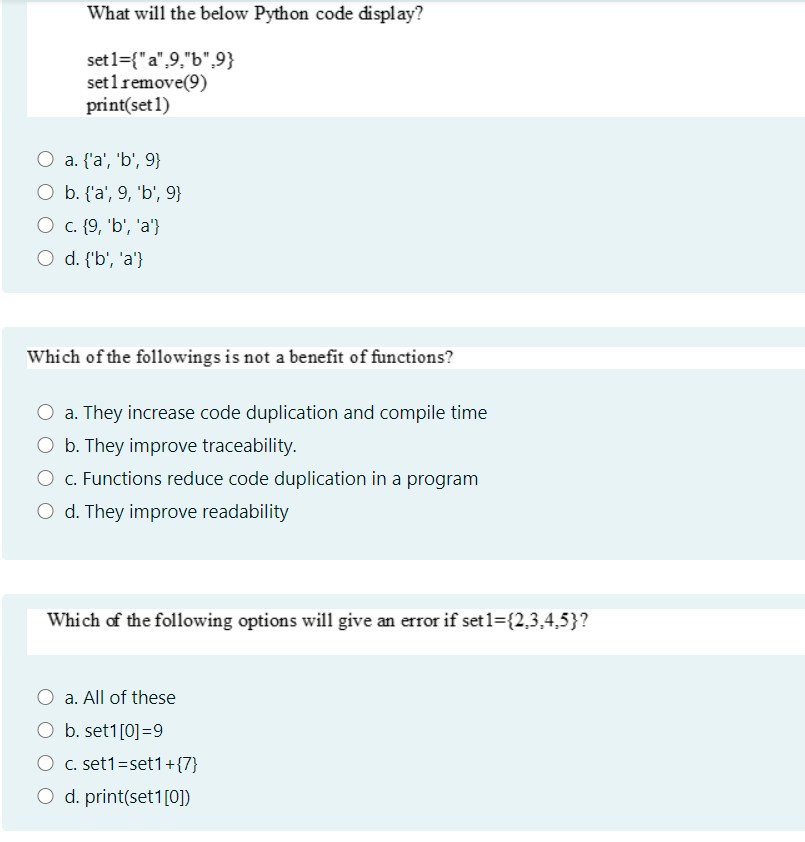
What is the output of the following Python code? def printMax(a, b): if a >b: print(a, 'is maximum') elif a==b: print(a, 'is equal to', b) else: print(b, 'is maximum') printMax(5.6) a. 5 O b. 5 is maximum O c. 6 O d. 6 is maximum The symbol along with the name of the decorator function can be placed above the definition of the function to be decorated works as an alternate way for decorating a function. a. & O b. $ O c. # d. @ What will the below Python code display? set 1={"a",9,"6",9} set 1 remove(9) print(set 1) O a. {'a', 'b', 9} O b. {'a', 9, 'b',9} O c. {9, 'b', 'a'} O d. {'b', 'a'} Which of the followings is not a benefit of functions? O a. They increase code duplication and compile time O b. They improve traceability. O c. Functions reduce code duplication in a program O d. They improve readability Which of the following options will give an error if set1={2.3.4.5}? a. All of these O b. set1[0]=9 O c. set1=set1 +{7} O d.print(set1[0])
Step by Step Solution
There are 3 Steps involved in it

Get step-by-step solutions from verified subject matter experts
 Study Help