







Question: What is the unit for electromotive force? Select your answer. newton joule ampere volt'Which of the following is not true about electromotive foroe? Select your
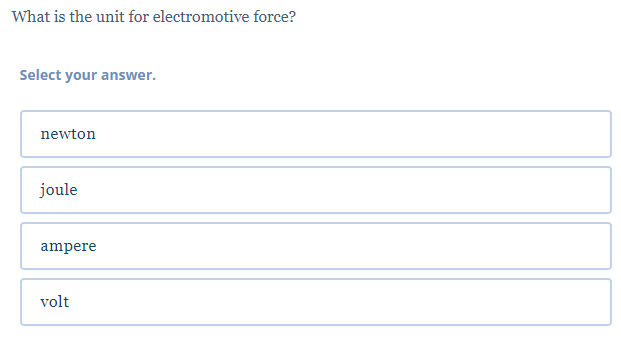
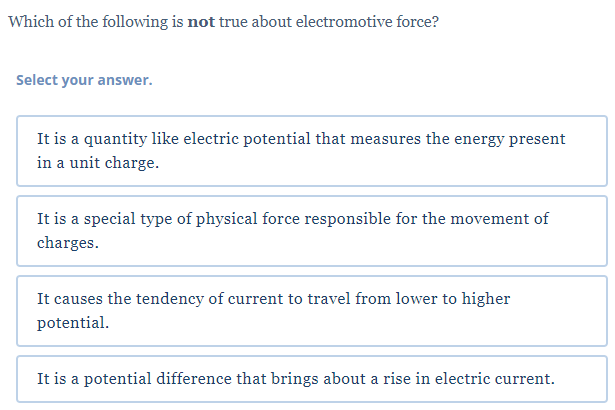
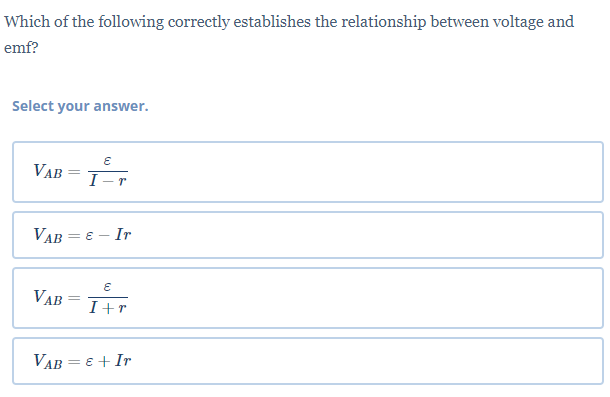
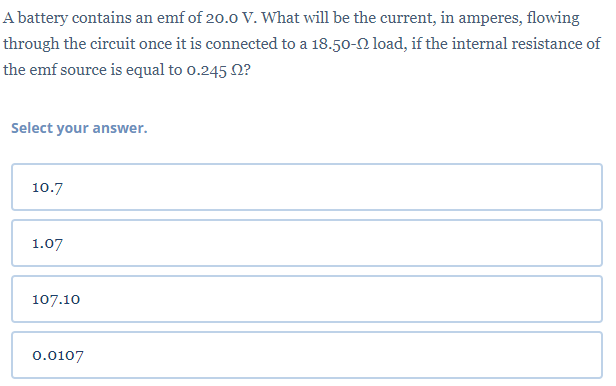
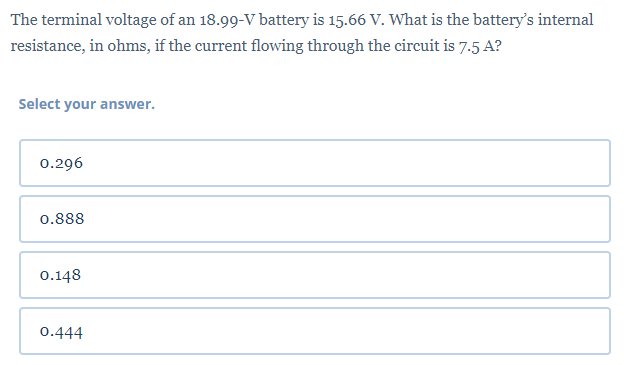
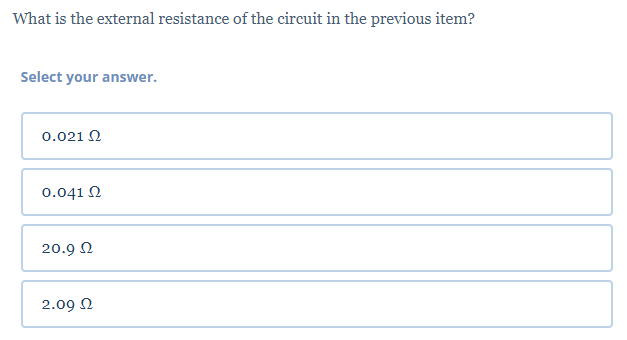
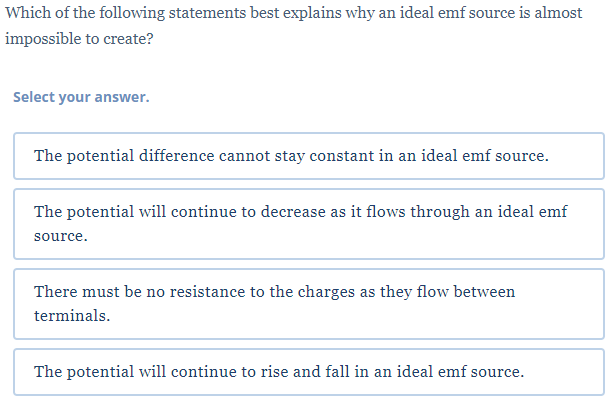
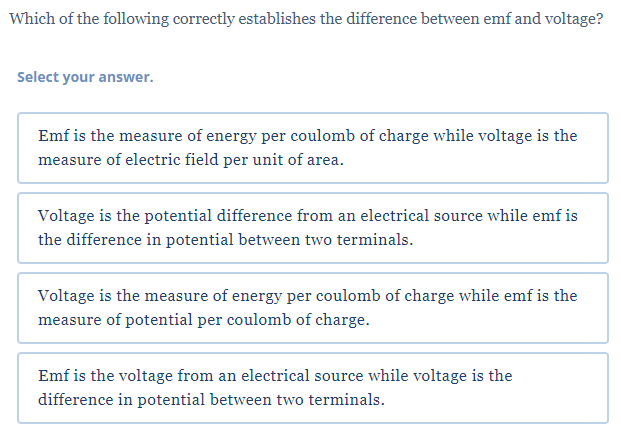
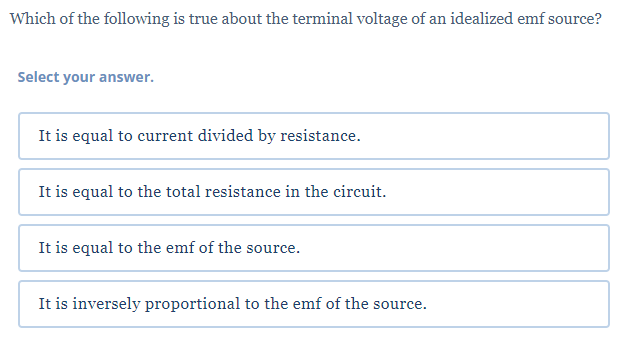
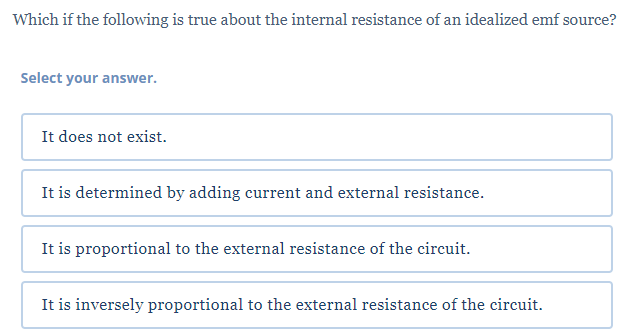
What is the unit for electromotive force? Select your answer. newton joule ampere volt'Which of the following is not true about electromotive foroe? Select your answer. It is a quantity like electric potential that measures the energy present in a unit charge. It is a special type of physical force responsible for the movement of charges. It causes the tendency of current to travel from lower to higher potential. It is a potential difference that brings about a rise in electric current. Which of the following correctly establishes the relationship between voltage and emf? Select your answer. A battery contains an emf of 20.0 V. What will be the current, in amperes, flowing through the circuit once it is connected to a 18.50-0 load, if the internal resistance of the emf source is equal to 0.245 0? Select your answer. 10.7 1.07 107.10 0.0107The terminal voltage of an 18.99Vbaen7 is 15. 55 V. What is the battery's internal resistance, in ohms= if the current owing through the circuit is 15 A? Select your answer. o.2o 0.333 o.148 0-444 What is the external resistance of the circuit in the previous item? Select your answer. 0.021 0 0.0410 20.9 0 2.09 0Which of the following statements best explains why an ideal emf source is almost impossible to create? Select your answer. The potential difference cannot stay constant in an ideal emf source. The potential will continue to decrease as it flows through an ideal emf source. There must be no resistance to the charges as they flow between terminals. The potential will continue to rise and fall in an ideal emf source.Which of the following correctly establishes the difference between emf and voltage? Select your answer. Emf is the measure of energy per coulomb of charge while voltage is the measure of electric field per unit of area. Voltage is the potential difference from an electrical source while emf is the difference in potential between two terminals. Voltage is the measure of energy per coulomb of charge while emf is the measure of potential per coulomb of charge. Emf is the voltage from an electrical source while voltage is the difference in potential between two terminals.1Which of the following is true about the terminal voltage of an idealized emf source? Select your answer. It is equal to current divided h}.F resistanoe. It is equal to the total resistance in the circuit. It is equal to the emf of the source. It is inversely,T proportional to the emf of the source. Which if the following is true about the internal resistance of an idealized emf source? Select your answer. It does not exist. It is determined by adding current and external resistance. It is proportional to the external resistance of the circuit. It is inversely proportional to the external resistance of the circuit
Step by Step Solution
There are 3 Steps involved in it

Get step-by-step solutions from verified subject matter experts
 Study Help