







Question: What management skills does CEO Robert Wright bring to Potbelly? 2.Why do you think Potbelly appointed new high-level managers In 1977, Peter Hastings and his
- What management skills does CEO Robert Wright bring to Potbelly? 2.Why do you think Potbelly appointed new high-level managers
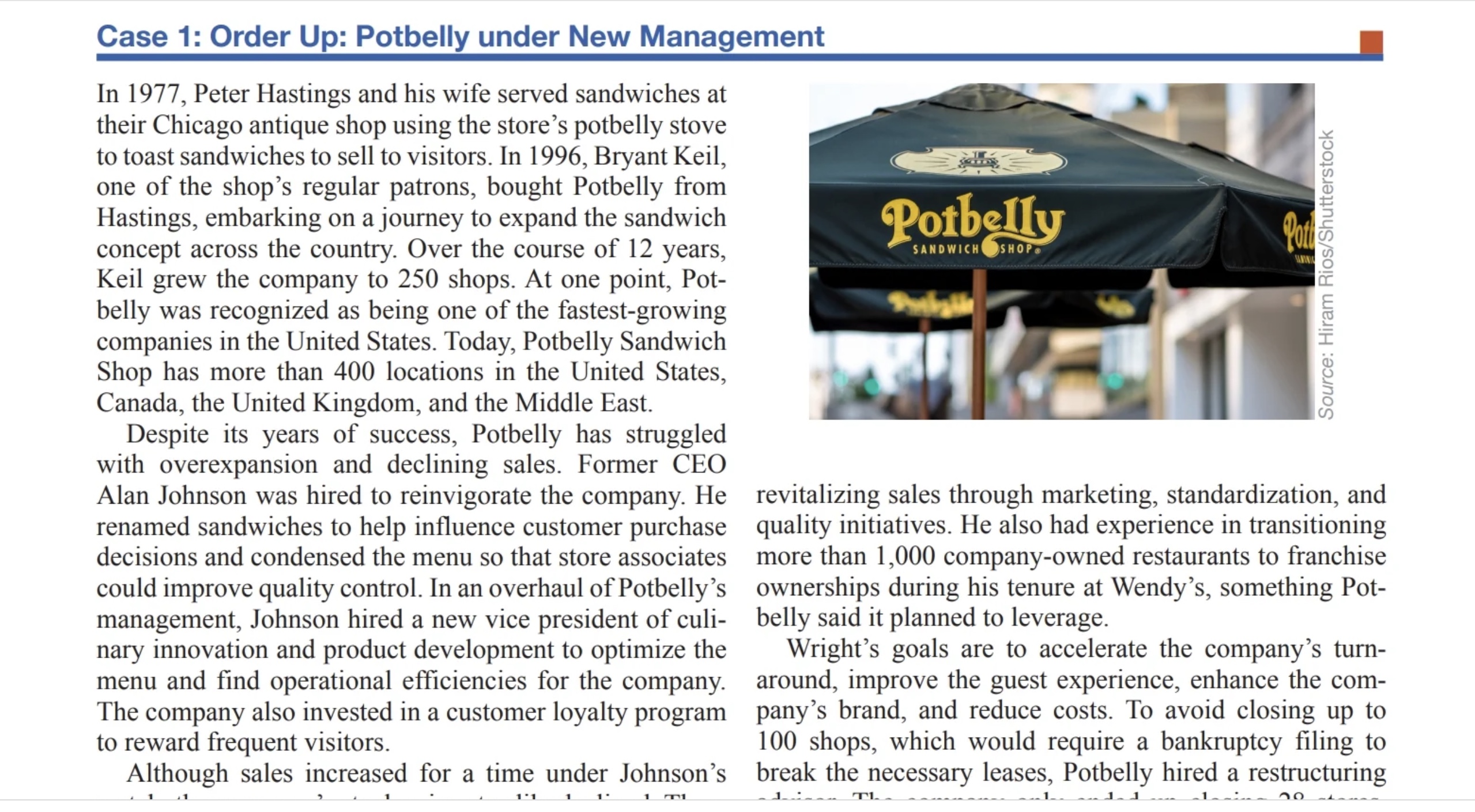
In 1977, Peter Hastings and his wife served sandwiches at their Chicago antique shop using the store's potbelly stove to toast sandwiches to sell to visitors. In 1996, Bryant Keil, one of the shop's regular patrons, bought Potbelly from Hastings, embarking on a journey to expand the sandwich concept across the country. Over the course of 12 years, Keil grew the company to 250 shops. At one point, Potbelly was recognized as being one of the fastest-growing companies in the United States. Today, Potbelly Sandwich Shop has more than 400 locations in the United States, Canada, the United Kingdom, and the Middle East. Despite its years of success, Potbelly has struggled with overexpansion and declining sales. Former CEO Alan Johnson was hired to reinvigorate the company. He renamed sandwiches to help influence customer purchase decisions and condensed the menu so that store associates could improve quality control. In an overhaul of Potbelly's management, Johnson hired a new vice president of culinary innovation and product development to optimize the menu and find operational efficiencies for the company. The company also invested in a customer loyalty program to reward frequent visitors. Although sales increased for a time under Johnson's revitalizing sales through marketing, standardization, and quality initiatives. He also had experience in transitioning more than 1,000 company-owned restaurants to franchise ownerships during his tenure at Wendy's, something Potbelly said it planned to leverage. Wright's goals are to accelerate the company's turnaround, improve the guest experience, enhance the company's brand, and reduce costs. To avoid closing up to 100 shops, which would require a bankruptcy filing to break the necessary leases, Potbelly hired a restructuring In 1977, Peter Hastings and his wife served sandwiches at their Chicago antique shop using the store's potbelly stove to toast sandwiches to sell to visitors. In 1996, Bryant Keil, one of the shop's regular patrons, bought Potbelly from Hastings, embarking on a journey to expand the sandwich concept across the country. Over the course of 12 years, Keil grew the company to 250 shops. At one point, Potbelly was recognized as being one of the fastest-growing companies in the United States. Today, Potbelly Sandwich Shop has more than 400 locations in the United States, Canada, the United Kingdom, and the Middle East. Despite its years of success, Potbelly has struggled with overexpansion and declining sales. Former CEO Alan Johnson was hired to reinvigorate the company. He renamed sandwiches to help influence customer purchase decisions and condensed the menu so that store associates could improve quality control. In an overhaul of Potbelly's management, Johnson hired a new vice president of culinary innovation and product development to optimize the menu and find operational efficiencies for the company. The company also invested in a customer loyalty program to reward frequent visitors. Although sales increased for a time under Johnson's revitalizing sales through marketing, standardization, and quality initiatives. He also had experience in transitioning more than 1,000 company-owned restaurants to franchise ownerships during his tenure at Wendy's, something Potbelly said it planned to leverage. Wright's goals are to accelerate the company's turnaround, improve the guest experience, enhance the company's brand, and reduce costs. To avoid closing up to 100 shops, which would require a bankruptcy filing to break the necessary leases, Potbelly hired a restructuring
Step by Step Solution
There are 3 Steps involved in it

Get step-by-step solutions from verified subject matter experts
 Study Help