



Question: What resonated with you about the research that Dr. Galway shared? What do you think would be important future research related to the issue
What resonated with you about the research that Dr. Galway shared?
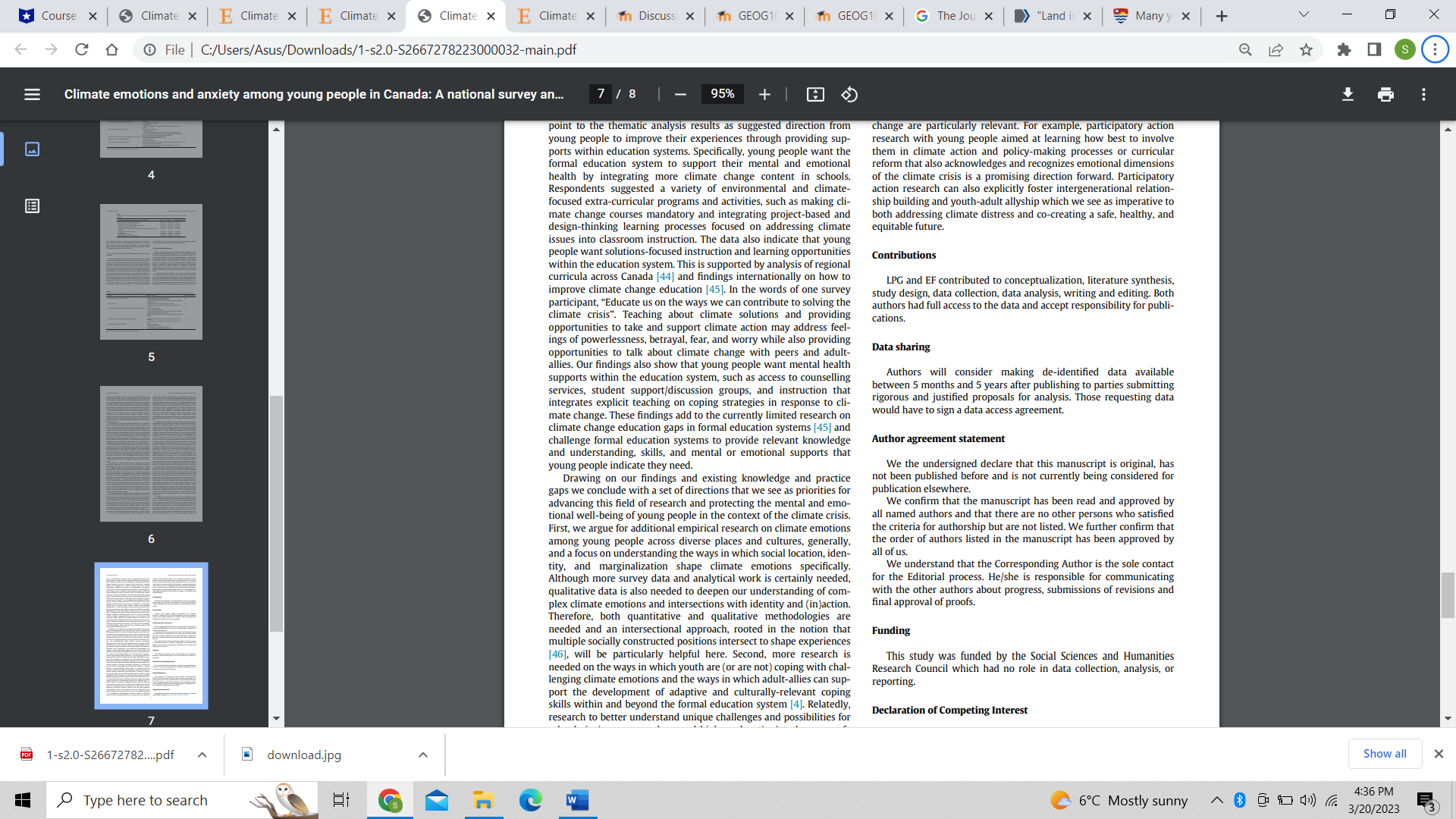
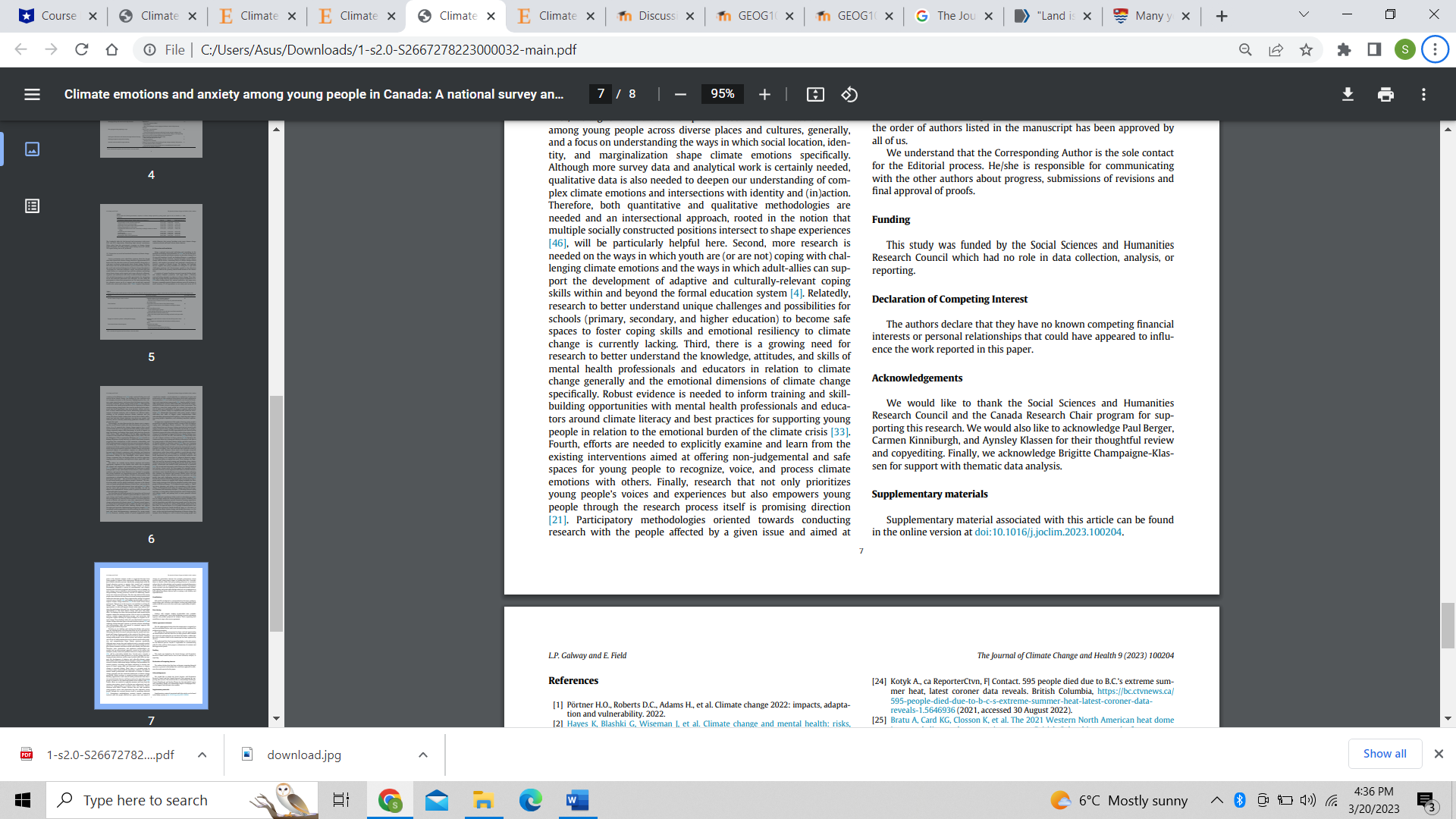
What do you think would be important future research related to the issue of climate anxiety among young people?
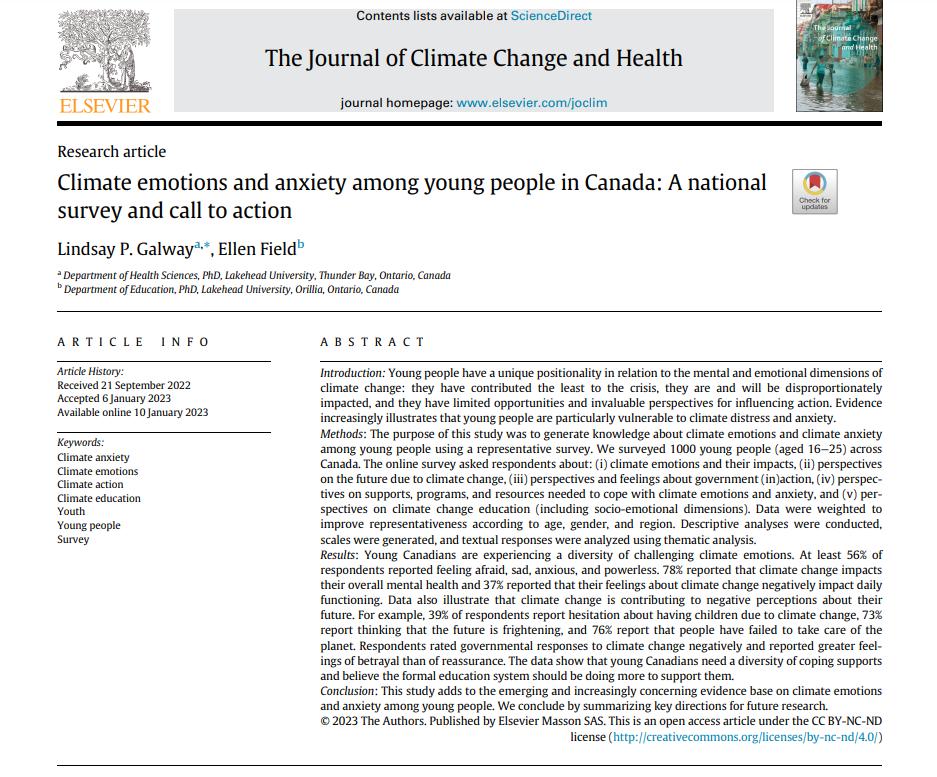
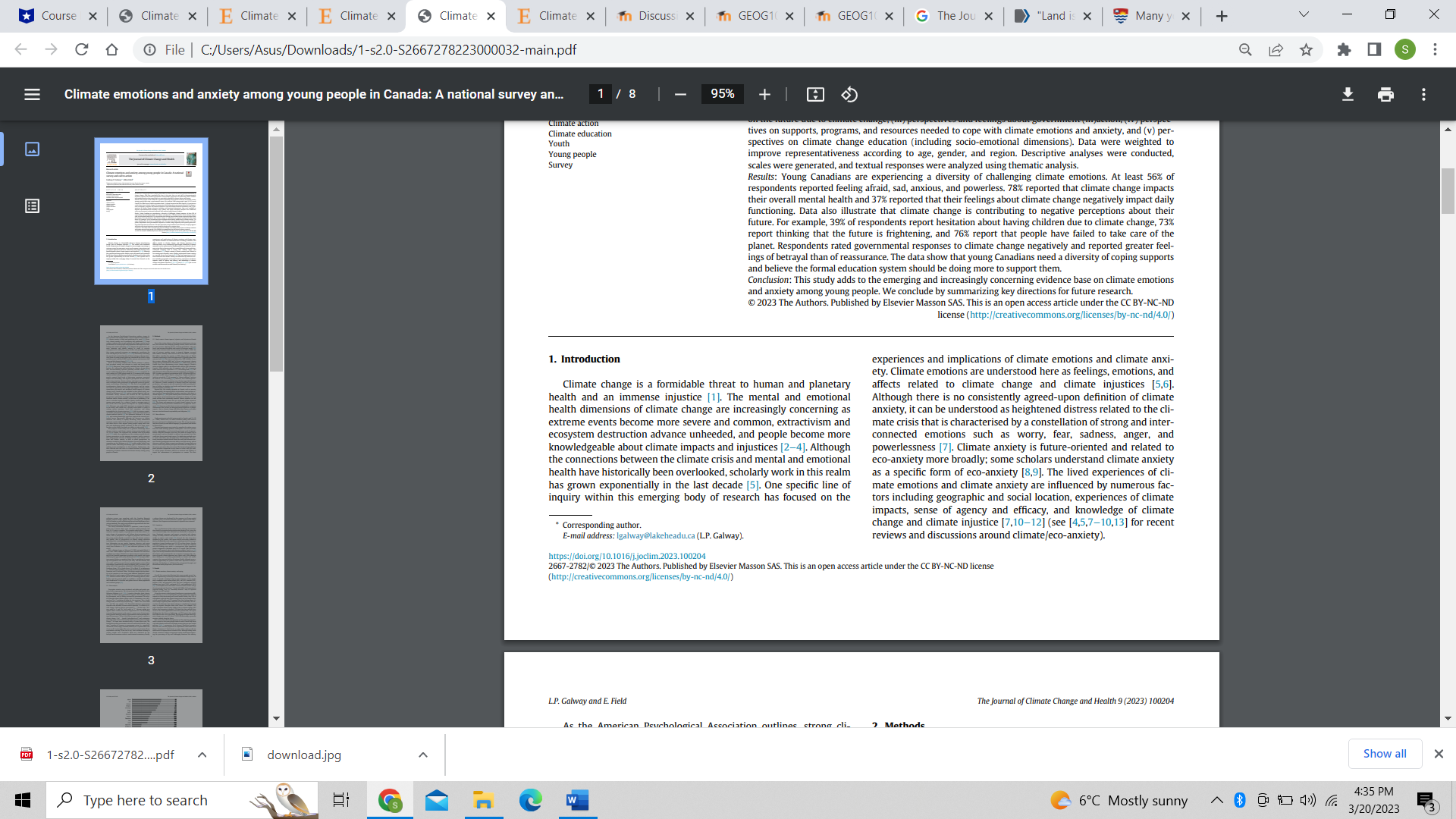
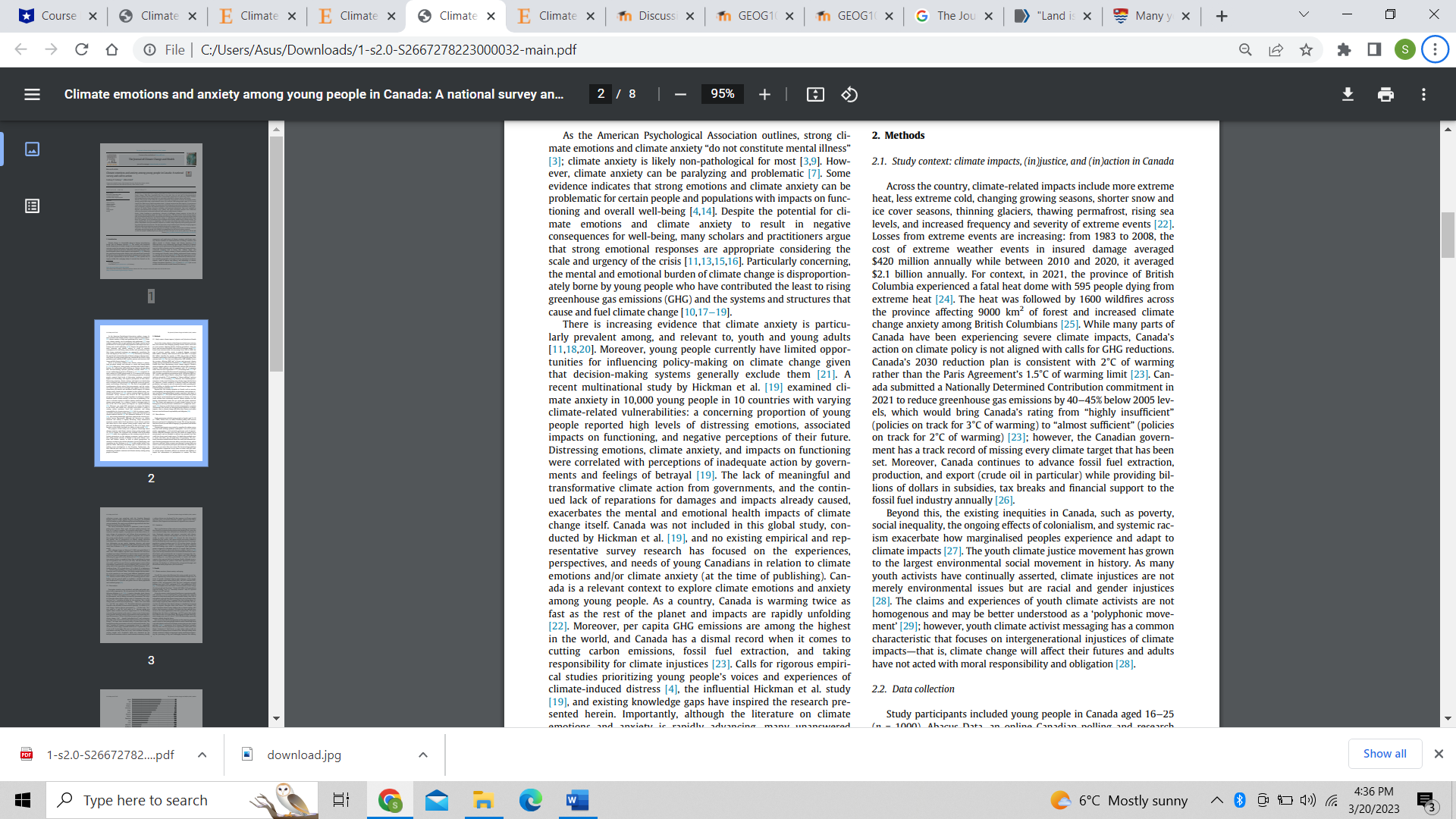
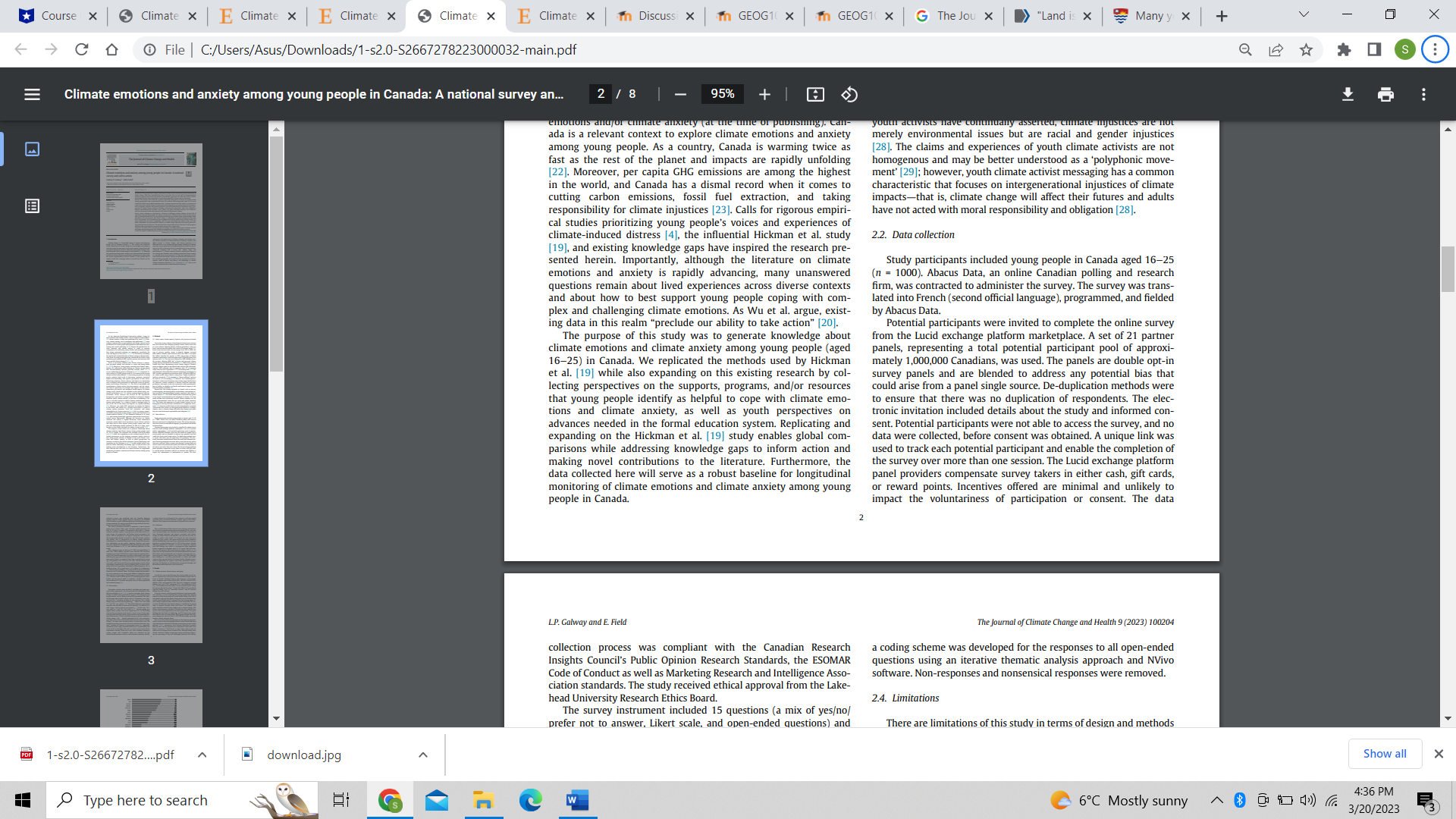
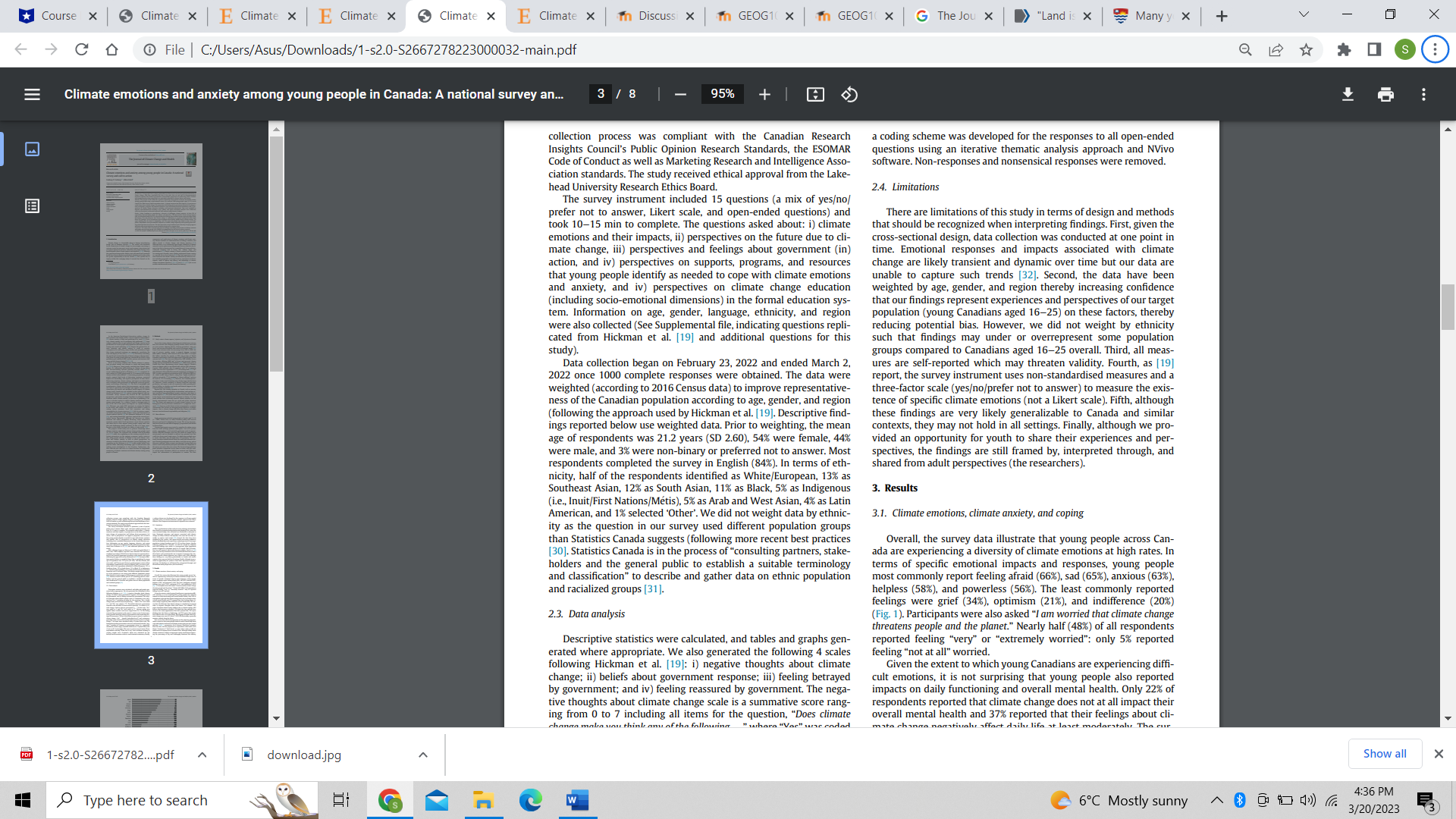
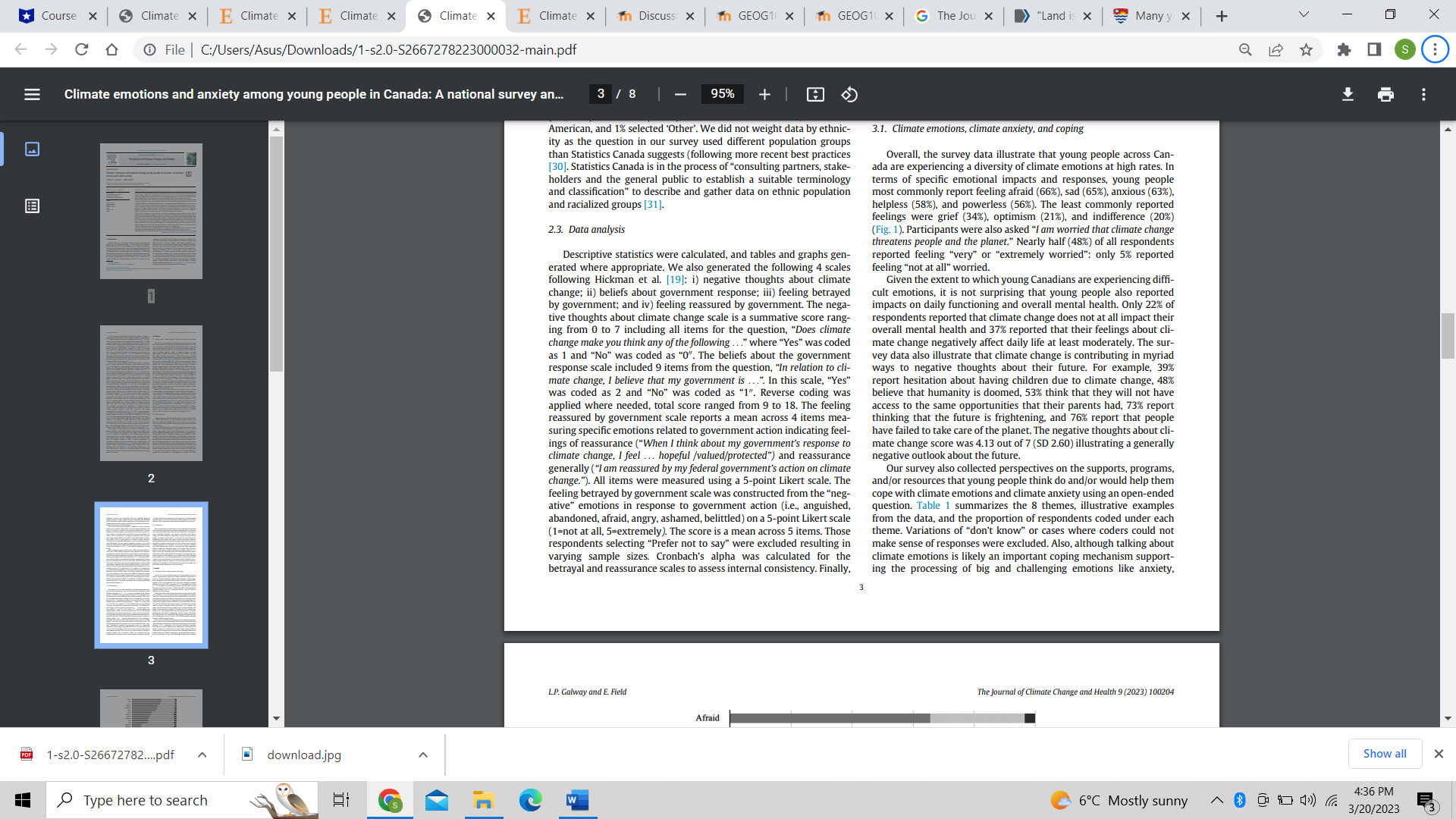
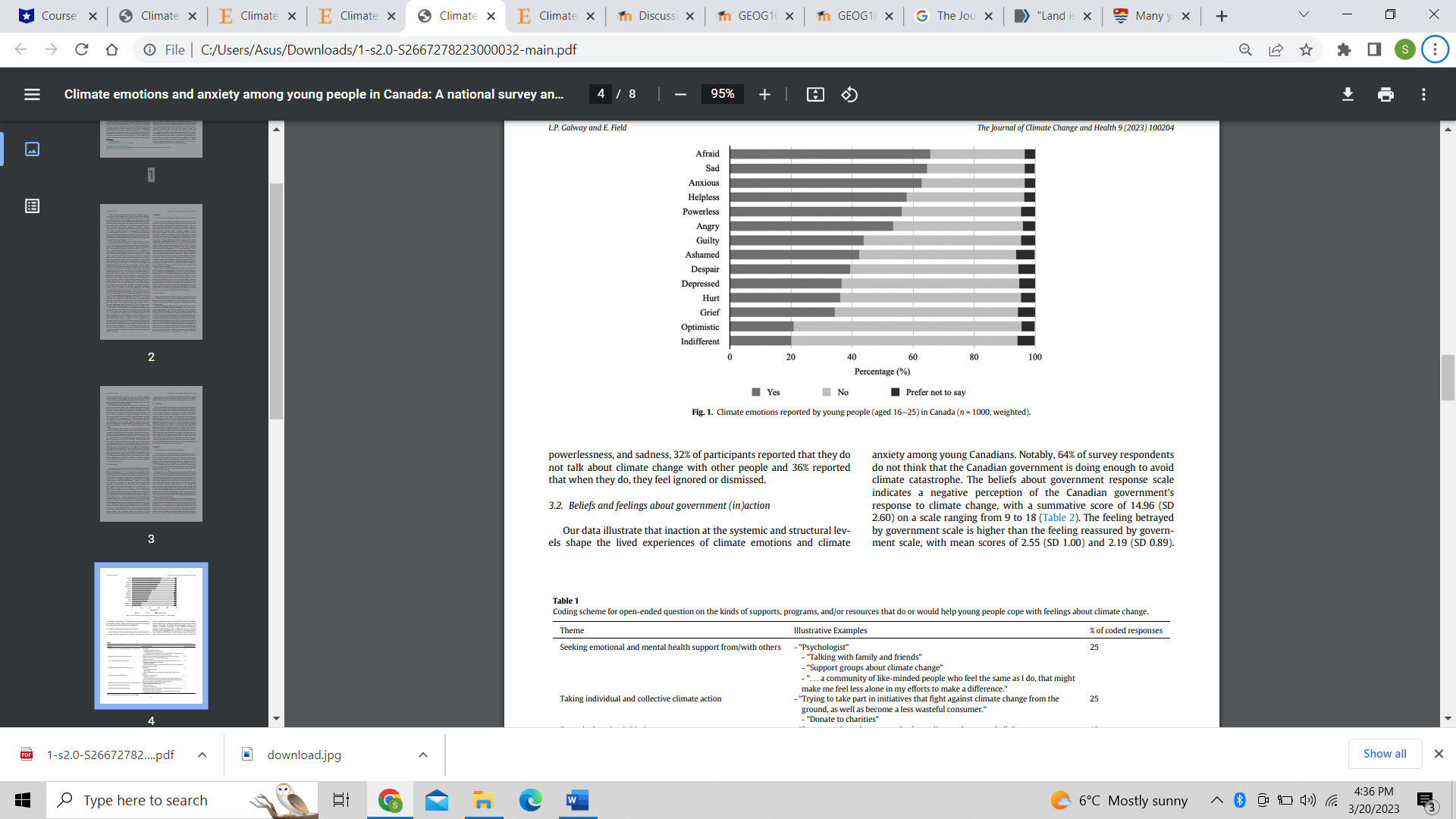
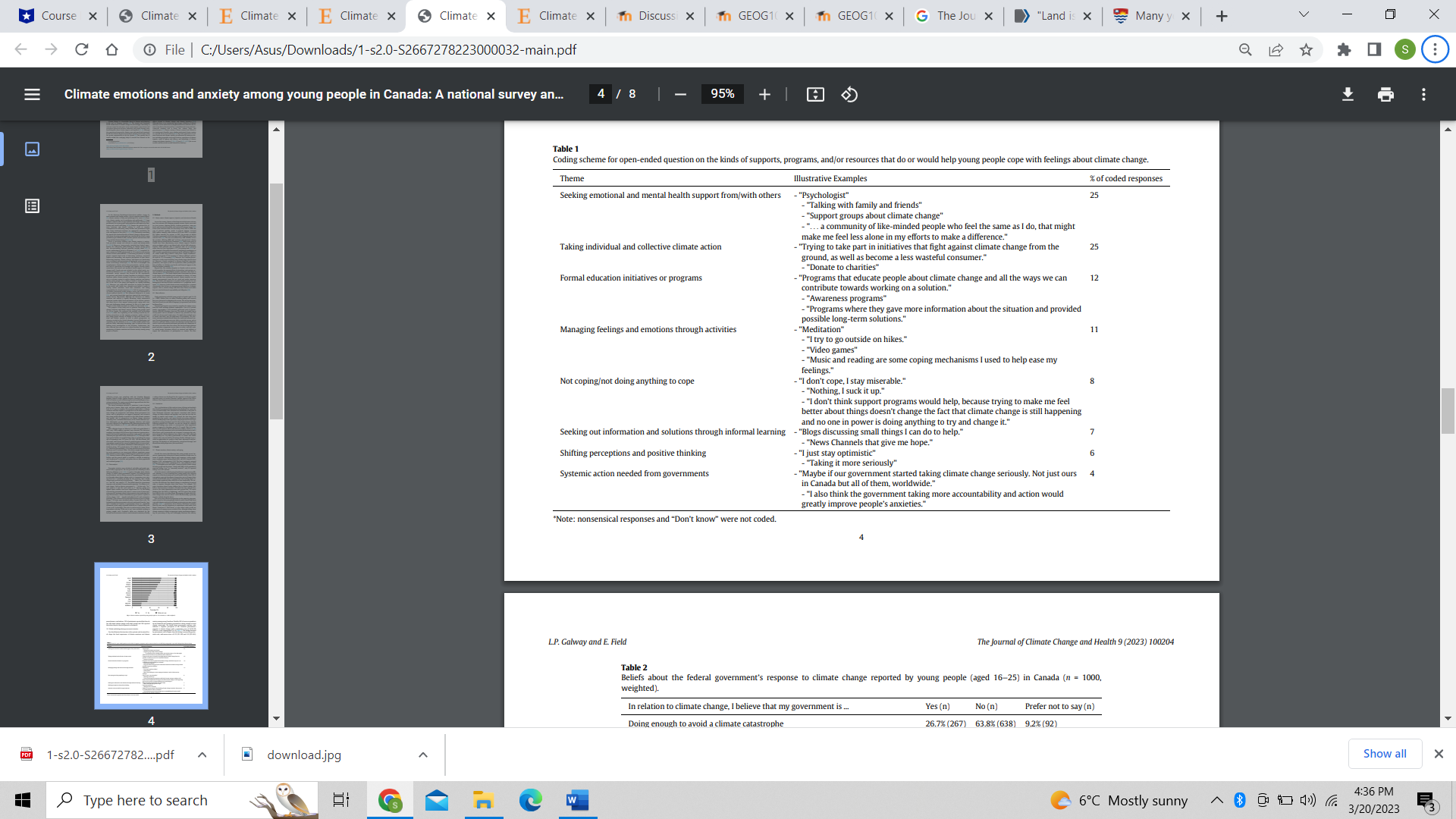
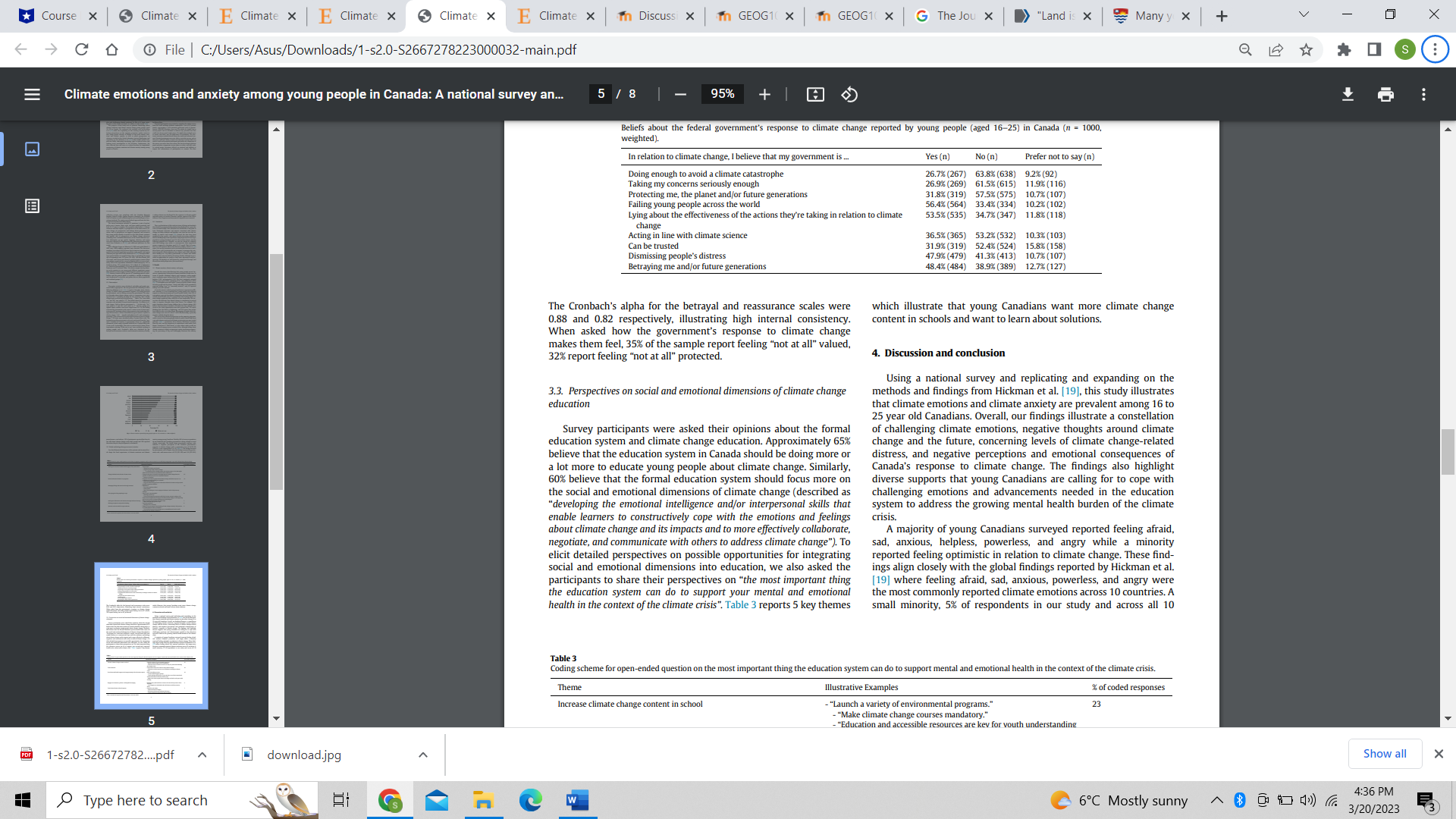
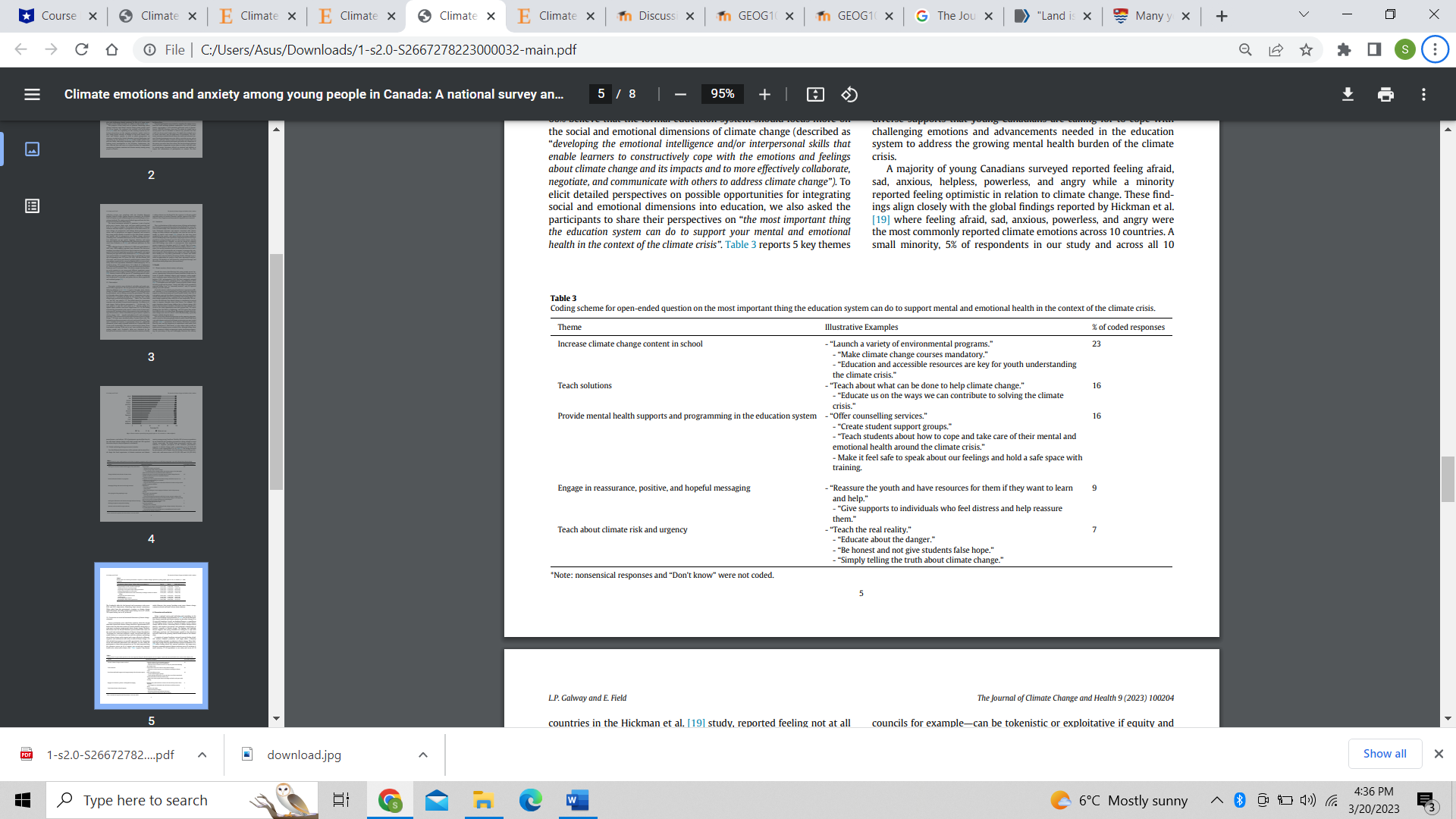
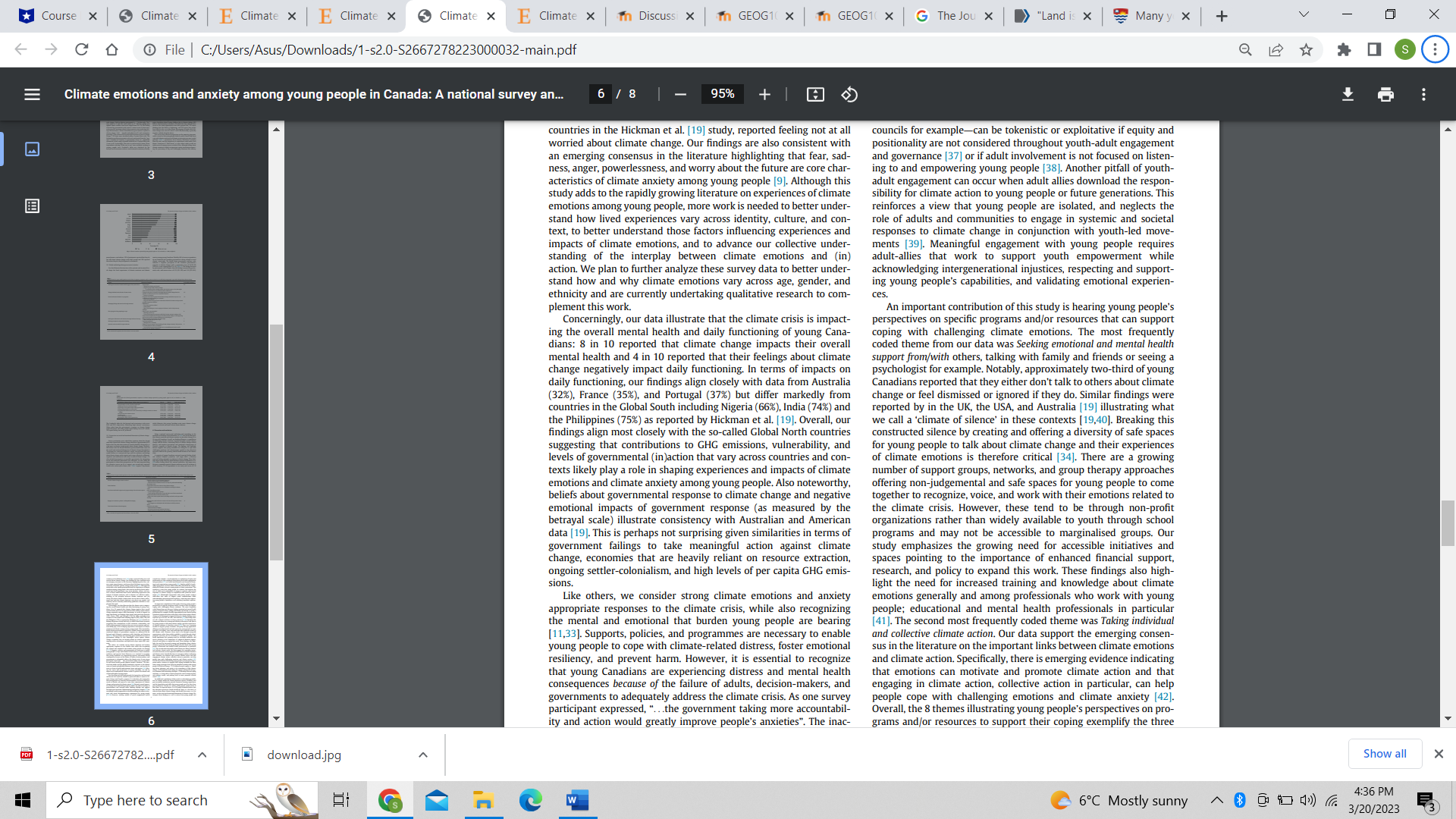
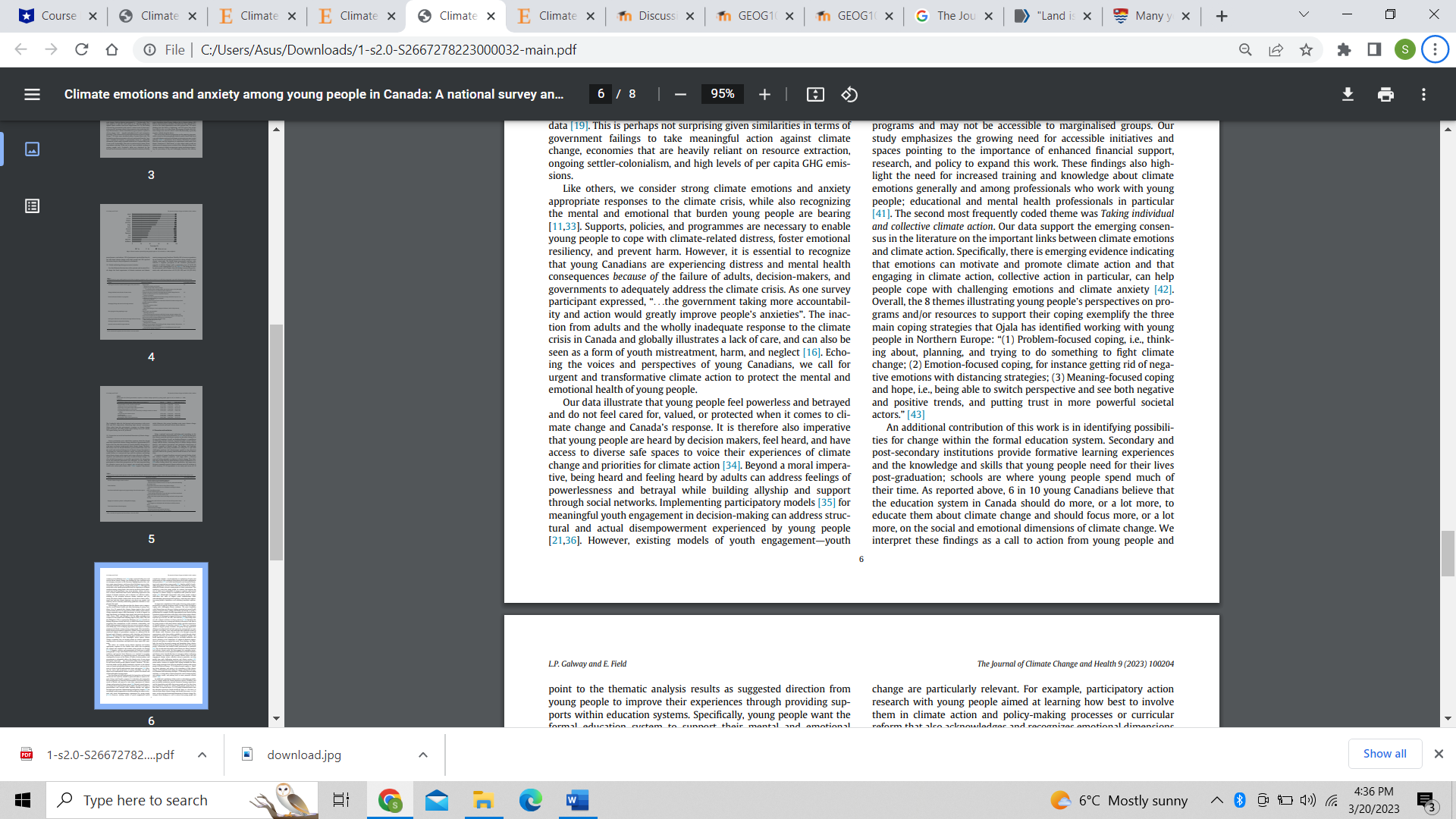
Contents lists available at ScienceDirect The Journal of Climate Change and Health journal homepage: www.elsevier.com/joclim The Journal of Climate Change and Health ELSEVIER Research article Climate emotions and anxiety among young people in Canada: A national survey and call to action Lindsay P. Galway,*, Ellen Fieldb "Department of Health Sciences, PhD, Lakehead University, Thunder Bay, Ontario, Canada b Department of Education, PhD, Lakehead University, Orillia, Ontario, Canada Check for updates ARTICLE INFO Article History: Received 21 September 2022 Accepted 6 January 2023 Available online 10 January 2023 Keywords: Climate anxiety Climate emotions Climate action Climate education Youth Young people Survey ABSTRACT Introduction: Young people have a unique positionality in relation to the mental and emotional dimensions of climate change: they have contributed the least to the crisis, they are and will be disproportionately impacted, and they have limited opportunities and invaluable perspectives for influencing action. Evidence increasingly illustrates that young people are particularly vulnerable to climate distress and anxiety. Methods: The purpose of this study was to generate knowledge about climate emotions and climate anxiety among young people using a representative survey. We surveyed 1000 young people (aged 16-25) across Canada. The online survey asked respondents about: (i) climate emotions and their impacts, (ii) perspectives on the future due to climate change, (iii) perspectives and feelings about government (in)action, (iv) perspec- tives on supports, programs, and resources needed to cope with climate emotions and anxiety, and (v) per- spectives on climate change education (including socio-emotional dimensions). Data were weighted to improve representativeness according to age, gender, and region. Descriptive analyses were conducted, scales were generated, and textual responses were analyzed using thematic analysis. Results: Young Canadians are experiencing a diversity of challenging climate emotions. At least 56% of respondents reported feeling afraid, sad, anxious, and powerless. 78% reported that climate change impacts their overall mental health and 37% reported that their feelings about climate change negatively impact daily functioning. Data also illustrate that climate change is contributing to negative perceptions about their future. For example, 39% of respondents report hesitation about having children due to climate change, 73% report thinking that the future is frightening, and 76% report that people have failed to take care of the planet. Respondents rated governmental responses to climate change negatively and reported greater feel- ings of betrayal than of reassurance. The data show that young Canadians need a diversity of coping supports and believe the formal education system should be doing more to support them. Conclusion: This study adds to the emerging and increasingly concerning evidence base on climate emotions and anxiety among young people. We conclude by summarizing key directions for future research. 2023 The Authors. Published by Elsevier Masson SAS. This is an open access article under the CC BY-NC-ND license (http://creativecommons.org/licenses/by-nc-nd/4.0/)
Step by Step Solution
3.41 Rating (148 Votes )
There are 3 Steps involved in it
This research by Dr Galway resonates with me for a few reasons Like many young Canadians in the study around 78 I have experienced negative emotions a... View full answer

Get step-by-step solutions from verified subject matter experts