







Question: When analyzing a special order, the assumption is that: ; a. the special order can be fulfilled within the normal operating capacity of the plant
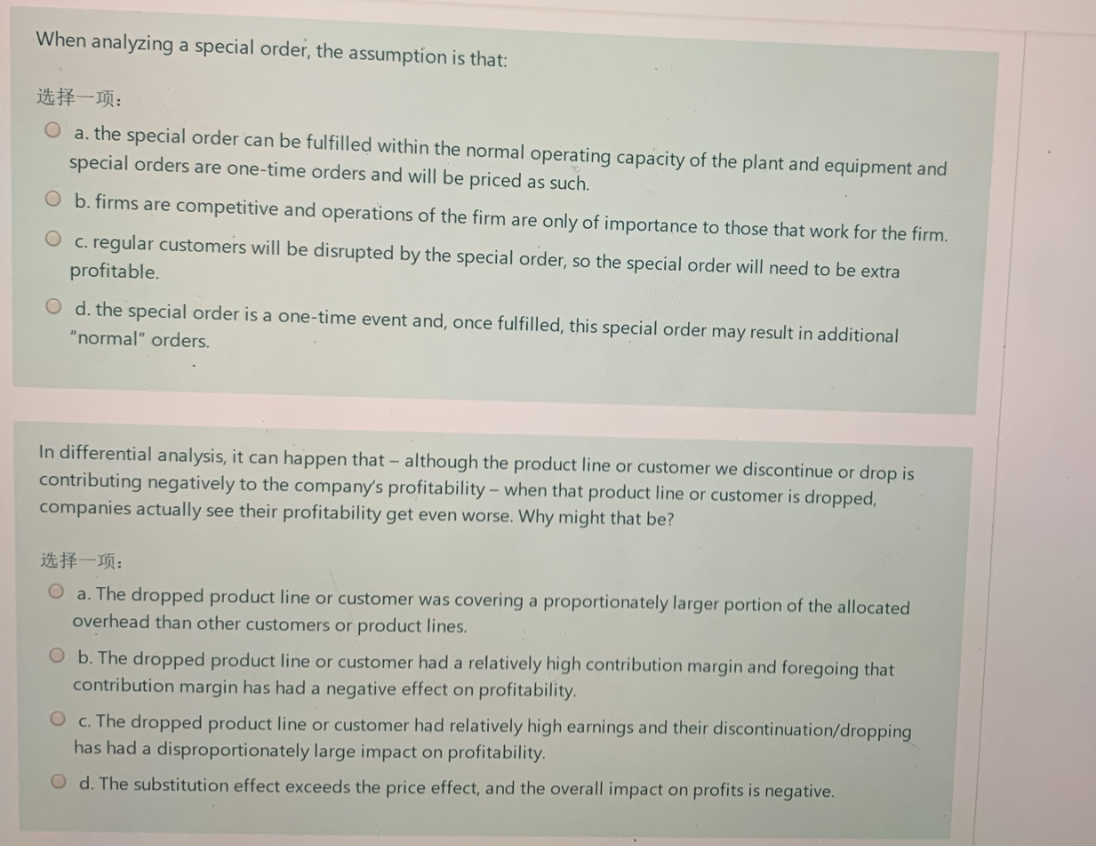
When analyzing a special order, the assumption is that: ; a. the special order can be fulfilled within the normal operating capacity of the plant and equipment and special orders are one-time orders and will be priced as such. O b. firms are competitive and operations of the firm are only of importance to those that work for the firm. O C. regular customers will be disrupted by the special order, so the special order will need to be extra profitable. O d. the special order is a one-time event and, once fulfilled, this special order may result in additional "normal" orders. In differential analysis, it can happen that - although the product line or customer we discontinue or drop is contributing negatively to the company's profitability when that product line or customer is dropped, companies actually see their profitability get even worse. Why might that be? ; a. The dropped product line or customer was covering a proportionately larger portion of the allocated overhead than other customers or product lines. b. The dropped product line or customer had a relatively high contribution margin and foregoing that contribution margin has had a negative effect on profitability. O c. The dropped product line or customer had relatively high earnings and their discontinuation/dropping has had a disproportionately large impact on profitability. Od. The substitution effect exceeds the price effect, and the overall impact on profits is negative
Step by Step Solution
There are 3 Steps involved in it

Get step-by-step solutions from verified subject matter experts
 Study Help