







Question: When looking at the loss causation problem - solving model, you should evaluate to see where and how the threshold limit was reached to create
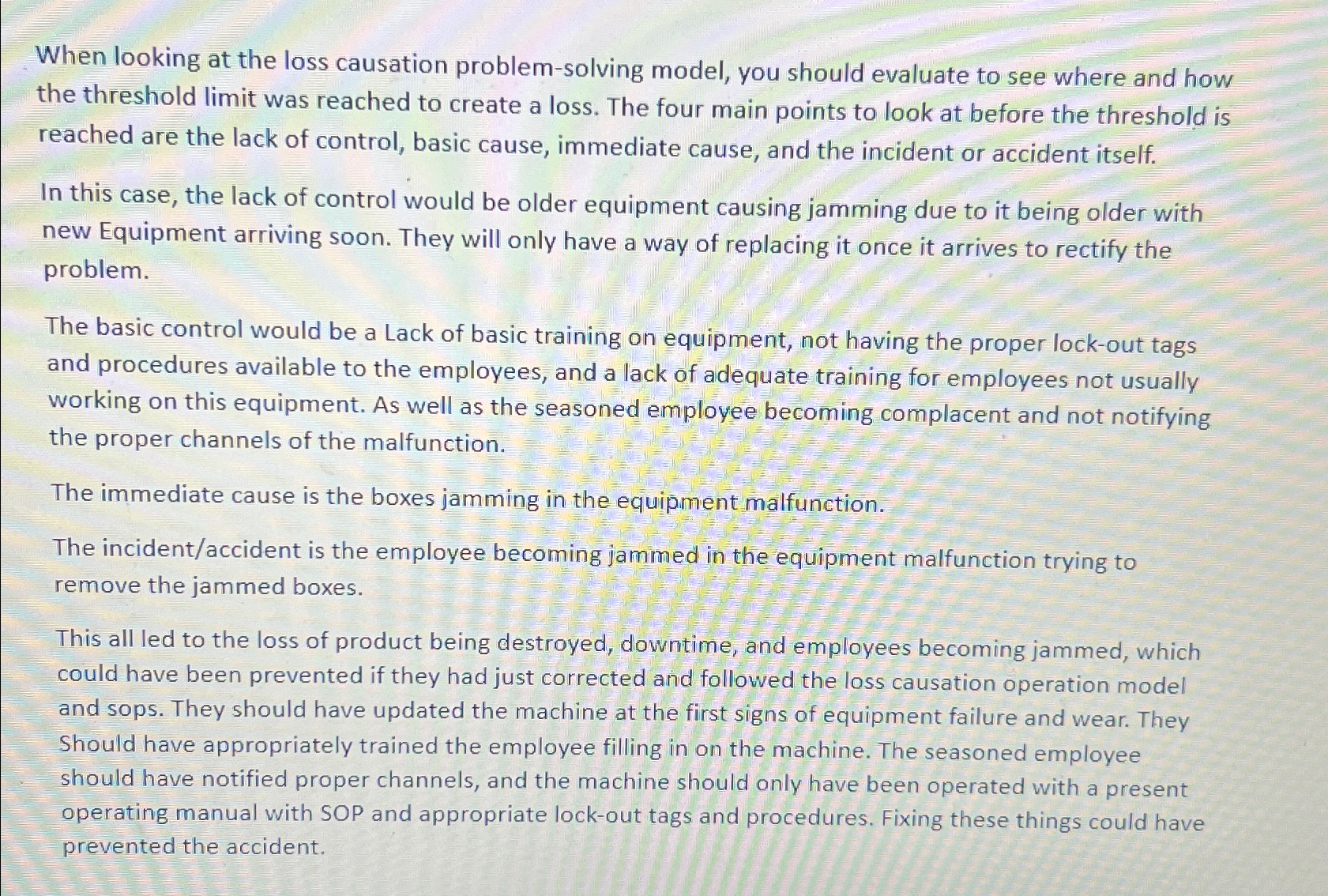
When looking at the loss causation problemsolving model, you should evaluate to see where and how the threshold limit was reached to create a loss. The four main points to look at before the threshold is reached are the lack of control, basic cause, immediate cause, and the incident or accident itself.
In this case, the lack of control would be older equipment causing jamming due to it being older with new Equipment arriving soon. They will only have a way of replacing it once it arrives to rectify the problem.
The basic control would be a Lack of basic training on equipment, not having the proper lockout tags and procedures available to the employees, and a lack of adequate training for employees not usually working on this equipment. As well as the seasoned employee becoming complacent and not notifying the proper channels of the malfunction.
The immediate cause is the boxes jamming in the equipment malfunction.
The incidentaccident is the employee becoming jammed in the equipment malfunction trying to remove the jammed boxes.
This all led to the loss of product being destroyed, downtime, and employees becoming jammed, which could have been prevented if they had just corrected and followed the loss causation operation model and sops. They should have updated the machine at the first signs of equipment failure and wear. They Should have appropriately trained the employee filling in on the machine. The seasoned employee should have notified proper channels, and the machine should only have been operated with a present operating manual with SOP and appropriate lockout tags and procedures. Fixing these things could have prevented the accident.
Step by Step Solution
There are 3 Steps involved in it
1 Expert Approved Answer
Step: 1 Unlock

Question Has Been Solved by an Expert!
Get step-by-step solutions from verified subject matter experts
Step: 2 Unlock
Step: 3 Unlock
 Study Help