







Question: When you performed null hypothesis tests for two samples using a z-test, what can you conclude about the population growth rate of both samples under
When you performed null hypothesis tests for two samples using a z-test, what can you conclude about the population growth rate of both samples under consideration if you rejected the null hypothesis?
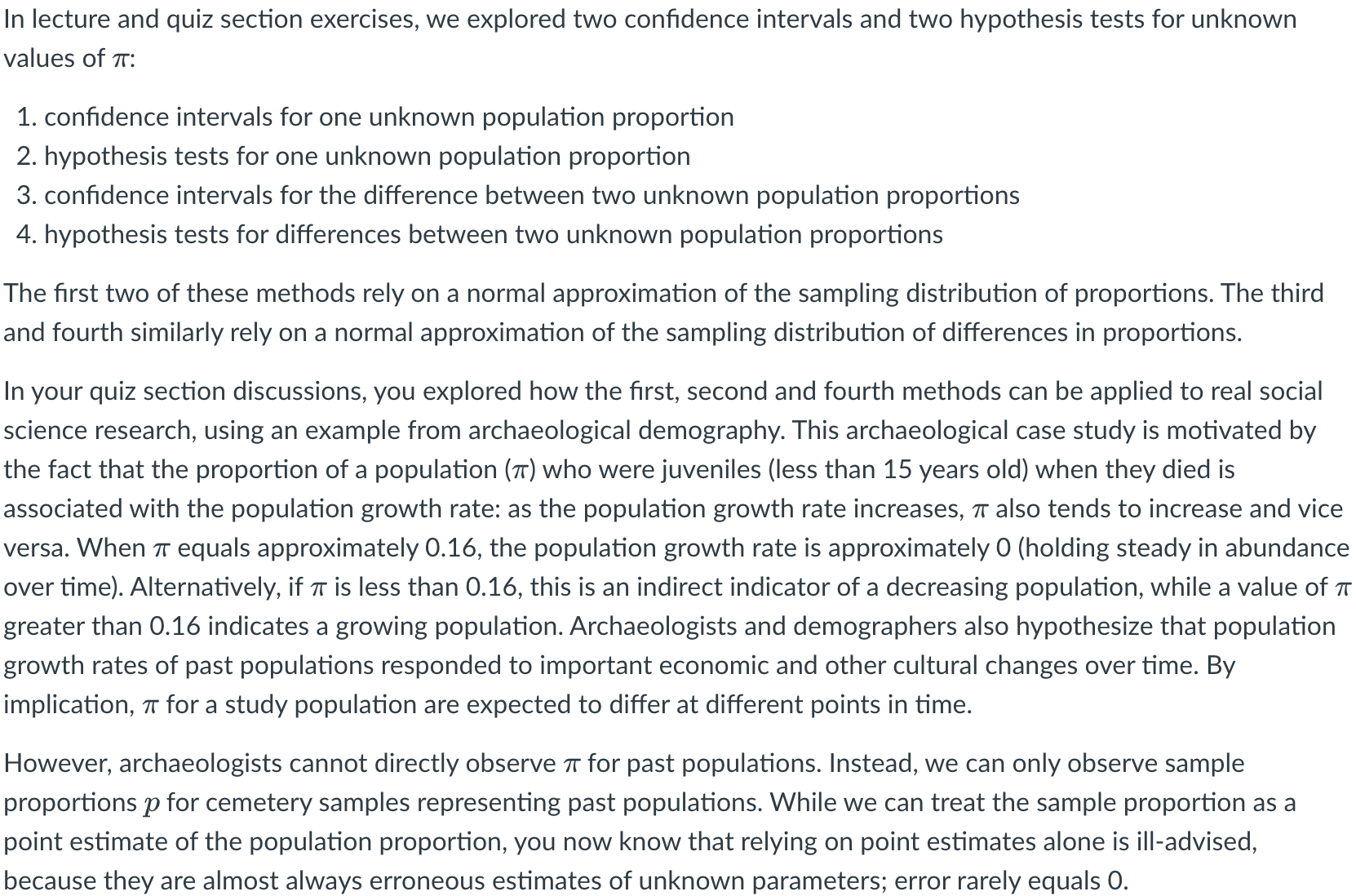
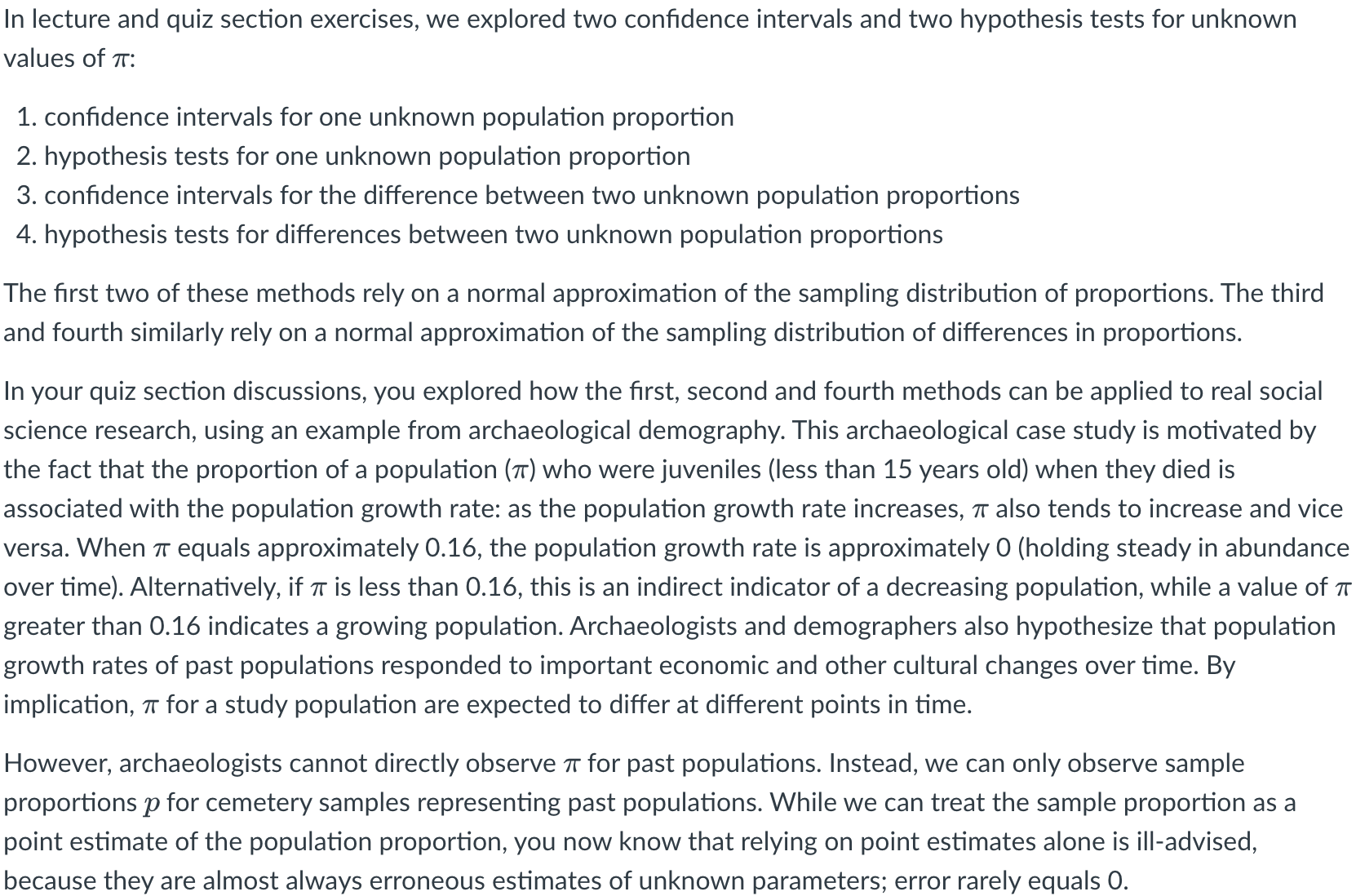
In lecture and quiz section exercises, we explored two condence intervals and two hypothesis tests for unknown values of 1r: 1. condence intervals for one unknown population proportion 2. hypothesis tests for one unknown population proportion 3. condence intervals for the difference between two unknown population proportions 4. hypothesis tests for differences between two unknown population proportions The rst two of these methods rely on a normal approximation of the sampling distribution of proportions. The third and fourth similarly rely on a normal approximation of the sampling distribution of differences in proportions. In your quiz section discussions, you explored how the rst, second and fourth methods can be applied to real social science research, using an example from archaeological demography. This archaeological case study is motivated by the fact that the proportion of a population (7r) who were juveniles (less than 15 years old) when they died is associated with the population growth rate: as the population growth rate increases, 1r also tends to increase and vice versa. When 1r equals approximately 0.16, the population growth rate is approximately 0 (holding steady in abundance over time). Alternatively, if 7r is less than 0.16, this is an indirect indicator of a decreasing population, while a value of 71' greater than 0.16 indicates a growing population. Archaeologists and demographers also hypothesize that population growth rates of past populations responded to important economic and other cultural changes over time. By implication, 1r for a study population are expected to differ at different points in time. However, archaeologists cannot directly observe 7r for past populations. Instead, we can only observe sample proportions p for cemetery samples representing past populations. While we can treat the sample proportion as a point estimate of the population proportion, you now know that relying on point estimates alone is ill-advised, because they are almost always erroneous estimates of unknown parameters; error rarely equals 0
Step by Step Solution
There are 3 Steps involved in it

Get step-by-step solutions from verified subject matter experts
 Study Help