



Question: Which is the following is correct with regard to using Net Present Value (NPV) in capital budgeting? 1) When the NPV is less than zero,


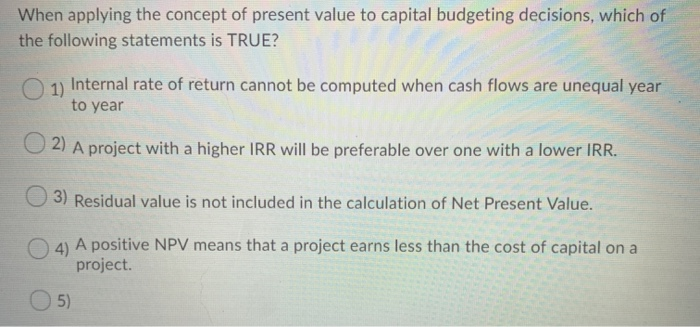
Which is the following is correct with regard to using Net Present Value (NPV) in capital budgeting? 1) When the NPV is less than zero, the project should receive the go ahead. 02) Only when NPV is equal to zero should the project be completed. 3) When the NPV is greater than zero, the project should be approved. 4) A project with a higher NPV should be completed instead of project with a lower NPV. Bert Company was making a decision with regard to a new and improved machine for its factory. The new machine is estimated to last 5 years. The new machine will improve future cash flows in each of the 5 years. Bert's cost of capital is 12%. Which of the following is NOT true with regard to making the decision to buy the new machine? 1) A decrease in the cost of capital will make Bert less likely to purchase the new machine. 2) The internal rate of return for the machine needs to be at least 12% to justify the purchase. 03) The cost of the new machine is used to calculate the Net Present Value. 4) Applying present value of a lump sum to 5 years of cash flows and adding them up and subtracting the cost of the machine will get Net Present Value of the machine. When applying the concept of present value to capital budgeting decisions, which of the following statements is TRUE? 1) Internal rate of return cannot be computed when cash flows are unequal year to year 2) A project with a higher IRR will be preferable over one with a lower IRR. 3) Residual value is not included in the calculation of Net Present Value. 4) A positive NPV means that a project earns less than the cost of capital on a project. 05)
Step by Step Solution
There are 3 Steps involved in it

Get step-by-step solutions from verified subject matter experts