







Question: Which of the following is NOT a valid SQL statement to insert a record in a table named Food? Food table is defined as follows:
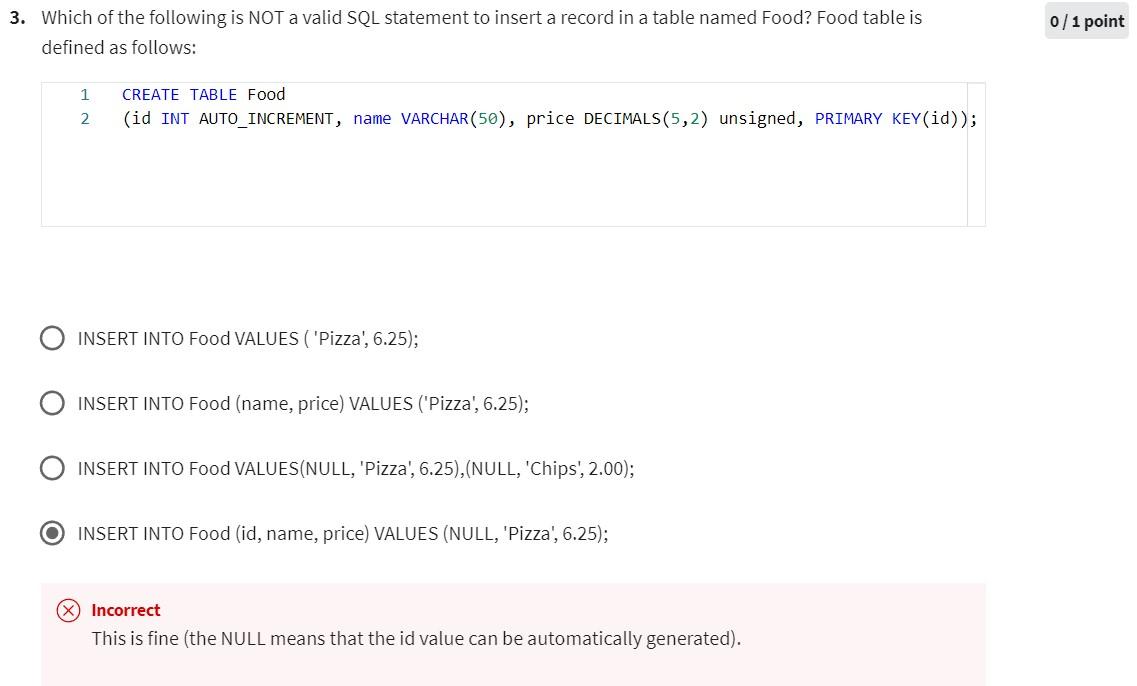
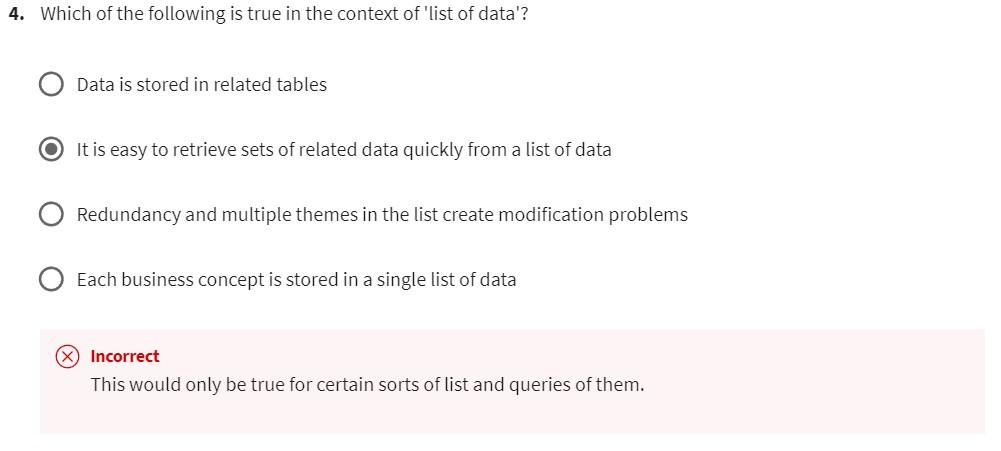
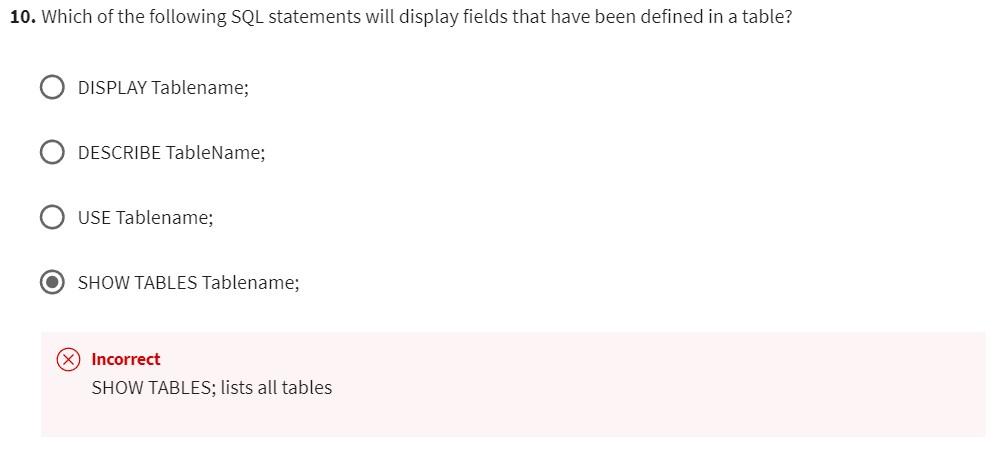
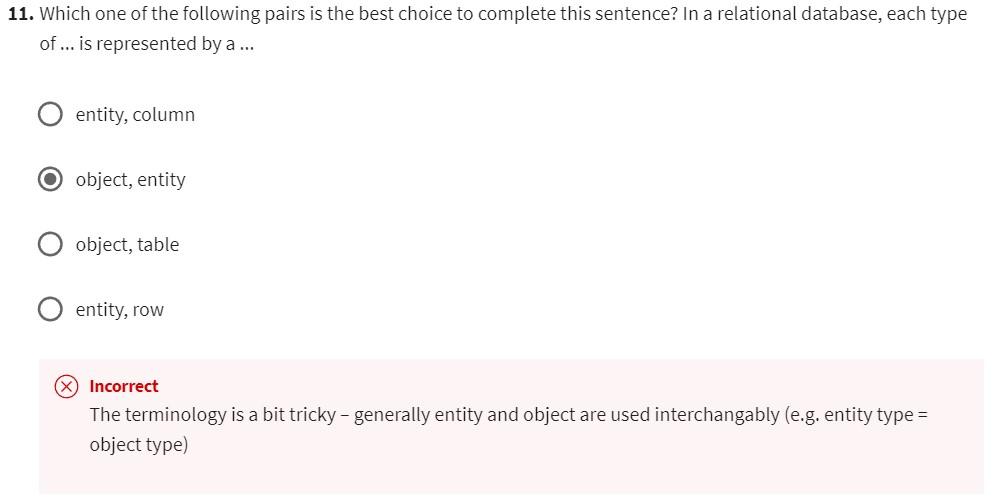
Which of the following is NOT a valid SQL statement to insert a record in a table named Food? Food table is defined as follows: CREATE TABLE Food (id INT AUTO_INCREMENT, name VARCHAR(50), price DECIMALS (5,2) unsigned, PRIMARY KEY(id)); INSERT INTO FOOd VALUES ( 'PizZa', 6.25); INSERT INTO Food (name, price) VALUES ('Pizza', 6.25); INSERT INTO Food VALUES(NULL, 'Pizza', 6.25),(NULL, 'Chips', 2.00); INSERT INTO Food (id, name, price) VALUES (NULL, 'Pizza', 6.25); Incorrect This is fine (the NULL means that the id value can be automatically generated). Which of the following is true in the context of 'list of data'? Data is stored in related tables It is easy to retrieve sets of related data quickly from a list of data Redundancy and multiple themes in the list create modification problems Each business concept is stored in a single list of data Incorrect This would only be true for certain sorts of list and queries of them. 10. Which of the following SQL statements will display fields that have been defined in a table? DISPLAY Tablename; DESCRIBE TableName; USE Tablename; SHOW TABLES Tablename; Incorrect SHOW TABLES; lists all tables 11. Which one of the following pairs is the best choice to complete this sentence? In a relational database, each type of ... is represented by a ... entity, column object, entity object, table entity, row Incorrect The terminology is a bit tricky - generally entity and object are used interchangably (e.g. entity type = object type)
Step by Step Solution
There are 3 Steps involved in it

Get step-by-step solutions from verified subject matter experts
 Study Help