







Question: Which statement MOST CLOSELY explains how the US tried to resolve the problems of expert evidence? A. Through advisory guidance based on the cases of
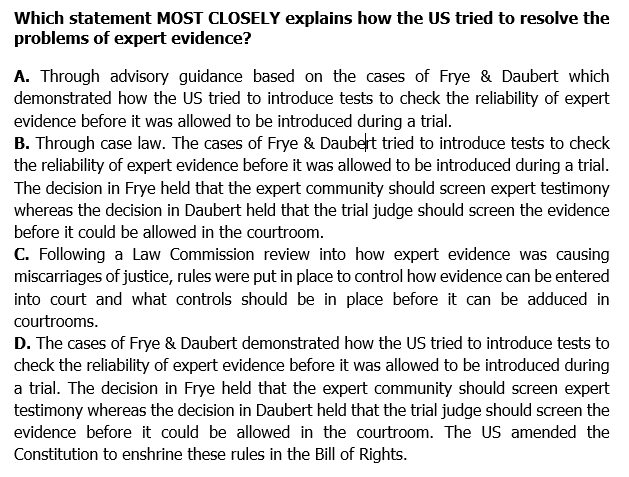
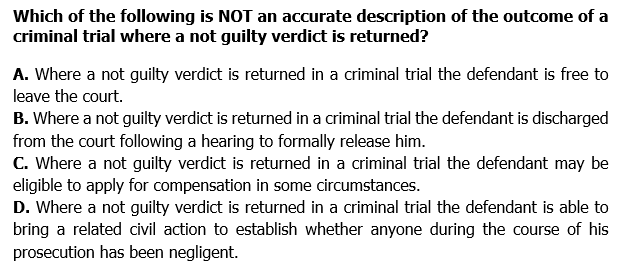
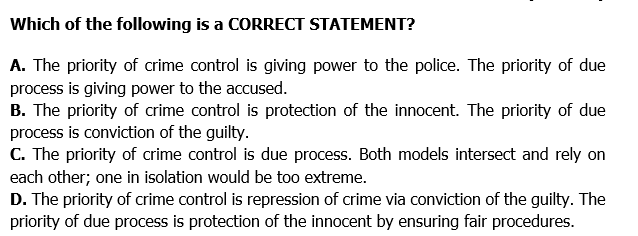
Which statement MOST CLOSELY explains how the US tried to resolve the problems of expert evidence? A. Through advisory guidance based on the cases of Frye & Daubert which demonstrated how the US tried to introduce tests to check the reliability of expert evidence before it was allowed to be introduced during a trial. B. Through case law. The cases of Frye & Daubert tried to introduce tests to check the reliability of expert evidence before it was allowed to be introduced during a trial. The decision in Frye held that the expert community should screen expert testimony whereas the decision in Daubert held that the trial judge should screen the evidence before it could be allowed in the courtroom. C. Following a Law Commission review into how expert evidence was causing miscarriages of justice, rules were put in place to control how evidence can be entered into court and what controls should be in place before it can be adduced in courtrooms. D. The cases of Frye & Daubert demonstrated how the US tried to introduce tests to check the reliability of expert evidence before it was allowed to be introduced during a trial. The decision in Frye held that the expert community should screen expert testimony whereas the decision in Daubert held that the trial judge should screen the evidence before it could be allowed in the courtroom. The US amended the Constitution to enshrine these rules in the Bill of Rights. Which of the following is NOT an accurate description of the outcome of a criminal trial where a not guilty verdict is returned? A. Where a not guilty verdict is returned in a criminal trial the defendant is free to leave the court. B. Where a not guilty verdict is returned in a criminal trial the defendant is discharged from the court following a hearing to formally release him. C. Where a not guilty verdict is returned in a criminal trial the defendant may be eligible to apply for compensation in some circumstances. D. Where a not guilty verdict is returned in a criminal trial the defendant is able to bring a related civil action to establish whether anyone during the course of his prosecution has been negligent. Which of the following is a CORRECT STATEMENT? A. The priority of crime control is giving power to the police. The priority of due process is giving power to the accused. B. The priority of crime control is protection of the innocent. The priority of due process is conviction of the guilty. C. The priority of crime control is due process. Both models intersect and rely on each other; one in isolation would be too extreme. D. The priority of crime control is repression of crime via conviction of the guilty. The priority of due process is protection of the innocent by ensuring fair procedures
Step by Step Solution
There are 3 Steps involved in it

Get step-by-step solutions from verified subject matter experts
 Study Help