







Question: Why do we need segments with memory management? How do we implement segmentation? Which of the following statements is incorrect in relation to segmentation? Files
Why do we need segments with memory management?
How do we implement segmentation?
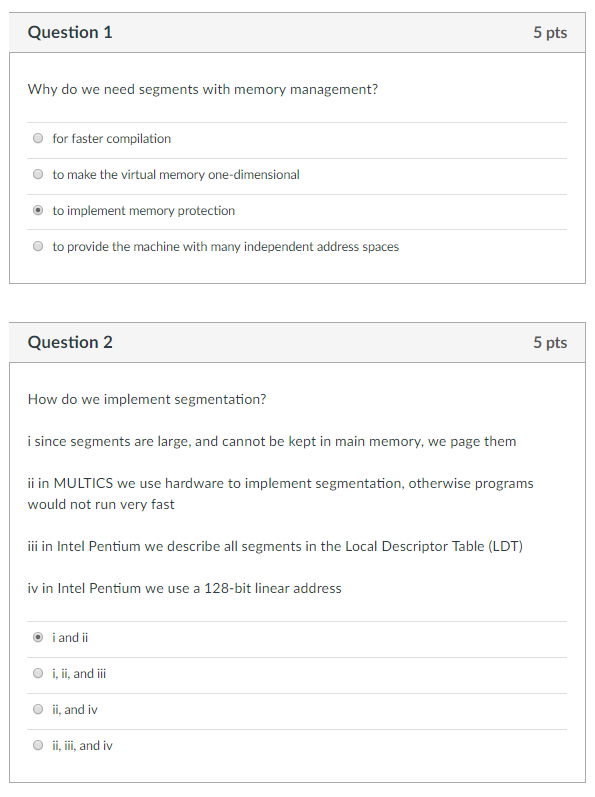
Which of the following statements is incorrect in relation to segmentation?
Files are logical units of information created by processes. A disk may contain millions of them. Does the operating system know or care what is in a file?
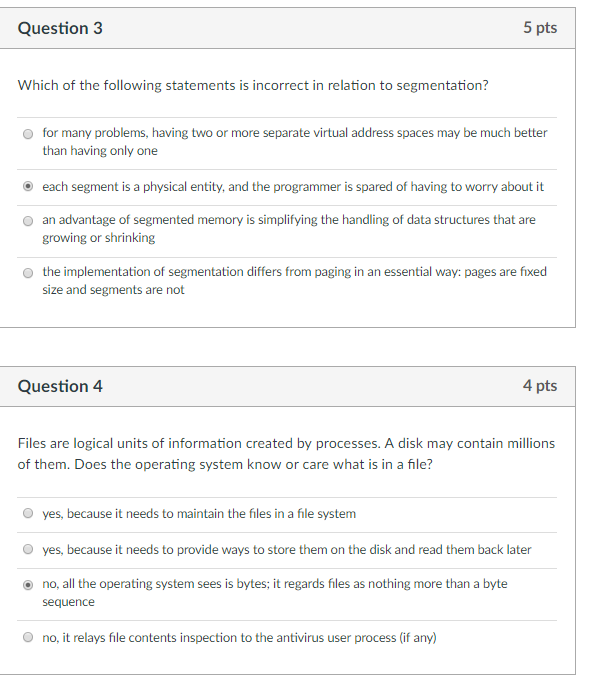
What are some of the operations we have on files with respect to their storage and retrieval?
Which of the following statements is incorrect in relation to directories?
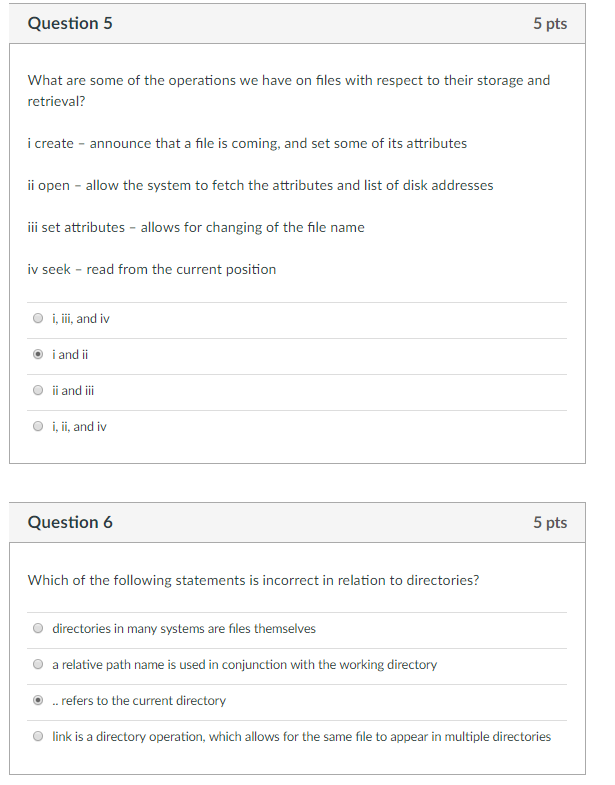
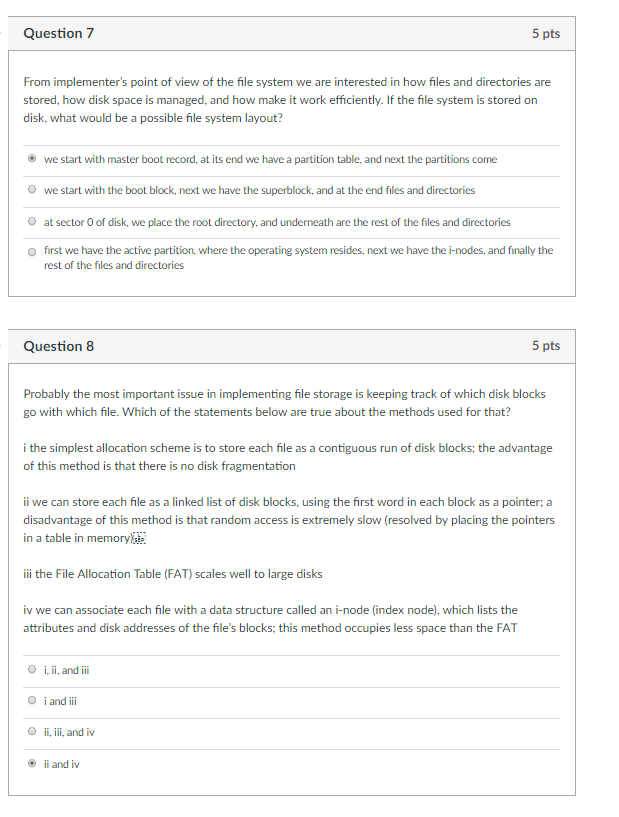
From implementers point of view of the file system we are interested in how files and directories are stored, how disk space is managed, and how make it work efficiently. If the file system is stored on disk, what would be a possible file system layout?
Probably the most important issue in implementing file storage is keeping track of which disk blocks go with which file. Which of the statements below are true about the methods used for that?
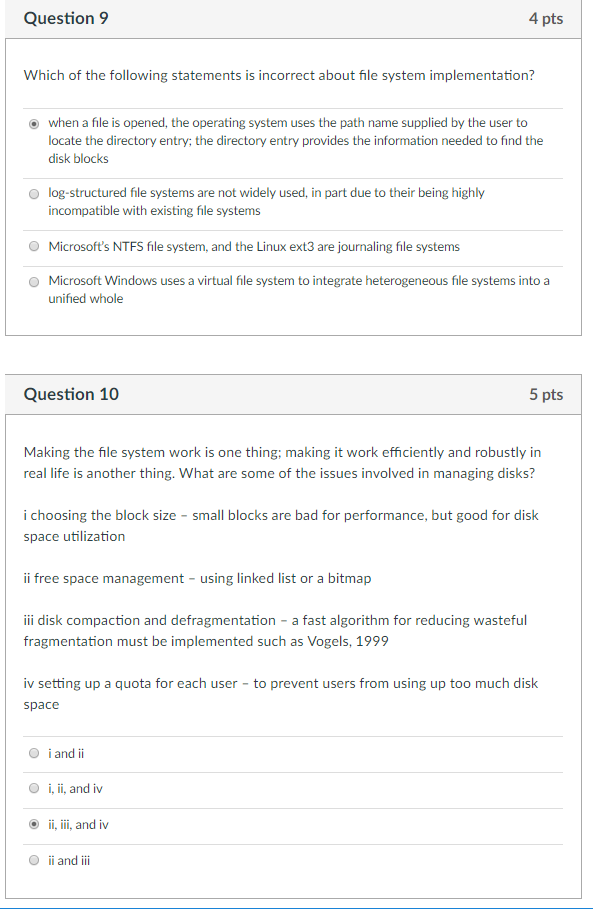
Which of the following statements is incorrect about file system implementation?
Making the file system work is one thing; making it work efficiently and robustly in real life is another thing. What are some of the issues involved in managing disks?
Checking to see if I'm correct on these.
Question 1 5 pts Why do we need segments with memory management? O for faster compilation O to make the virtual memory one-dimensional to implement memory protection O to provide the machine with many independent address spaces Question2 5 pts How do we implement segmentation? i since segments are large, and cannot be kept in main memory, we page thenm ii in MULTICS we use hardware to implement segmentation, otherwise programs would not run very fast iii in Intel Pentium we describe all segments in the Local Descriptor Table (LDT) iv in Intel Pentium we use a 128-bit linear address i and i O i, li, and ii O ii, and iv 0 ii, iii, and iv
Step by Step Solution
There are 3 Steps involved in it

Get step-by-step solutions from verified subject matter experts
 Study Help