



Question: Why is it possible to isolate DNA from a Woolly Mammoth preserved in ice, but not the corresponding RNA from this same sample? The 3
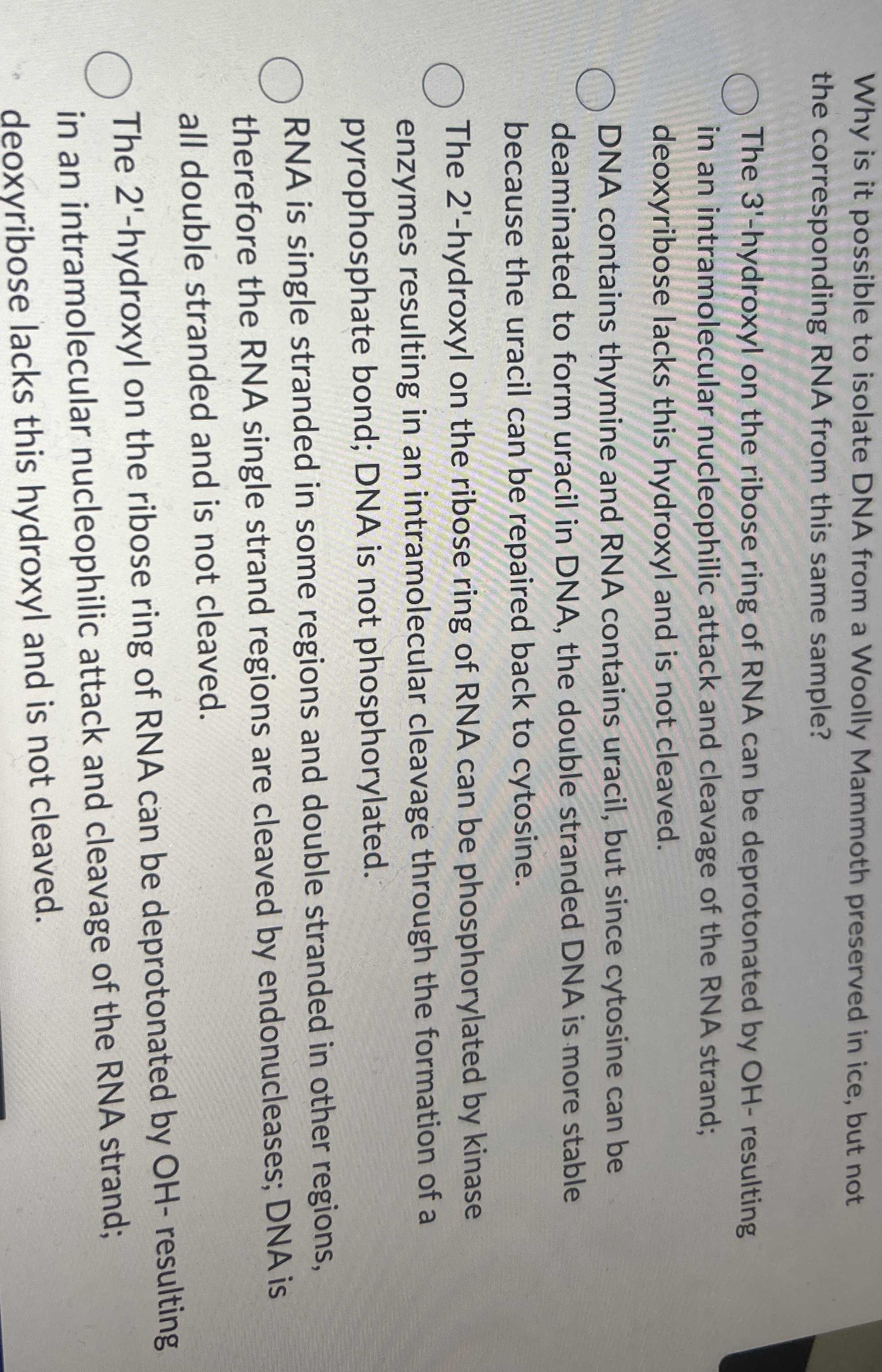
Why is it possible to isolate DNA from a Woolly Mammoth preserved in ice, but not the corresponding RNA from this same sample?
The hydroxyl on the ribose ring of RNA can be deprotonated by OH resulting in an intramolecular nucleophilic attack and cleavage of the RNA strand; deoxyribose lacks this hydroxyl and is not cleaved.
DNA contains thymine and RNA contains uracil, but since cytosine can be deaminated to form uracil in DNA, the double stranded DNA is more stable because the uracil can be repaired back to cytosine.
The hydroxyl on the ribose ring of RNA can be phosphorylated by kinase enzymes resulting in an intramolecular cleavage through the formation of a pyrophosphate bond; DNA is not phosphorylated.
RNA is single stranded in some regions and double stranded in other regions, therefore the RNA single strand regions are cleaved by endonucleases; DNA is all double stranded and is not cleaved.
The hydroxyl on the ribose ring of RNA can be deprotonated by OH resulting in an intramolecular nucleophilic attack and cleavage of the RNA strand; deoxyribose lacks this hydroxyl and is not cleaved.
Step by Step Solution
There are 3 Steps involved in it
1 Expert Approved Answer
Step: 1 Unlock

Question Has Been Solved by an Expert!
Get step-by-step solutions from verified subject matter experts
Step: 2 Unlock
Step: 3 Unlock