



Question: will like no more no info is given thats all needed Companies Fight Hackers with Red, Blue, and Purple Teams This activity is important because
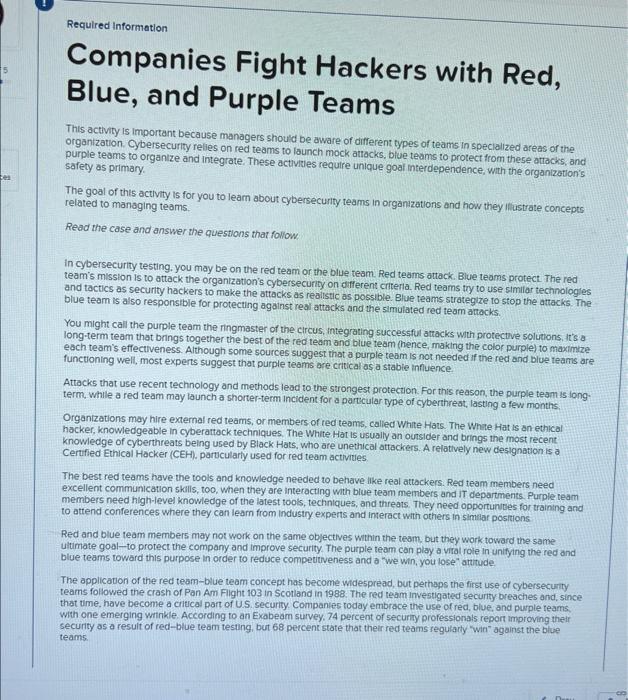
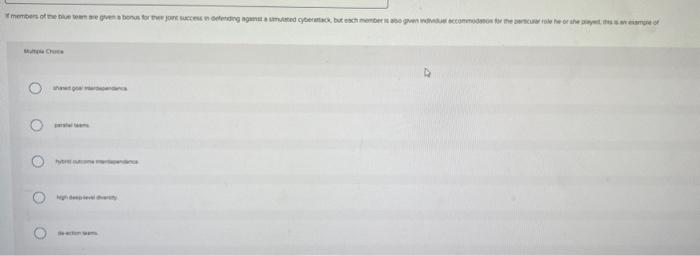
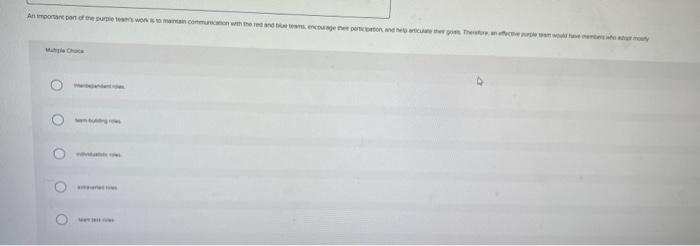
Companies Fight Hackers with Red, Blue, and Purple Teams This activity is important because managers should be aware of different types of teams in specialized areas of the organization. Cybersecurity relies on red teams to lounch mock atracks, blue teams to protect from these attachs, and purple teams to organize and integrate. These activiles require unique goal interdependence, with the organization's safety as primary. The goal of this activity is for you to leam about cybersecurty teams in organizations and how they iliustrate concepts related to managing teams. Read the case and answer the questions that follow: in cybersecurity testing. you may be on the red team or the blue team. Red teams attack. Blue teams protect. The red team's mission is to attack the organization's cybersecurity on different citteria. Red teams try to use similar technologies and tactics as security hackers to make the attacks as realistic as possible. Blue teams strateglze to stop the attacks. The blue team is also responsible for protecting against real attacks and the simulated red team atrocks. You might call the purple team the ringmaster of the circus, integrating successful atracks with protective solutions, It's a long-term team that brings together the best of the red team and blue team (hence, making the cclor purple) to maximize each team's effectiveness. Although some sources suggest that a purple team is not needed if the red and blue teams are functioning well, most experts suggest that purple teams ore critical as a stable influence. Attacks that use recent technology and methods lead to the strongest protection. For this reason, the purple team is long: term, While a red team may launch a shorter-term incident for a parccular type of cyberthreat, lasting a few months. Organizations may hire extenal red teams, or members of red teams, called White Hats. The Whate Hat is an ethical hacker, knowledgeable in cyberanack techniques. The White Hat is usually an ounsider and brings the most recent knowledge of cyberthreats being used by Black Hats, who are unethical attackers. A relatively new designation is a Certified Ethical Hacker (CEH), partucularly used for red team activities. The best red teams have the tools and knowledge needed to behave like real attackers. Red team members need excellent communication skills, too, when they are interacting with blue team members and IT departments. Purple team members need high-level knowledge of the latest tools, techniques, and threats. They need opportunves for training and to attend conferences where they can learn from industry experts and interact with others in similar positions Red and blue team members may not work on the same objectives within the team, but they work toward the same ultimate goal-to protect the company and improve security. The purple team can play a vital role in unitying the red and blue teams toward this purpose in order to reduce competitiveness and a "we Win, you lose" artitude. The application of the red team-blue team concept has become widespread, but perhaps the first use of cybersecuity teams followed the crash of Pan Am Filght 103 in Sconland in 1988 . The red team investigated 5 ecurty breaches and, since that time, have become a critical part of U.S. security. Companies today embrace the use of red, blue, and purple teams, whih one emerging witnkle. According to an Exabeam survey. 74 percent of securny professtorals report improving their securty as a result of red-blue team testing, but 68 percent state that their red teams regularly "win" against the blue teams. iaval tieni the Whienolew this Oo wifin werm An mpooman par of Wetrio olose Motrionose 3. 1 neverumen not 5 Companies Fight Hackers with Red, Blue, and Purple Teams This activity is important because managers should be aware of different types of teams in specialized areas of the organization. Cybersecurity relies on red teams to lounch mock atracks, blue teams to protect from these attachs, and purple teams to organize and integrate. These activiles require unique goal interdependence, with the organization's safety as primary. The goal of this activity is for you to leam about cybersecurty teams in organizations and how they iliustrate concepts related to managing teams. Read the case and answer the questions that follow: in cybersecurity testing. you may be on the red team or the blue team. Red teams attack. Blue teams protect. The red team's mission is to attack the organization's cybersecurity on different citteria. Red teams try to use similar technologies and tactics as security hackers to make the attacks as realistic as possible. Blue teams strateglze to stop the attacks. The blue team is also responsible for protecting against real attacks and the simulated red team atrocks. You might call the purple team the ringmaster of the circus, integrating successful atracks with protective solutions, It's a long-term team that brings together the best of the red team and blue team (hence, making the cclor purple) to maximize each team's effectiveness. Although some sources suggest that a purple team is not needed if the red and blue teams are functioning well, most experts suggest that purple teams ore critical as a stable influence. Attacks that use recent technology and methods lead to the strongest protection. For this reason, the purple team is long: term, While a red team may launch a shorter-term incident for a parccular type of cyberthreat, lasting a few months. Organizations may hire extenal red teams, or members of red teams, called White Hats. The Whate Hat is an ethical hacker, knowledgeable in cyberanack techniques. The White Hat is usually an ounsider and brings the most recent knowledge of cyberthreats being used by Black Hats, who are unethical attackers. A relatively new designation is a Certified Ethical Hacker (CEH), partucularly used for red team activities. The best red teams have the tools and knowledge needed to behave like real attackers. Red team members need excellent communication skills, too, when they are interacting with blue team members and IT departments. Purple team members need high-level knowledge of the latest tools, techniques, and threats. They need opportunves for training and to attend conferences where they can learn from industry experts and interact with others in similar positions Red and blue team members may not work on the same objectives within the team, but they work toward the same ultimate goal-to protect the company and improve security. The purple team can play a vital role in unitying the red and blue teams toward this purpose in order to reduce competitiveness and a "we Win, you lose" artitude. The application of the red team-blue team concept has become widespread, but perhaps the first use of cybersecuity teams followed the crash of Pan Am Filght 103 in Sconland in 1988 . The red team investigated 5 ecurty breaches and, since that time, have become a critical part of U.S. security. Companies today embrace the use of red, blue, and purple teams, whih one emerging witnkle. According to an Exabeam survey. 74 percent of securny professtorals report improving their securty as a result of red-blue team testing, but 68 percent state that their red teams regularly "win" against the blue teams. iaval tieni the Whienolew this Oo wifin werm An mpooman par of Wetrio olose Motrionose 3. 1 neverumen not 5
Step by Step Solution
There are 3 Steps involved in it

Get step-by-step solutions from verified subject matter experts