



Question: will tend to favor: high/low Attempte Average/2 2. Dividend preference theory (bird-In-the-hand theory) Despite some theoretical assertions, many investors do care a great deal about
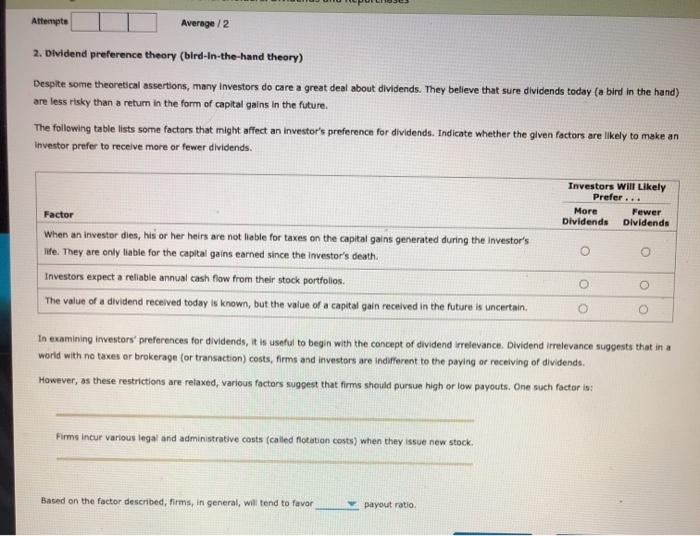
Attempte Average/2 2. Dividend preference theory (bird-In-the-hand theory) Despite some theoretical assertions, many investors do care a great deal about dividends. They believe that sure dividends today (a bird in the hand) are less risky than a retum in the form of capital gains in the future. The following table lsts some factors that might affect an investor's preference for dividends. Indicate whether the given factors are likely to make an Investor prefer to receive more or fewer dividends. Investors will likely Prefer... More Fewer Dividends Dividends o Factor When an investor dies, his or her heirs are not liable for taxes on the capital gains generated during the investor's life. They are only liable for the capital gains earned since the investor's death. Investors expect a reliable annual cash flow from their stock portfolios. The value of a dividend received today is known, but the value of a capital gain received in the future is uncertain In examining investors' preferences for dividends, it is useful to begin with the concept of dividend irrelevance Dividend irrelevance suggests that in a world with no taxes or brokerage for transaction) costs, firms and investors are indifferent to the paying or receiving of dividends. However, as these restrictions are relaxed, various factors suggest that firms should pursue high or low payouts. One such factor is: Firme incur various legal and administrative costs (cated flotation costs) when they issue new stock. Based on the factor described, firms, in general, will tend to favor payout ratio
Step by Step Solution
There are 3 Steps involved in it

Get step-by-step solutions from verified subject matter experts