







Question: Word File Edit View Insert Format Tools Table Window Help C O 2 Q g Thu 9 May 4:53 pm AutoSave A A Y C
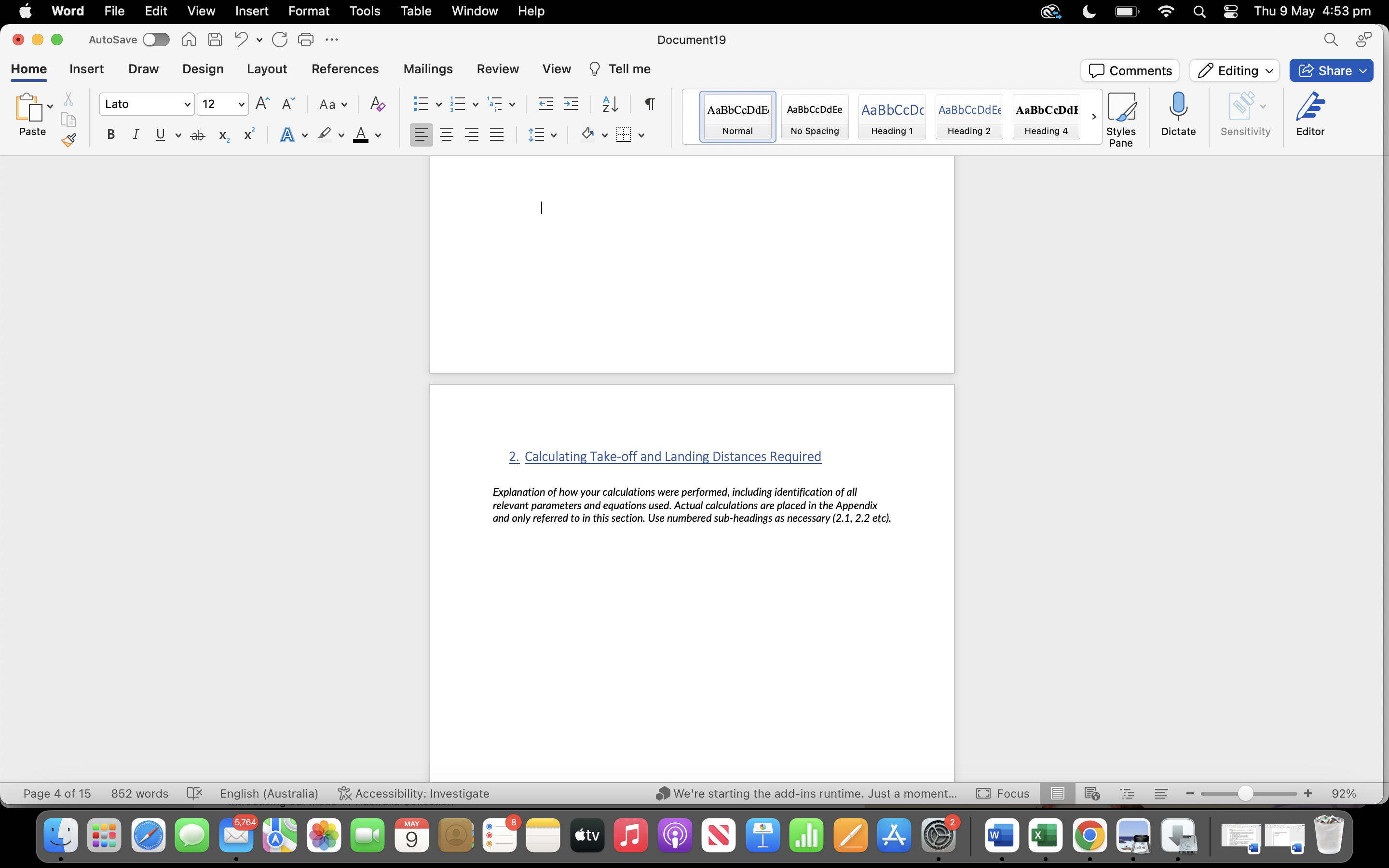
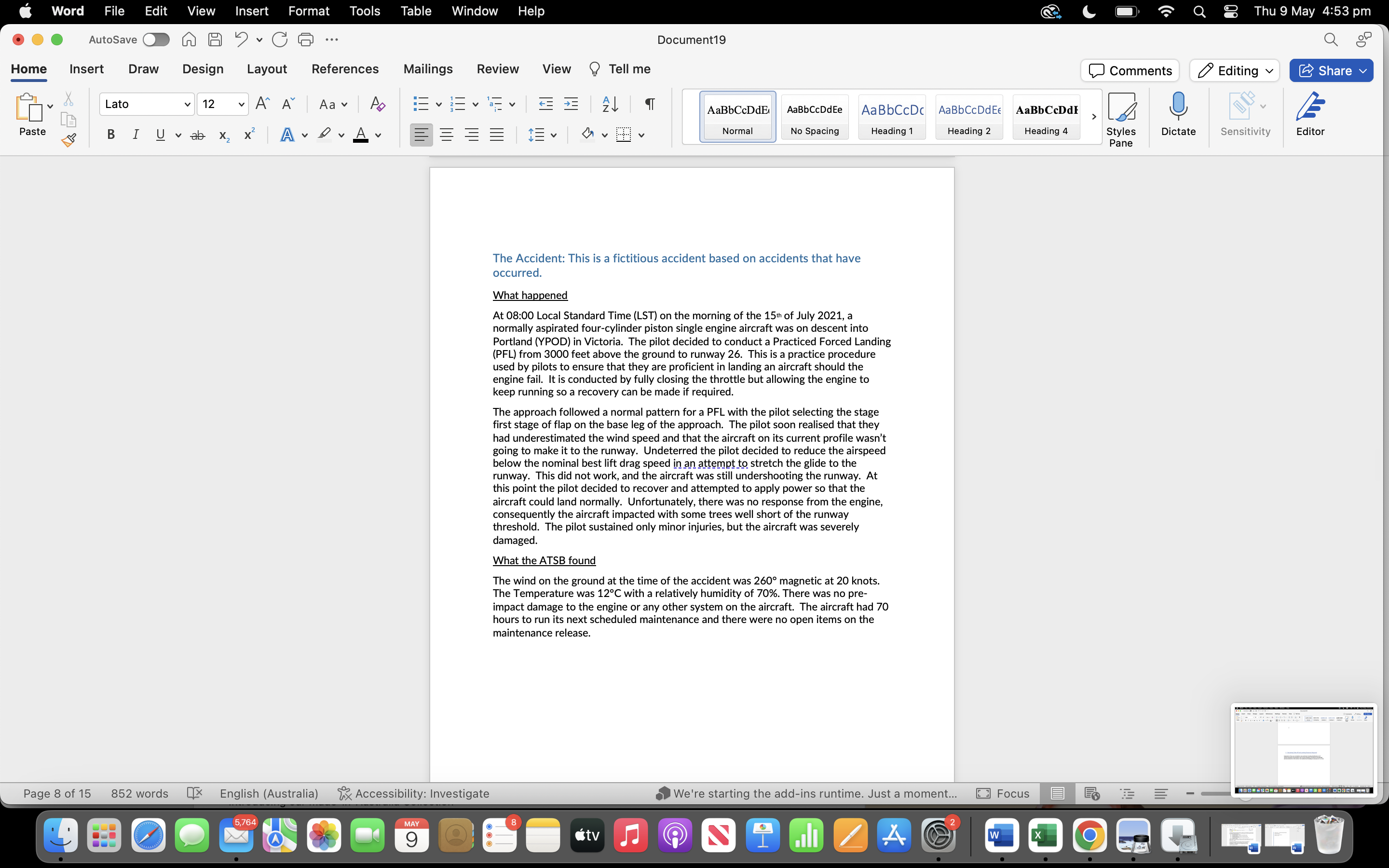
Word File Edit View Insert Format Tools Table Window Help C O 2 Q g Thu 9 May 4:53 pm AutoSave A A Y C G ... Document19 Home Insert Draw Design Layout References Mailings Review View ? Tell me Comments Editing Share Lato v 12 A A Aa Ap EVEEEVEE AaBbCcDdE AaBbCcDdEe AaBbCcDc AaBbCcDdEE AaBbCcDdi Editor Paste BIUvab X X A DAY Normal No Spacing Heading 1 Heading 2 Heading 4 Styles Dictate Sensitivity Pane 2. Calculating Take-off and Landing Distances Required Explanation of how your calculations were performed, including identification of all relevant parameters and equations used. Actual calculations are placed in the Appendix and only referred to in this section. Use numbered sub-headings as necessary (2.1, 2.2 etc). Page 4 of 15 852 words X English (Australia) Accessibility: Investigate We're starting the add-ins runtime. Just a moment... Focus + 92% MAY 52 9 WFormat & Thu 9 May Autosave I (D D2vC Q@ - Document19 Home Insert Draw Design Layout References Mailings Review View Q Tellme T Laio Wz oA A Aav | R vis T b=l = s [:g' Paste B I Uva x, X | AvZvAv Normal | NoSpacing Heading 1 Heading 2 Heading 4 s;ay:'ees The Accident: This is a fictitious accident based on accidents that have occurred. What happened At 08:00 Local Standard Time (LST) on the morning of the 15t of July 2021, a normally aspirated four-cylinder piston single engine aircraft was on descent into Portland (YPOD) in Victoria. The pilot decided to conduct a Practiced Forced Landing (PFL) from 3000 feet above the ground to runway 26. This is a practice procedure used by pilots to ensure that they are proficient in landing an aircraft should the engine fail. Itis conducted by fully closing the throttle but allowing the engine to keep running so a recovery can be made if required. The approach followed a normal pattern for a PFL with the pilot selecting the stage first stage of flap on the base leg of the approach. The pilot soon realised that they had underestimated the wind speed and that the aircraft on its current profile wasn't going to make it to the runway. Undeterred the pilot decided to reduce the airspeed runway. This did not work, and the aircraft was still undershooting the runway. At this point the pilot decided to recover and attempted to apply power so that the aircraft could land normally. Unfortunately, there was no response from the engine, consequently the aircraft impacted with some trees well short of the runway threshold. The pilot sustained only minor injuries, but the aircraft was severely damaged. What the ATSB found The wind on the ground at the time of the accident was 260 magnetic at 20 knots. The Temperature was 12C with a relatively humidity of 70%. There was no pre- impact damage to the engine or any other system on the aircraft. The aircraft had 70 hours to run its next scheduled maintenance and there were no open items on the maintenance release. Page 80f 15 852 words [X English (Australia) ( Accessibility: Investigate .' We're starting the add-ins runtime. Just a moment... B0 =S0Rg "G 70oQ0TMAX (J Comments 8 Dictate VAL Al & Share v Sensitivity | Editor
Step by Step Solution
There are 3 Steps involved in it

Get step-by-step solutions from verified subject matter experts
 Study Help