







Question: Working with Overhangs ( 5 0 points ) The most common type of 'quick calculation' or 'proof of concept' calculation is validating steel shapes, and
Working with Overhangs points
The most common type of 'quick calculation' or 'proof of concept' calculation is validating steel shapes, and determining the amount of space that will be taken up by a structural member. Architects will like you as a structural engineer if you are considering space, so they do not have to deal with the headaches of using oversized members. This example will hopefully get you to think of nonconventional ways to propose a solution.
All steel is A Steel.
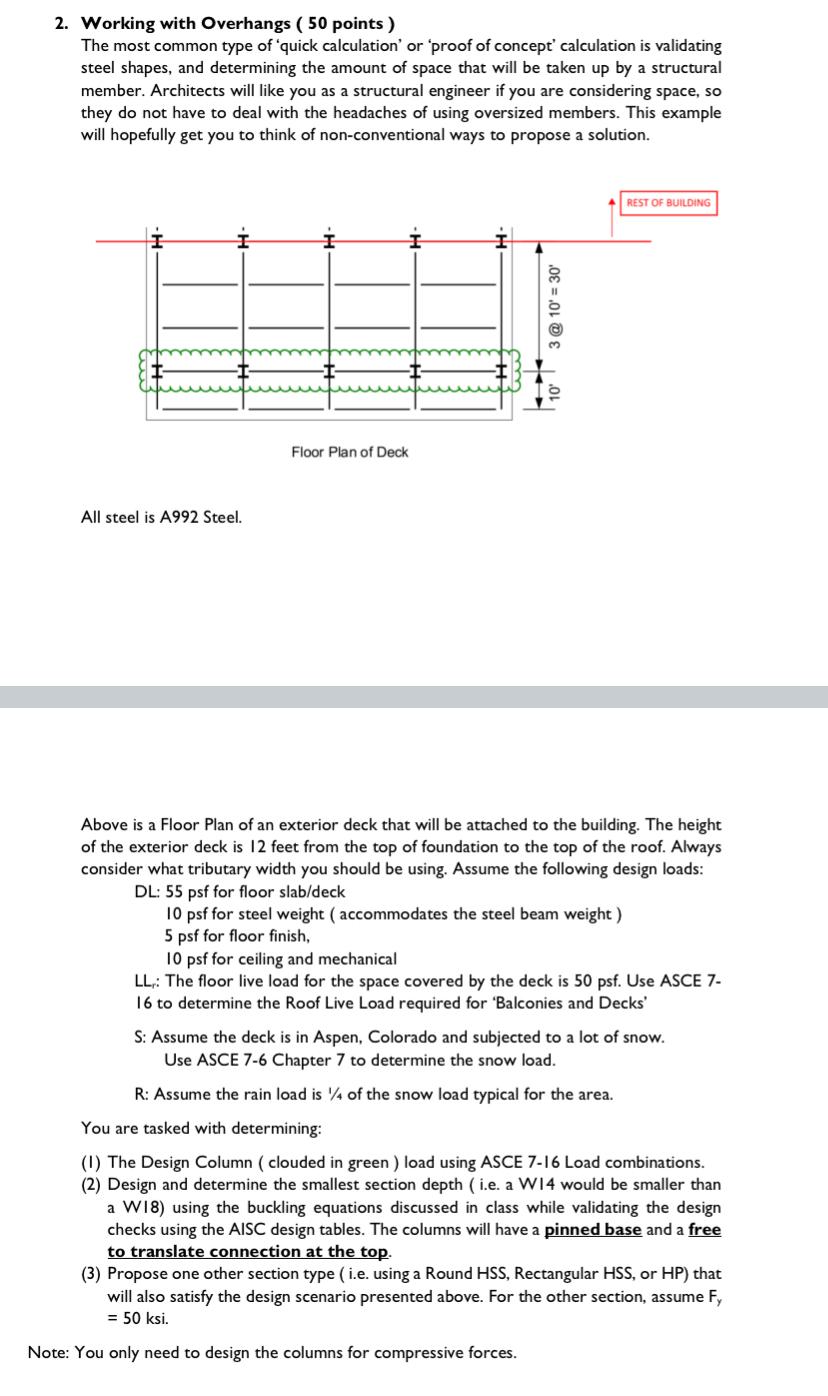
Above is a Floor Plan of an exterior deck that will be attached to the building. The height of the exterior deck is feet from the top of foundation to the top of the roof. Always consider what tributary width you should be using. Assume the following design loads:
DL: psf for floor slabdeck
psf for steel weight accommodates the steel beam weight
psf for floor finish,
psf for ceiling and mechanical
: The floor live load for the space covered by the deck is psf Use ASCE
to determine the Roof Live Load required for 'Balconies and Decks'
S: Assume the deck is in Aspen, Colorado and subjected to a lot of snow.
Use ASCE Chapter to determine the snow load.
R: Assume the rain load is of the snow load typical for the area.
You are tasked with determining:
I The Design Column clouded in green load using ASCE Load combinations.
Design and determine the smallest section depth ie a WI would be smaller than a WI using the buckling equations discussed in class while validating the design checks using the AISC design tables. The columns will have a pinned base and a free to translate connection at the top.
Propose one other section type ie using a Round HSS Rectangular HSS or HP that will also satisfy the design scenario presented above. For the other section, assume ksi.
Note: You only need to design the columns for compressive forces.
Step by Step Solution
There are 3 Steps involved in it
1 Expert Approved Answer
Step: 1 Unlock

Question Has Been Solved by an Expert!
Get step-by-step solutions from verified subject matter experts
Step: 2 Unlock
Step: 3 Unlock
 Study Help