Question: Write 1 full page I will give fast up vote for a full page Describe your score how will you use this in a leadership
Write 1 full page
I will give fast up vote for a full page
Describe your score how will you use this in a leadership setting?
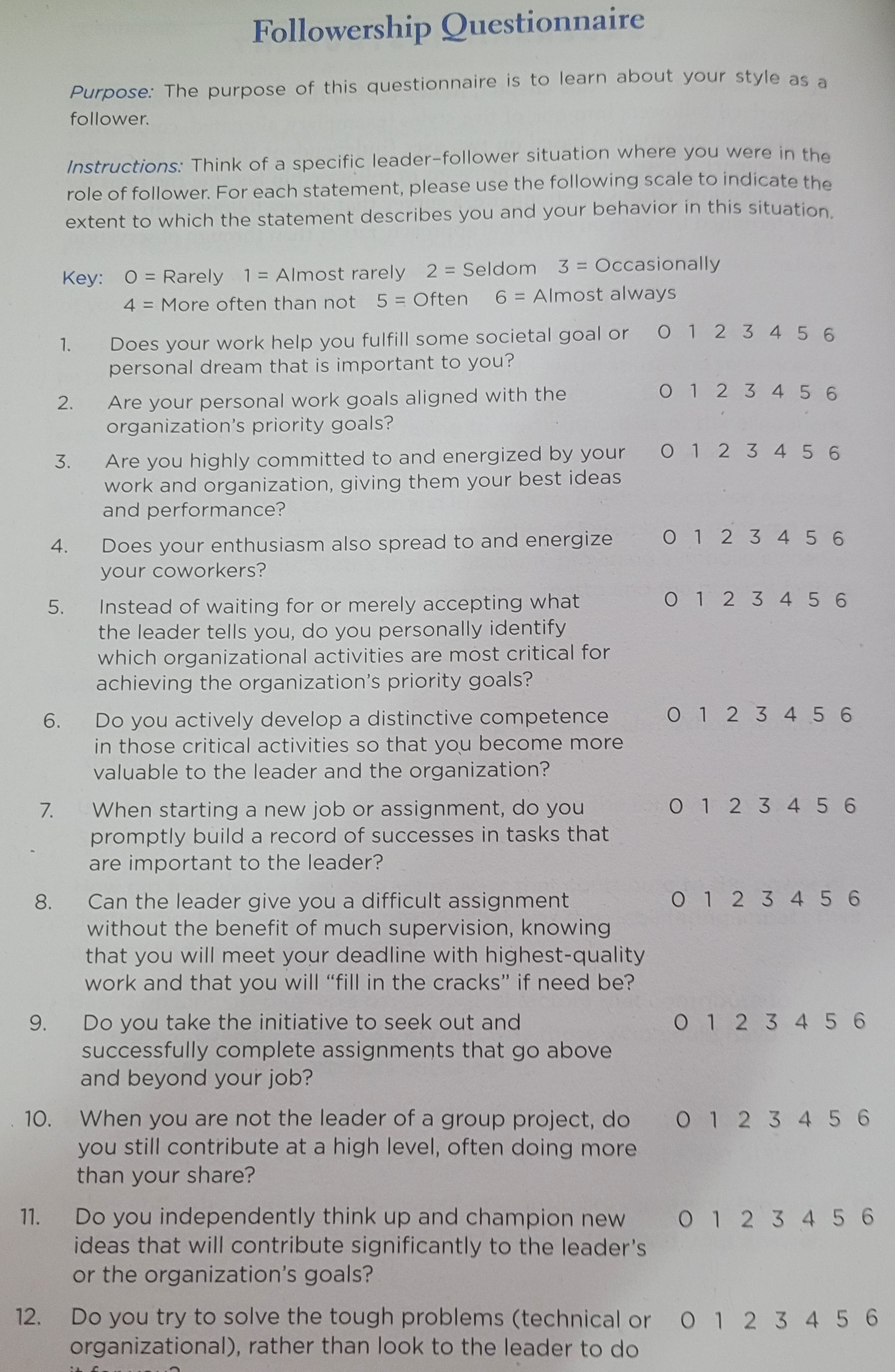
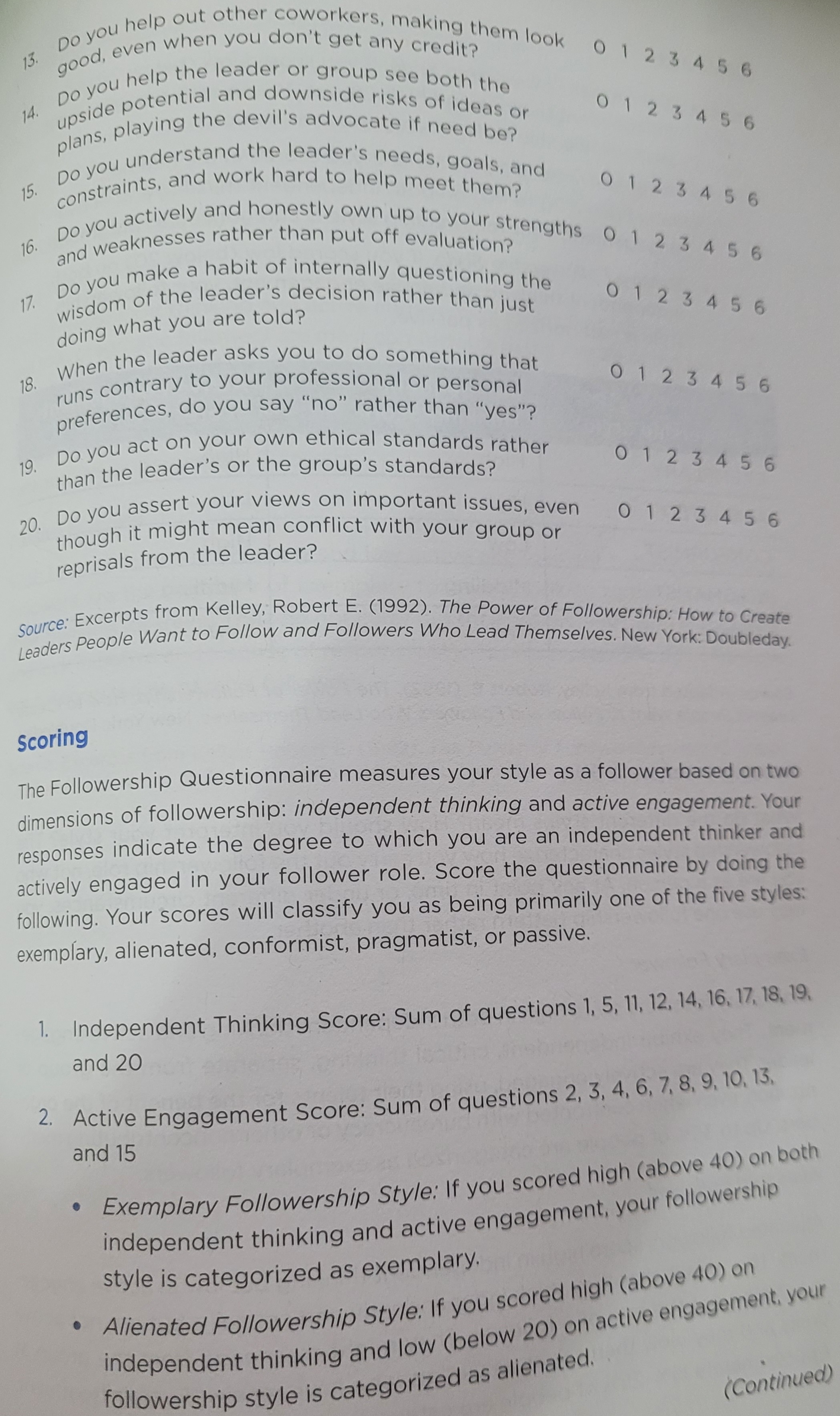
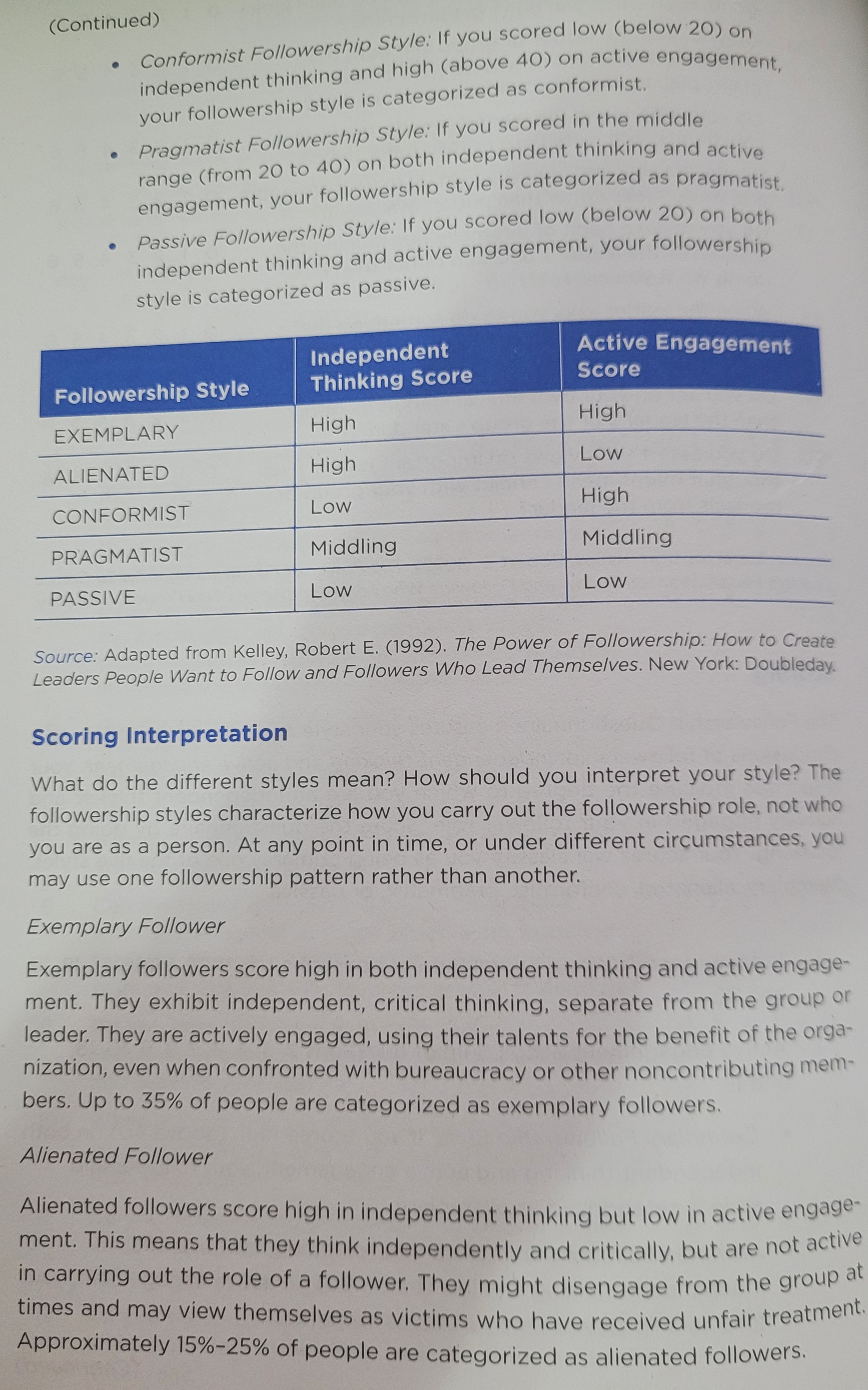
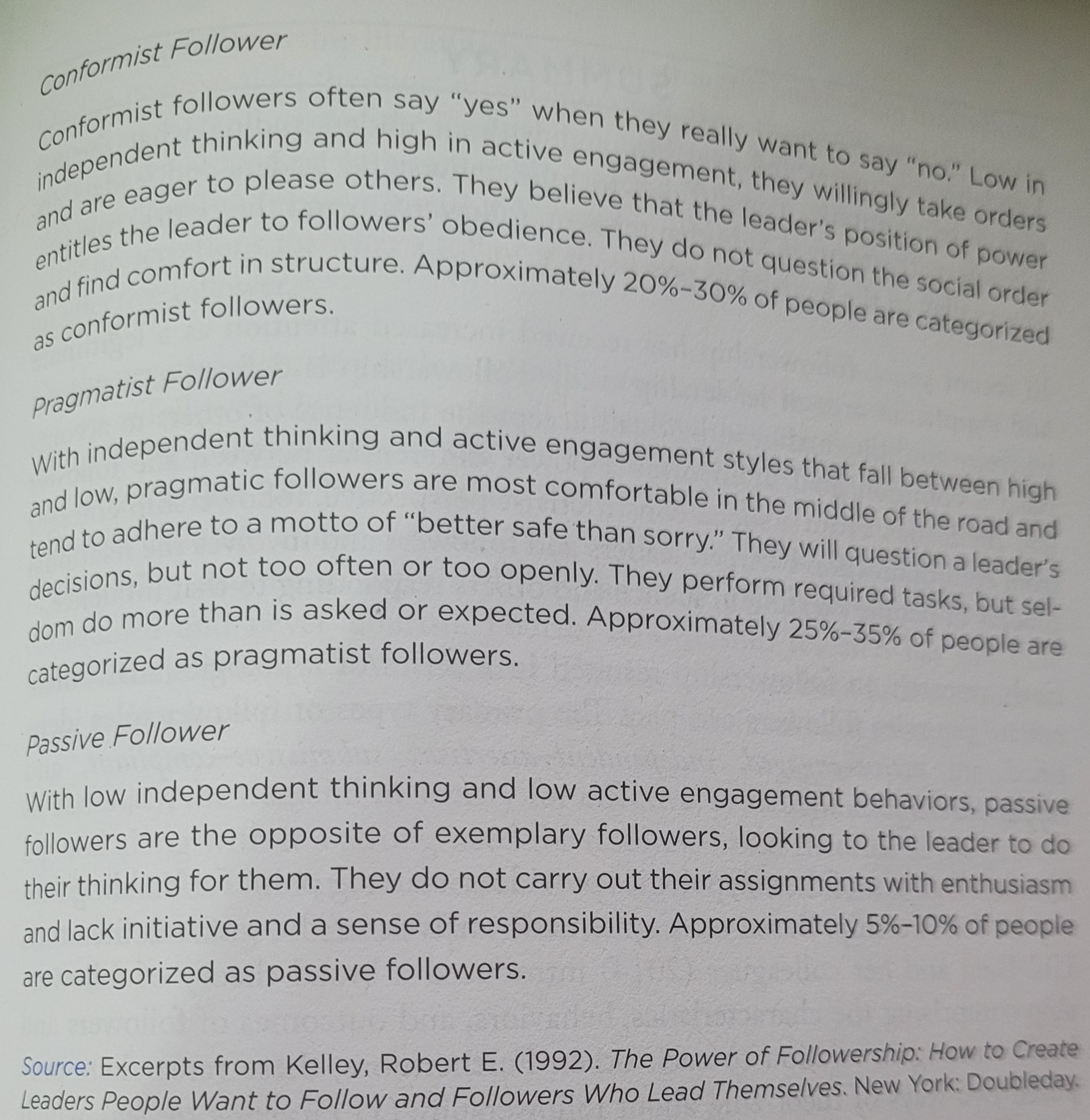
Purpose: The purpose of this questionnaire is to learn about your style as a follower. Instructions: Think of a specific leader-follower situation where you were in the role of follower. For each statement, please use the following scale to indicate the extent to which the statement describes you and your behavior in this situation. Key: 0= Rarely 1= Almost rarely 2= Seldom 3 = Occasionally 4= More often than not 5= Often 6= Almost always personal dream that is important to you? 2. Are your personal work goals aligned with the 0123456 organization's priority goals? work and organization, giving them your best ideas and performance? your coworkers? the leader tells you, do you personally identify which organizational activities are most critical for achieving the organization's priority goals? in those critical activities so that you become more valuable to the leader and the organization? promptly build a record of successes in tasks that are important to the leader? 8. Can the leader give you a difficult assignment 01233456 without the benefit of much supervision, knowing that you will meet your deadline with highest-quality work and that you will "fill in the cracks" if need be? 9. Do you take the initiative to seek out and successfully complete assignments that go above and beyond your job? 10. When you are not the leader of a group project, do 0123456 you still contribute at a high level, often doing more than your share? 11. Do you independently think up and champion new 0123456 ideas that will contribute significantly to the leader's or the organization's goals? organizational), rather than look to the leader to do 13. Do you heven when you don't get any credit? good, even when you don't get any credit? Do you help the leader or group see both the 14. Dopside potential and downside risks of ideas or plans, playing the devil's advocate if need be? 16. Do you actively and honestly own up to your strengths 0123456 17. Do you make a habit of internally questioning the 012238456 woing what you are told? runs contrary to your professional or personal 19. Do you act on your own ethical standards rat though it might mean conflict with your group or reprisals from the leader? source: Excerpts from Kelley; Robert E. (1992). The Power of Followership: How to Create Leaders People Want to Follow and Followers Who Lead Themselves. New York: Doubleday. scoring The Followership Questionnaire measures your style as a follower based on two dimensions of followership: independent thinking and active engagement. Your responses indicate the degree to which you are an independent thinker and actively engaged in your follower role. Score the questionnaire by doing the following. Your scores will classify you as being primarily one of the five styles: exemplary, alienated, conformist, pragmatist, or passive. 1. Independent Thinking Score: Sum of questions 1,5,11,12,14,16,17,18,19, and 20 2. Active Engagement Score: Sum of questions 2,3,4,6,7,8,9,10,13, and 15 - Exemplary Followership Style: If you scored high (above 40) on both independent thinking and active engagement, your followership style is categorized as exemplary. - Alienated Followership Style: If you scored high (above 40) on independent thinking and low (below 20) on active engagement, your followership style is categorized as alienated. (Continued) - Conformist Followership Style: If you scored low (below 20) on independent thinking and high (above 40) on active engagement, your followership style is categorized as conformist. - Pragmatist Followership Style: If you scored in the middle range (from 20 to 40 ) on both independent thinking and active engagement, your followership style is categorized as pragmatist. - Passive Followership Style: If you scored low (below 20) on both independent thinking and active engagement, your followership style is categorized as passive. Source: Adapted from Kelley, Robert E. (1992). The Power of Followership: How to Create Leaders People Want to Follow and Followers Who Lead Themselves. New York: Doubleday. Scoring Interpretation What do the different styles mean? How should you interpret your style? The followership styles characterize how you carry out the followership role, not who you are as a person. At any point in time, or under different circumstances, you may use one followership pattern rather than another. Exemplary Follower Exemplary followers score high in both independent thinking and active engagement. They exhibit independent, critical thinking, separate from the group or leader. They are actively engaged, using their talents for the benefit of the organization, even when confronted with bureaucracy or other noncontributing members. Up to 35% of people are categorized as exemplary followers. Alienated Follower Alienated followers score high in independent thinking but low in active engagement. This means that they think independently and critically, but are not active in carrying out the role of a follower. They might disengage from the group at times and may view themselves as victims who have received unfair treatment. Approximately 15%25% of people are categorized as alienated followers. conformist Follower conformist followers often say "yes" when they really want to say "no." Low in independent thinking and high in active engagement, they willingly take orders and are eager to please others. The leader's position of power entites the comfort in structure. Approximately do not question the social order and find comfort in structurs. pragmatist Follower With independent thinking and active engagement styles that fall between high and low, pragmatic followers are most comfortable in the middle of the road and tend to adhere to a motto of "better safe than sorry." They will question a leader's decisions, but not too often or too openly. They perform required tasks, but seldom do more than is asked or expected. Approximately 25%35% of people are categorized as pragmatist followers. Passive Follower With low independent thinking and low active engagement behaviors, passive followers are the opposite of exemplary followers, looking to the leader to do their thinking for them. They do not carry out their assignments with enthusiasm and lack initiative and a sense of responsibility. Approximately 5\%-10\% of people are categorized as passive followers. Source: Excerpts from Kelley, Robert E. (1992). The Power of Followership: How to Create Leaders People Want to Follow and Followers Who Lead Themselves. New York: Doubleday









 Study Help