







Question: Write a C++ program for (thanks in advance): A usage example: int main () { int size = 10; int * arr = new [size];
Write a C++ program for (thanks in advance):
A usage example:
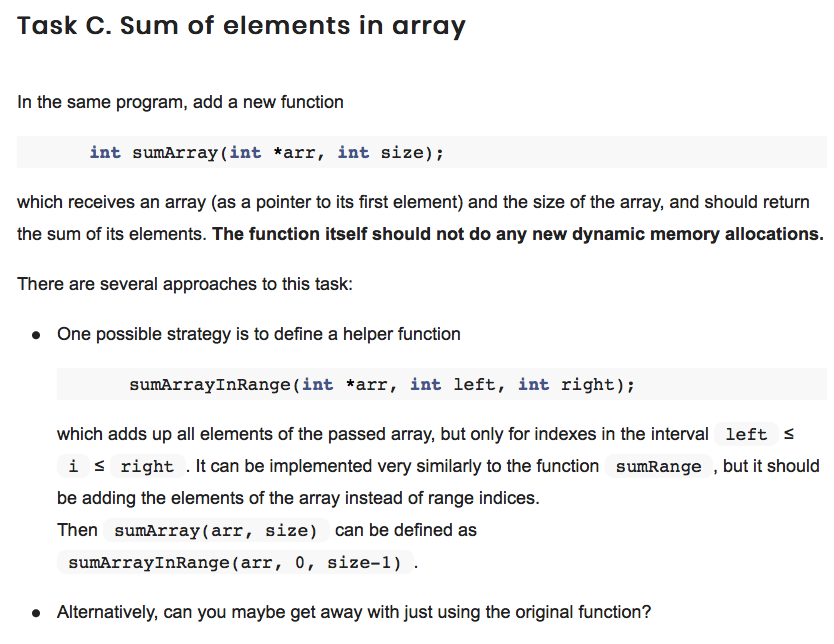
int main() { int size = 10; int *arr = new[size]; // allocate array dynamically arr[0] = 12; arr[1] = 17; arr[2] = -5; arr[3] = 3; arr[4] = 7; arr[5] = -15; arr[6] = 27; arr[7] = 5; arr[8] = 13; arr[9] = -21; int sum = sumArray(arr, size); // Add all elements cout "Sum is " sum endl; // Sum is 43 int sum = sumArray(arr, 5); // Add up first five elements cout "Sum is " sum endl; // Sum is 34 delete[] arr; // deallocate it }Task C. Sum of elements in array In the same program, add a new function int sumArray(int *arr, int size) which receives an array (as a pointer to its first element) and the size of the array, and should return the sum of its elements. The function itself should not do any new dynamic memory allocations. There are several approaches to this task: One possible strategy is to define a helper function sumArrayInRange(int *arr, int left, int right); which adds up all elements of the passed array, but only for indexes in the interval left s i s right . It can be implemented very similarly to the function sumRange be adding the elements of the array instead of range indices. Then sumArray(arr, size) can be defined as but it should sumArrayInRange (arr, 0, size-1) Alternatively, can you maybe get away with just using the original function
Step by Step Solution
There are 3 Steps involved in it

Get step-by-step solutions from verified subject matter experts
 Study Help