Question: Write a critique for this article. ( Plagiarism check ) Impact of HR Practices on Organizational Performance in Bangladesh Mir Mohammed Nurul Absar Balasundaram Nimalathasan?
Write a critique for this article. ( Plagiarism check )
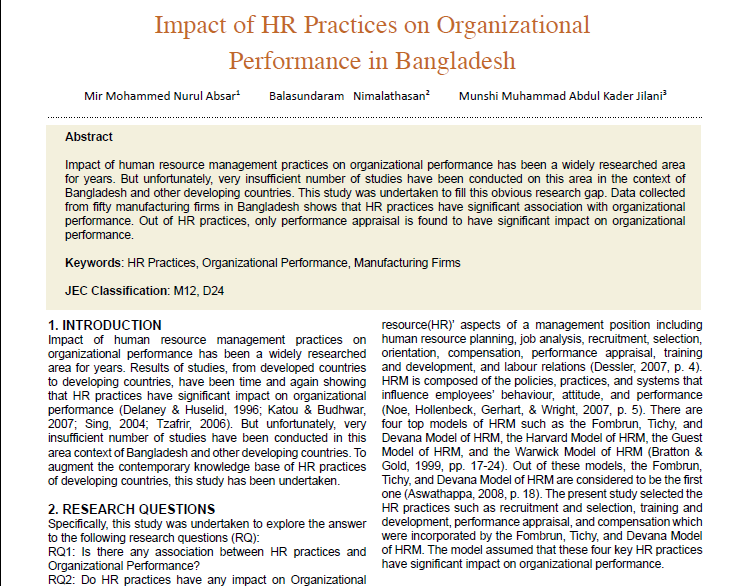
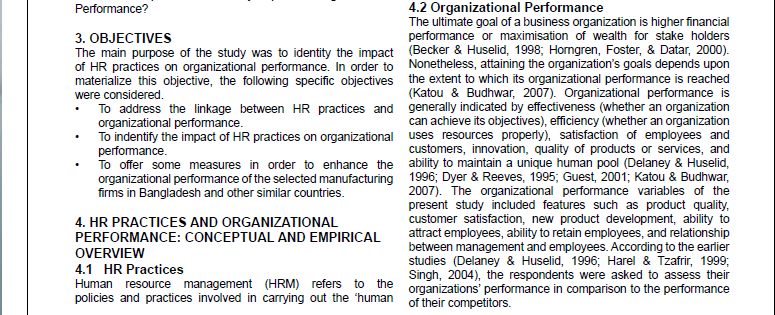
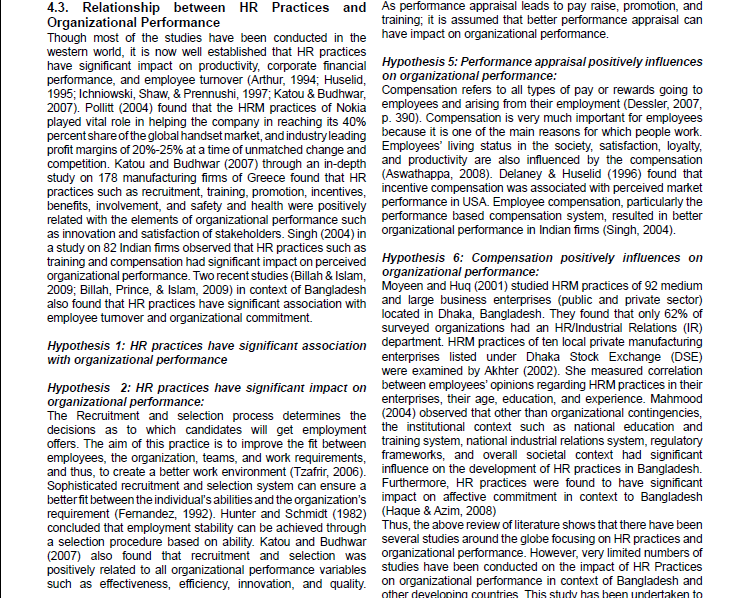
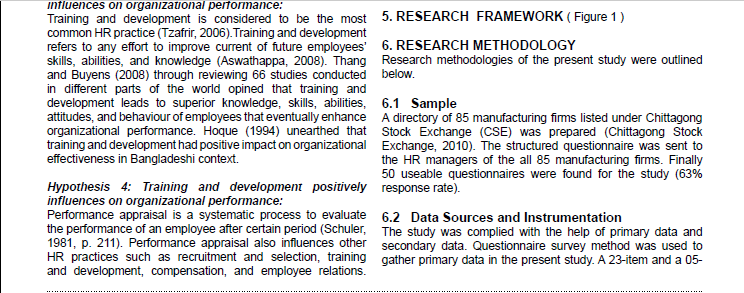
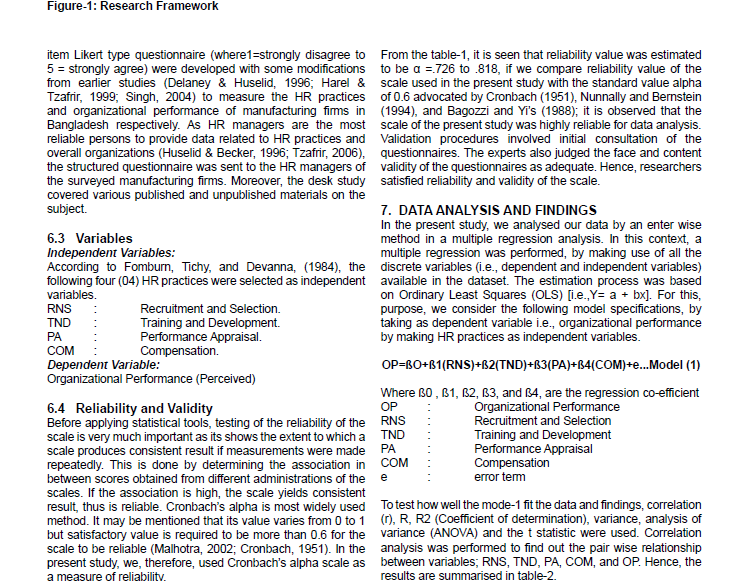
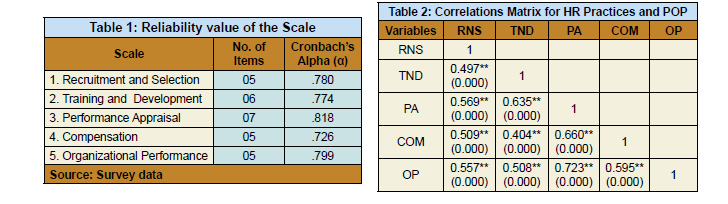
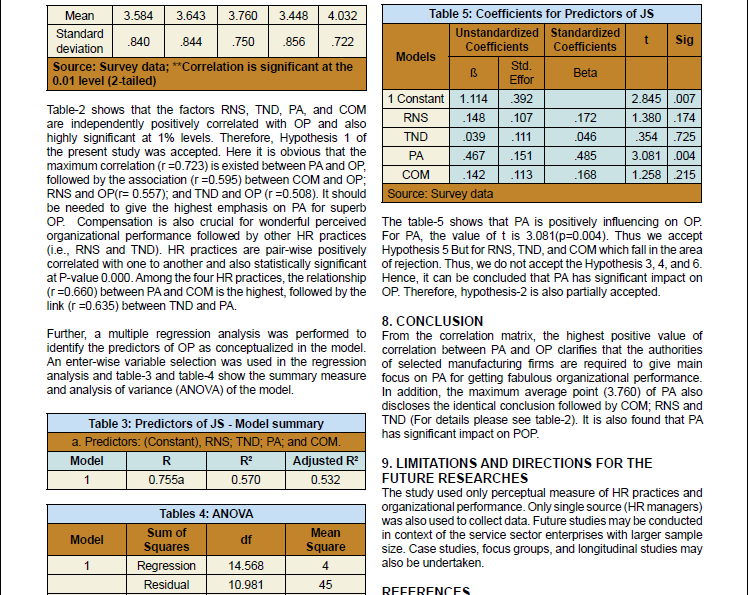
Impact of HR Practices on Organizational Performance in Bangladesh Mir Mohammed Nurul Absar Balasundaram Nimalathasan? Munshi Muhammad Abdul Kader Jilani Abstract Impact of human resource management practices on organizational performance has been a widely researched area for years. But unfortunately, very insufficient number of studies have been conducted on this area in the context of Bangladesh and other developing countries. This study was undertaken to fill this obvious research gap. Data collected from fifty manufacturing firms in Bangladesh shows that HR practices have significant association with organizational performance. Out of HR practices, only performance appraisal is found to have significant impact on organizational performance. Keywords: HR Practices, Organizational Performance, Manufacturing Firms JEC Classification: M12, D24 1. INTRODUCTION resource(HR) aspects of a management position including Impact of human resource management practices on human resource planning, job analysis, recruitment, selection, organizational performance has been a widely researched orientation, compensation, performance appraisal, training area for years. Results of studies, from developed countries and development, and labour relations (Dessler, 2007, p. 4). to developing countries, have been time and again showing HRM is composed of the policies, practices, and systems that that HR practices have significant impact on organizational influence employees' behaviour, attitude, and performance performance (Delaney & Huselid, 1996; Katou & Budhwar, (Noe, Hollenbeck, Gerhart, & Wright, 2007, p. 5). There are 2007; Sing, 2004; Tzafrir, 2006). But unfortunately, very four top models of HRM such as the Fombrun, Tichy, and insufficient number of studies have been conducted in this Devana Model of HRM, the Harvard Model of HRM, the Guest area context of Bangladesh and other developing countries. To Model of HRM, and the Warwick Model of HRM (Bratton & augment the contemporary knowledge base of HR practices Gold, 1999, pp. 17-24). Out of these models, the Fombrun, of developing countries, this study has been undertaken. Tichy, and Devana Model of HRM are considered to be the first one (Aswathappa, 2008, p. 18). The present study selected the 2. RESEARCH QUESTIONS HR practices such as recruitment and selection, training and Specifically, this study was undertaken to explore the answer development, performance appraisal, and compensation which to the following research questions (RQ): were incorporated by the Fombrun, Tichy, and Devana Model RQ1: Is there any association between HR practices and of HRM. The model assumed that these four key HR practices Organizational Performance? have significant impact on organizational performance. RQ2: Do HR practices have any impact on Organizational Performance? 4.2 Organizational Performance The ultimate goal of a business organization is higher financial 3. OBJECTIVES performance or maximisation of wealth for stake holders The main purpose of the study was to identity the impact (Becker & Huselid, 1998; Horngren, Foster, & Datar, 2000). of HR practices on organizational performance. In order to Nonetheless, attaining the organization's goals depends upon materialize this objective, the following specific objectives the extent to which its organizational performance is reached were considered. (Katou & Budhwar, 2007). Organizational performance is To address the linkage between HR practices and generally indicated by effectiveness (whether an organization organizational performance. can achieve its objectives), efficiency (whether an organization To indentify the impact of HR practices on organizational uses resources properly), satisfaction of employees and performance. customers, innovation, quality of products or services, and To offer some measures in order to enhance the ability to maintain a unique human pool (Delaney & Huselid, organizational performance of the selected manufacturing 1996; Dyer & Reeves, 1995; Guest, 2001; Katou & Budhwar, firms in Bangladesh and other similar countries. 2007). The organizational performance variables of the present study included features such as product quality, 4. HR PRACTICES AND ORGANIZATIONAL customer satisfaction, new product development, ability to PERFORMANCE: CONCEPTUAL AND EMPIRICAL attract employees, ability to retain employees, and relationship OVERVIEW between management and employees. According to the earlier 4.1 HR Practices studies (Delaney & Huselid, 1996; Harel & Tzafrir, 1999; Singh, 2004), the respondents were asked to assess their Human resource management (HRM) refers to the organizations' performance in comparison to the performance policies and practices involved in carrying out the human of their competitors. 4.3. Relationship between HR Practices and As performance appraisal leads to pay raise, promotion, and Organizational Performance training, it is assumed that better performance appraisal can Though most of the studies have been conducted in the have impact on organizational performance. western world, it is now well established that HR practices have significant impact on productivity, corporate financial Hypothesis 5: Performance appraisal positively influences performance, and employee turnover (Arthur, 1994; Huselid, on organizational performance: 1995; Ichniowski, Shaw, & Prennushi, 1997; Katou & BudhwarCompensation refers to all types of pay or rewards going to 2007). Pollitt (2004) found that the HRM practices of Nokia employees and arising from their employment (Dessler, 2007, played vital role in helping the company in reaching its 40% p. 390). Compensation is very much important for employees percent share of the global handset market and industry leading because it is one of the main reasons for which people work. profit margins of 20%-25% at a time of unmatched change and Employees' living status in the society, satisfaction, loyalty, competition. Katou and Budhwar (2007) through an in-depth and productivity are also influenced by the compensation study on 178 manufacturing firms of Greece found that HR (Aswathappa, 2008). Delaney & Huselid (1996) found that practices such as recruitment , training, promotion, incentives, incentive compensation was associated with perceived market benefits, involvement, and safety and health were positively performance in USA. Employee compensation, particularly the related with the elements of organizational performance such performance based compensation system, resulted in better as innovation and satisfaction of stakeholders. Singh (2004) in organizational performance in Indian firms (Singh, 2004). a study on 82 Indian firms observed that HR practices such as training and compensation had significant impact on perceived Hypothesis 6: Compensation positively influences on organizational performance. Two recent studies (Billah & Islam, organizational performance: 2009; Billah, Prince, & Islam, 2009) in context of Bangladesh Moyeen and Huq (2001) studied HRM practices of 92 medium also found that HR practices have significant association with and large business enterprises (public and private sector) employee tumover and organizational commitment. located in Dhaka, Bangladesh. They found that only 62% of surveyed organizations had an HR/Industrial Relations (IR) Hypothesis 1: HR practices have significant association department HRM practices of ten local private manufacturing with organizational performance enterprises listed under Dhaka Stock Exchange (DSE) were examined by Akhter (2002). She measured correlation Hypothesis 2: HR practices have significant impact on between employees' opinions regarding HRM practices in their organizational performance: enterprises, their age, education, and experience. Mahmood The Recruitment and selection process determines the (2004) observed that other than organizational contingencies, decisions as to which candidates will get employment the institutional context such as national education and offers. The aim of this practice is to improve the fit between training system, national industrial relations system, regulatory employees, the organization, teams, and work requirements, frameworks, and overall societal context had significant and thus, to create a better work environment (Tzafrir, 2006). influence on the development of HR practices in Bangladesh. Sophisticated recruitment and selection system can ensure a Furthermore, HR practices were found to have significant better fit between the individual's abilities and the organization's impact on affective commitment in context to Bangladesh requirement (Fernandez, 1992). Hunter and Schmidt (1982) (Haque & Azim, 2008) concluded that employment stability can be achieved through Thus, the above review of literature shows that there have been a selection procedure based on ability. Katou and Budhwar several studies around the globe focusing on HR practices and (2007) also found that recruitment and selection was organizational performance. However, very limited numbers of positively related to all organizational performance variables studies have been conducted on the impact of HR Practices such as effectiveness, efficiency, innovation, and quality. on organizational performance in context of Bangladesh and other developing countries. This study has been undertaken to influences on organizational performance: Training and development is considered to be the most 5. RESEARCH FRAMEWORK (Figure 1) common HR practice (Tzafrir, 2006). Training and development refers to any effort to improve current of future employees' 6. RESEARCH METHODOLOGY skills, abilities, and knowledge (Aswathappa, 2008). Thang Research methodologies of the present study were outlined and Buyens (2008) through reviewing 66 studies conducted below. in different parts of the world opined that training and development leads to superior knowledge, skills, abilities, 6.1 Sample attitudes, and behaviour of employees that eventually enhance A directory of 85 manufacturing fims listed under Chittagong organizational performance. Hoque (1994) unearthed that Stock Exchange (CSE) was prepared (Chittagong Stock training and development had positive impact on organizational Exchange, 2010). The structured questionnaire was sent to effectiveness in Bangladeshi context. the HR managers of the all 85 manufacturing firms. Finally 50 useable questionnaires were found for the study (63% Hypothesis 4: Training and development positively response rate). influences on organizational performance: Performance appraisal is a systematic process to evaluate 6.2 Data Sources and Instrumentation the performance of an employee after certain period (Schuler, The study was complied with the help of primary data and 1981, p. 211). Performance appraisal also influences other secondary data. Questionnaire survey method was used to HR practices such as recruitment and selection, training gather primary data in the present study. A 23-item and a 05- and development, compensation, and employee relations. Figure-1: Research Framework item Likert type questionnaire (where1=strongly disagree to From the table-1, it is seen that reliability value was estimated 5 = strongly agree) were developed with some modifications to be a =.726 to 818, if we compare reliability value of the from earlier studies (Delaney & Huselid, 1996; Harel & scale used in the present study with the standard value alpha Tzafrir, 1999; Singh, 2004) to measure the HR practices of 0.6 advocated by Cronbach (1951), Nunnally and Bernstein and organizational performance of manufacturing firms in (1994), and Bagozzi and Yi's (1988); it is observed that the Bangladesh respectively. As HR managers are the most scale of the present study was highly reliable for data analysis. reliable persons to provide data related to HR practices and Validation procedures involved initial consultation of the overall organizations (Huselid & Becker, 1996; Tzafrir, 2006), questionnaires. The experts also judged the face and content the structured questionnaire was sent to the HR managers of validity of the questionnaires as adequate. Hence, researchers the surveyed manufacturing firms. Moreover, the desk study satisfied reliability and validity of the scale. covered various published and unpublished materials on the subject. 7. DATA ANALYSIS AND FINDINGS In the present study, we analysed our data by an enter wise 6.3 Variables method in a multiple regression analysis. In this context, a Independent Variables: multiple regression was performed, by making use of all the According to Fomburn, Tichy, and Devanna, (1984), the discrete variables (i.e., dependent and independent variables) following four (04) HR practices were selected as independent available in the dataset. The estimation process was based variables. on Ordinary Least Squares (OLS) [i.e., Y= a + bx]. For this, RNS Recruitment and Selection. purpose, we consider the following model specifications, by TND Training and Development. taking as dependent variable i.e., organizational performance PA Performance Appraisal. by making HR practices as independent variables. COM Compensation Dependent Variable: OP=BO+B1(RNS)+B2(TND)+33(PA)+B4(COM)+e...Model (1) Organizational Performance (Perceived) Where BO, B1, B2, B3, and B4, are the regression coefficient 6.4 Reliability and validity Organizational Performance Before applying statistical tools, testing of the reliability of the RNS Recruitment and Selection scale is very much important as its shows the extent to which a TND Training and Development scale produces consistent result if measurements were made PA Performance Appraisal repeatedly. This is done by determining the association in COM Compensation between scores obtained from different administrations of the e error term scales. If the association is high, the scale yields consistent result, thus is reliable. Cronbach's alpha is most widely used to test how well the mode-1 fit the data and findings, correlation method. It may be mentioned that its value varies from 0 to 1 (), R, R2 (Coefficient of determination), variance, analysis of but satisfactory value is required to be more than 0.6 for the variance (ANOVA) and the t statistic were used. Correlation scale to be reliable (Malhotra, 2002; Cronbach, 1951). In the analysis was performed to find out the pair wise relationship present study, we, therefore, used Cronbach's alpha scale as between variables; RNS, TND, PA, COM, and OP. Hence, the a measure of reliability, results are summarised in table-2 OP Table 1: Reliability value of the Scale No. of Cronbach's Scale Items Alpha (a) 1. Recruitment and Selection 05 .780 2. Training and Development 06 .774 3. Performance Appraisal 07 .818 4. Compensation 05 .726 5. Organizational Performance 05 .799 Source: Survey data Table 2: Correlations Matrix for HR Practices and POP Variables RNS TND PA COM OP RNS 1 0.497** TND 1 (0.000) 0.569** 0.635** PA 1 (0.000) (0.000) 0.509** 0.404** 0.660** COM 1 (0.000) (0.000) (0.000) 0.557** 0.508** 0.723** 0.595** 1 (0.000) (0.000) (0.000) (0.000) t Mean 3.584 3.643 3.760 3.448 4.032 Table 5: Coefficients for Predictors of JS Standard Unstandardized Standardized .840 .844 .750 .856 .722 deviation Coefficients Coefficients Sig Models Source: Survey data; **Correlation is significant at the Std. B Beta 0.01 level (2-tailed) Effor 1 Constant 1.114 392 2.845 .007 Table-2 shows that the factors RNS, TND, PA, and COM are independently positively correlated with OP and also RNS .148 .107 .172 1.380.174 highly significant at 1% levels. Therefore, Hypothesis 1 of TND .039 .111 .046 354 .725 the present study was accepted. Here it is obvious that the PA 467 .151 485 3.081 .004 maximum correlation (r=0.723) is existed between PA and OP, followed by the association (r=0.595) between COM and OP; COM 142 113 .168 1.258 215 RNS and OP(r= 0.557), and TND and OP (r=0.508). It should Source: Survey data be needed to give the highest emphasis on PA for superb OP. Compensation is also crucial for wonderful perceived The table-5 shows that PA is positively influencing on OP. organizational performance followed by other HR practices For PA, the value of t is 3.081(p=0.004). Thus we accept (i.e., RNS and TND). HR practices are pair-wise positively Hypothesis 5 But for RNS, TND, and COM which fall in the area correlated with one to another and also statistically significant of rejection. Thus, we do not accept the Hypothesis 3, 4, and 6. at P-value 0.000. Among the four HR practices, the relationship Hence, it can be concluded that PA has significant impact on (r=0.660) between PA and COM is the highest, followed by the OP. Therefore, hypothesis-2 is also partially accepted. link (r=0.635) between TND and PA. 8. CONCLUSION Further, a multiple regression analysis was performed to From the correlation matrix, the highest positive value of identify the predictors of OP as conceptualized in the model correlation between PA and OP clarifies that the authorities An enter-wise variable selection was used in the regression of selected manufacturing firms are required to give main analysis and table-3 and table-4 show the summary measure focus on PA for getting fabulous organizational performance. and analysis of variance (ANOVA) of the model. In addition, the maximum average point (3.760) of PA also discloses the identical conclusion followed by COM; RNS and Table 3: Predictors of JS - Model summary TND (For details please see table-2). It is also found that PA a. Predictors: (Constant), RNS, TND; PA and COM. has significant impact on POP. Model R R? Adjusted R2 9. LIMITATIONS AND DIRECTIONS FOR THE 1 0.755a 0.570 0.532 FUTURE RESEARCHES The study used only perceptual measure of HR practices and organizational performance. Only single source (HR managers) Tables 4: ANOVA was also used to collect data. Future studies may be conducted Sum of Mean Model df in context of the service sector enterprises with larger sample Squares Square size. Case studies, focus groups, and longitudinal studies may Regression 14.568 4 also be undertaken. Residual 10.981 45 RFFFRENCES 1









 Study Help