







Question: Write a function called dict_invert that takes in a dictionary with immutable values and returns the inverse of the dictionary. The inverse of a dictionary
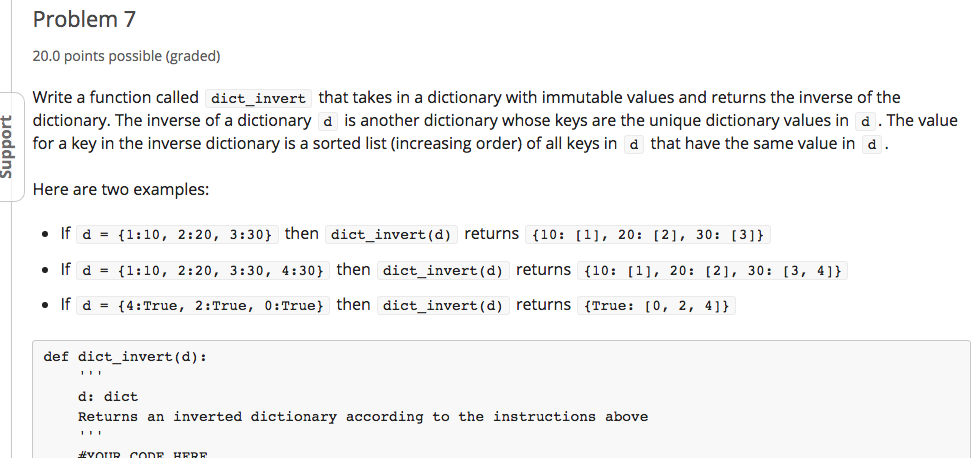
Write a function called dict_invert that takes in a dictionary with immutable values and returns the inverse of the dictionary. The inverse of a dictionary d is another dictionary whose keys are the unique dictionary values in d. The value for a key in the inverse dictionary is a sorted list (increasing order) of all keys in d that have the same value in d. Here are two examples: If d = {1: 10, 2: 20, 3: 30} then dict_invert(d) returns {10: [1, 20: [2], 30: [31]} If d = {1: 10, 2: 20, 3: 30, 4: 30} then dict_invert(d) returns {10: [1], 20: [2], 30: [3, 4]} If d = {4: True, 2: True, 0: True} then dict_invert(d) returns {True: [0, 2, 4]} def dict_invert (d): d: dict Returns an inverted dictionary according to the instructions above
Step by Step Solution
There are 3 Steps involved in it

Get step-by-step solutions from verified subject matter experts
 Study Help