







Question: Write a function named eliminate_super_diagonal which accepts two input arguments 1. an Nx N real (floating point) matrix A for which A#1I0, with N 2
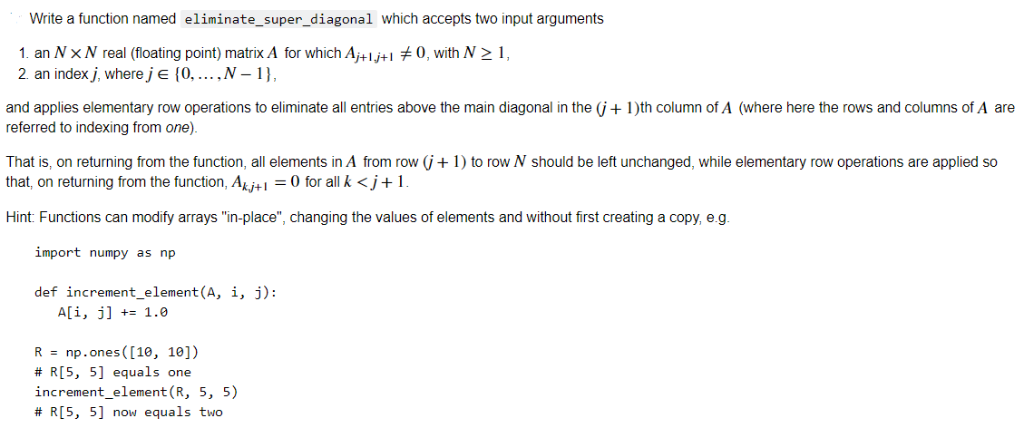
Write a function named eliminate_super_diagonal which accepts two input arguments 1. an Nx N real (floating point) matrix A for which A#1I0, with N 2 1, 2 an index j, where j E [0 N-1, and applies elementary row operations to eliminate all entries above the main diagonal in the (i+1)th column of A (where here the rows and columns of A are referred to indexing from one) That s, on returning rom the function, all elements in from row + 1) o row should be left unchanged while elementary row operations are applied so that, on returning from the function, Aj0 for all &j+1 Hint: Functions can modify arrays "in-place", changing the values of elements and without first creating a copy, e.g. import numpy as np def increment_element(A, i, j): R np.ones ([10, 10]) # R[5, 5] equals one increment element (R, 5, 5) # R[5, 5] now equals two
Step by Step Solution
There are 3 Steps involved in it

Get step-by-step solutions from verified subject matter experts
 Study Help