







Question: Write a post outlining the pitfalls or challenge that Dave (the consultant) encountered during each contracting phase in the scenario Consider in your consulting groups
- Write a post outlining the pitfalls or challenge that Dave (the consultant) encountered during each contracting phase in the scenario
- Consider in your consulting groups how these pitfalls could apply to your project and whether you need to change course at all
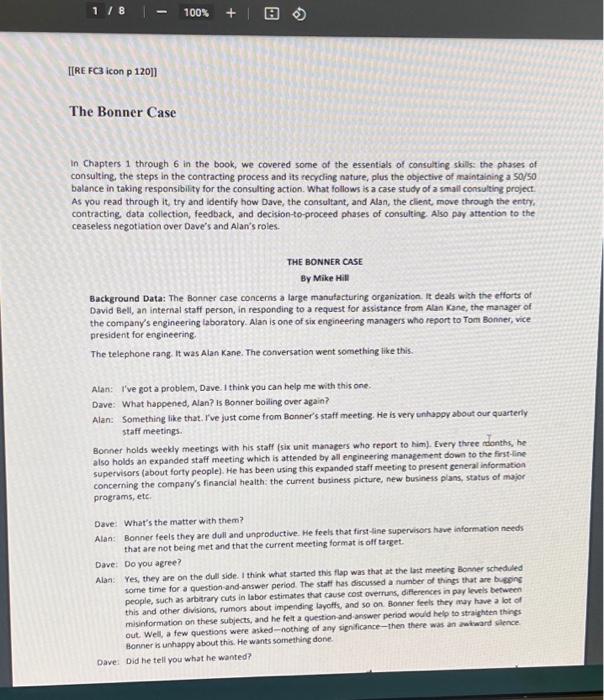
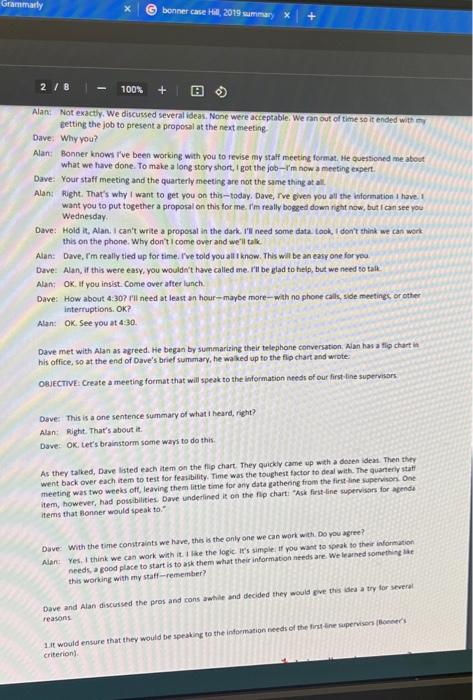
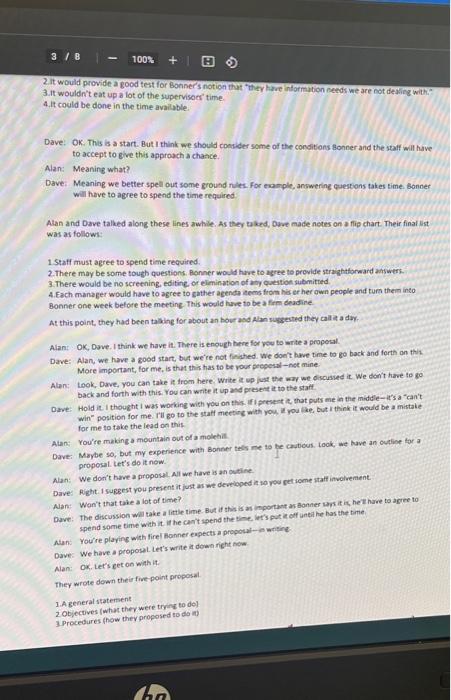
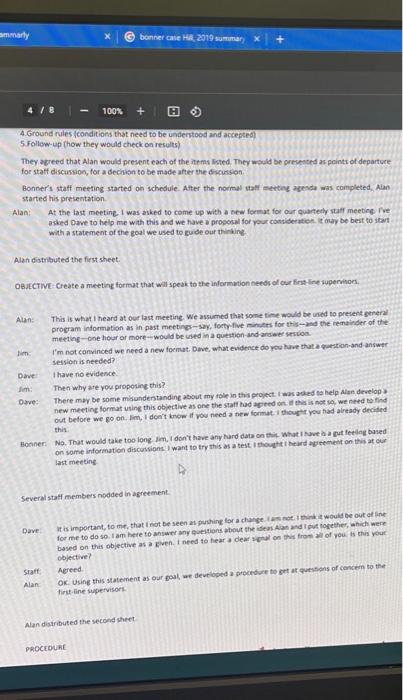
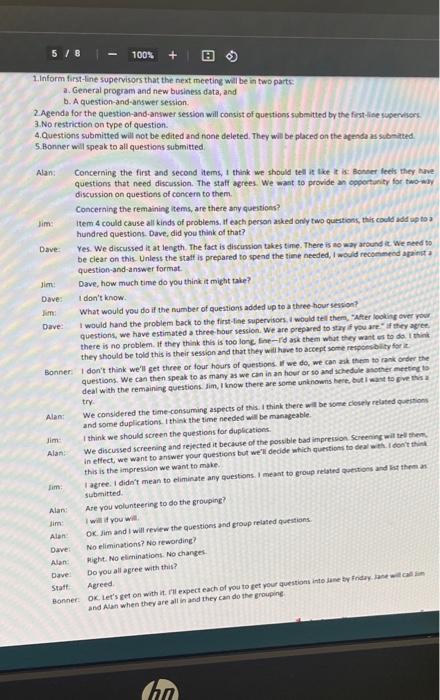
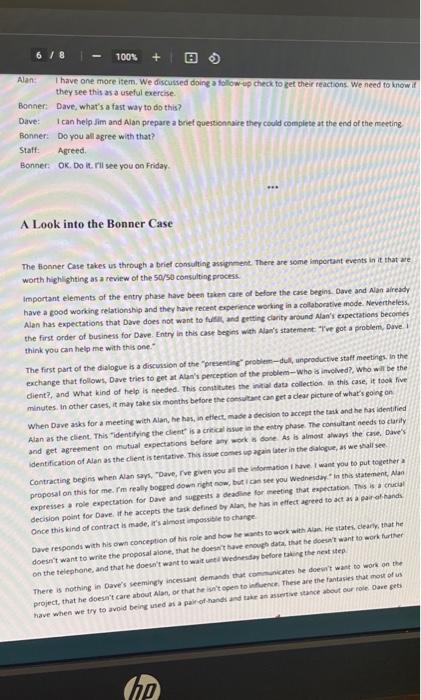
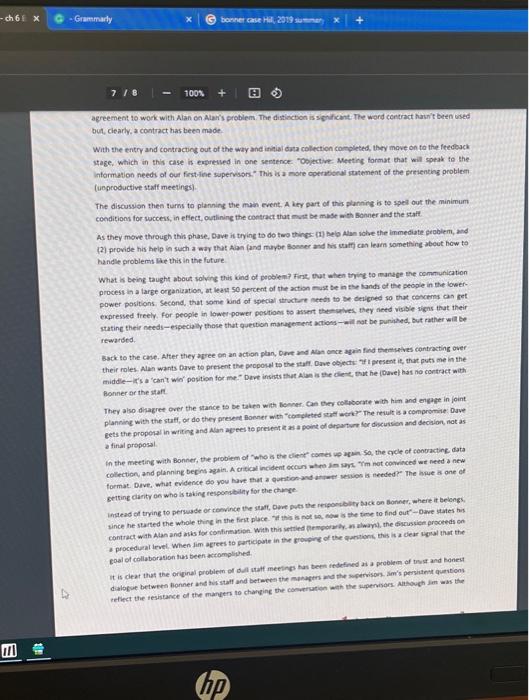
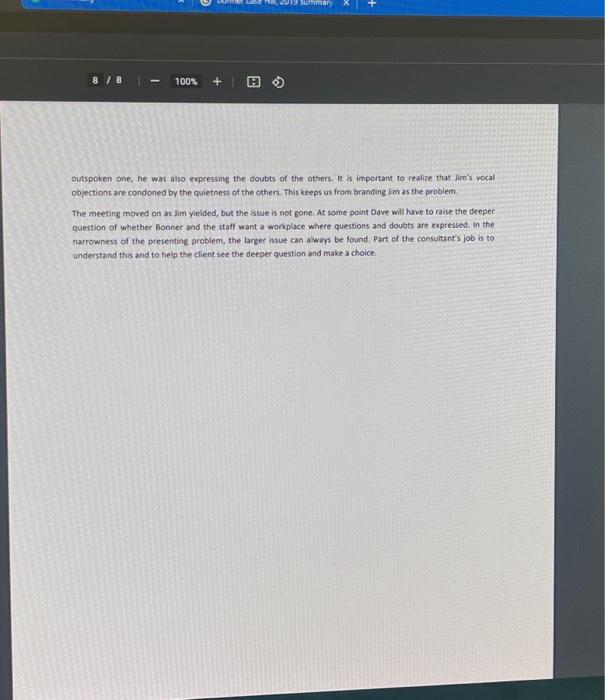
In Chapters 1 through 6 in the book, we covered some of the essentials of consulting skills: the phases of consulting, the steps in the contracting process and its recycling nature, plus the objective of maintaining a 50/50 balance in taking responsibility for the consulting action. What follows is a case study of a small consulting project. As you read through it, try and identify how Dave, the consultant, and Alan, the client, move through the entry, contracting, data collection, feedback, and decision-to-proceed phases of consulting Also ply attention to the ceaseless nezotiation over Dave's and Alan's roles. THE BONNER CASE By Mike Hill Background Data: The Bonner case concerns a large manulacturing organization. it deals with the etforts of David Bell, an internal staff person, in responding to a request for assistance from Alan Kanc, the manager of the company's engineering laboratory. Alan is one of six engineering managers who report to Tom Bonner, vice president for engineering. The telephone rang it was Alan Kane. The conversation went something like this. Alan: I've got a problem, Dave. 1 think you can help me with this one. Dave: What happened, Alan? is Eonner boling over again? Alan: Something like that. Ive just come from Bonner's staff meeting. He is very unhappy about our quarterly staff meetings. Bonner holds weelly meetings with his staff (six unit managers who report to him). Every three months, he aiso holds an expanded staff meeting which is attended by all engineering management down to the first-line supervisors (about forty people). He has been using this expanded staff meeting to present general information concerning the company's financial health: the current business picture, new business plans, status of major programs, etc. Dave: What's the matter with them? Alan: Bonner feels they are dull and unproductive. He feels that first line supervisors have information needs that are not being met and that the current meeting format is off target. Dave: Do you agree? Alan: Yes, they are on the dull side. I think what started this flap was that at the last meeting Bonner schedvied sorne time for a questionand-ancwer period. The staff has discussed a number of things that are bueging people, such as arbitrary cuts in labor estimates thet cause cost overnass, differences in pay levels between this and other divisions, rumors about impending loyoffs, and so on fonner ferk they may have a lot of misinformation on these subjects, and he felt a question and answer period would help to straighten things out Wel, a few questions were asked-nothing of any sien ficance-then there was an awiward slenceBonner is unhappy about this. He wants samething done Dave: Did he tell you what he wanted? Alani Not exacty, We discusted several ideas. None were acteptable. We ran out of time so it ended with my tetting the job to present a proposal at the next meeting Dave, Why you? Alar: Bonner knows r've been working with you to revise my stalf meeting format, He questioned me about what we have done. To make a long story short, 1 got the job-l'm now a meeting expert. Dave- Your staff meeting and the quarterly meeting are not the same thing at al. Alan: kight. That's why I want to get you on this-today. Dave, rve giveh you atl the information 1 have: 1 want you to put together a proposal on thisfor me. i'm really bogged down right now, but f can see you Wednesday. Dave: Hold it, Alan. I can't write a proposal in the dark. I'll need some data. took, I don't think we can work this on the phone. Why don't 1 come over and we'li talk. Aan: Dave, r'm really tied up for time. fve told you all t know. This will be an easy one for you. Dave. Alan, if this were easy, you woulda't have called me. r'll be glad to help, but we need to talk: Alan: Ox. if you insist. Come over after lunch. Dave: How about 4:30? I'll need at least an hour-maybe more-with no phone calk, side meetings, or other intertuptions. OK? Alan: OK See you at 430 . Dave met with Alan as agreed. He began by summarizing their telephone conversation, Aian has a flo chart it his office, so at the end of Dave's brief summary, he walked up to the flp chart and wrote: OBJECTIVE: Create a meeting format that will speak to the usformation steds of our first line supervibars: Dsve: This is a one sentence summary of what 1 heard, fight? Alant Right. That's about it: Dave: OK, ter's brainstorm some ways to do this. As ther talked, Dave listed each item on the flip chart. They quickly came up with a doseh ideat. Then they. went back mever eboting was two weeks oft, leaving them little time for any data gathering from the firit-line supervisen. One item, however, had possiblities. Dave underlined it on the fip charti "Ask frit-line suptrubars for agendel items that Bonner would speak to." Dave: Whth the time constraints we have, thas is the anly one we can work with Do you agrte? Aart Yes. I think we can work with it. 1 lke the logic. If's simple. If vou want to speak to their information Yes, I think we cas work winh it tive the legk is's simple ff vou wast to speak to thear infondation. needs, a good plate to start is to ask them what their information needs are we learned something at this working with my staff-remember? bave and Alan discussed the pros and cons awhle and decided they would fre thes isea a toy for several reasons 1. It would ensure that they would be spesking to the information needs of the fint tine auperisen focecers criterions. 2.it would provide a good test for Bonner's notion that "they have information needs we are not dealing with.? 3. It wouldn't eat up a lot of the supervisoes' time. 4. It could be done in the time avaluble. Dave: OK. This is a start. But I think we should consider some of the conditions Bonner and the staff will have to accept to give this approach a chance. Alan: Meanine what? Dave: Meaning we better spell out some ground nues. For ecample, anowering cuestions takes time Bonner will have to agree to spend the time required: Alan and Dave talked along these lines awhle. As ther tuked, Owe made notes on a flip chart. Their final list was as follows: 1. Staff must agree to spend time required. 2. There may be some tough questions. Aonner would have to arree to provide strighttorward antiwers. 3. There would be no screening, editine, or elimination of any quetion submitted. 4. Each manager would have to agree to gather agendt iems from her er her own people and tum them into Bonner one week before the meeting. This wosld have to be a frem deadire. At this point, they had been takine for about an hour and Alan subsected they calla a dyy. Alan: OK, Ovve. I think we have it. There is enough here for wee to write a propecal. Dave: Alan, we hove a good start but we're not finghed. We doent hwe time 60 go bock and forth on this More important, for me, is that this has to be your peopesal - not mine. Alon: Look, Dave, you can tale if trom here, Write it up just the war we diccusied it we daint have to go back and forth with this, rou can write it up asd present it to the statf. Dave: Hold ic i thought i was working with you on this. if i presest ic, that putr me in the midde-it's "can't win" position for me. r'll go to the staff meeting whth you a you like, but i think it would be a mustale for me to take the lead on this Alan: rou're making a mountain out of a moletil. Dave: Maybe so, but my experience with Bonner tabs me to be castious. took, we huve an outioe tor a proposal tet's do it now. Nan: We dor't have a proposit All we have is an outine Dave: Aight I suggest you present it just as we developed as so you get iome staff involvement. Aan: Won't that taie a lot of time? Dave: The diccussion will take a lithe time. Bit if this is as inportant as Aonner aps it is, he hare to agree to spend some time with it it he cant spend the tine, ir's put ic of uneit he has the bime whis Yourre plaping with firel Bonner expects a proposal-s whtine. Dave: We have a proposal Let's write it dowaricht now Alan: ox, Let's eet on with it: They wrote down their five point proposal. 1. A general statement 2 Objectives (what ther were tring to dol. 3. Precedures (how they proposed to do in) 4.Ground rules (conditions that need to be underntood and accepted? 5. Follow-up (how they would check on results) They agreed that Alan would present each of the ittms Isted. They wauld be presessed as pointr of departuce for staft discustion, for a dechion to be made after the diccusson. Bonner's staff meeting started on schedule. After the normal stafl metting agensa was completed, alan started his presentation. Alan: At the last meetine- 1 was asked to come up with a bee format for our quartecly statr meeting Fve axked Dave to help me with this and we have a prososal for your cossideratien it may be best to atmit with a statement of the goal we used to gude our thinking. Alan distrbuted the first sheet. DBILCTIVE: Greate a meeting format that will speak to the informution needs of cur firs line supennon. Aan: This is what i heard at our last mettine. We assimed that some fime would be used to present gereral procram intormation as in past meeting-s-2y, forty-five rinstrs for this-and the rechainder of the meeting - boe heur or more- would be used in a questien-and araw be sesion. Iim: I'm not convinced we need a new foemat Deve, what evidence do you have that a queston-and answer session is needed? Diver itave no evidence. Im: Then why are you groposing this? Owe: There may be some misuhderitandine about my tole in this project. t was aded ta help Asn develop 3 new meeting format using this objective as one the staft had agred ont il kisis is not sa, we reed to thind out before we go on. Im, I dog't knoe if voe need a new format I blougla you fiad aiready decited this Bonnen No. That would take too long Im, I don't have any hard data on thic. What I nuve da a gut feelag based on some information discussions. I want to try this as a test 1 thougte 1 heird ayetmett on this at our last meetine Several staft members nodded in agretenent Dare. It is important, to me, that I not be seen as punhing for a change. I as nat it think if wouls be out of ine for me to do so. 1 am here to answrr any queltions phout the isear alan and I pis pogether, which were based on this objective as a Even. i need to hear a dew zget on this fron all of you is this pour. ebjective? statt Agreed Alan: OK. Using this satement as our foal, we deur loped a preadure to ort at quesibons of cancen to the fint line dupervisork. 1.Inform furst-hine supervisors that the next meeting wall be in two parts: a. General program and new business data, and b. A question-and-ars wer session. 2. Agendl for the questicn-and-andwer session will consist of quektions submitted by the first-lise sugeraluers 3. No restriction on type of question 4.Questions submitted will not be edited and none deleted. They will be placed on the dgenda as subelath. 5 Borner will speak to all questions submitted Alan: Concerning the first and second items, t think we should tell it tike it is: Bonher feets they kive questions that need discussion. The staff agrees. We wast to provide an opportanty for tao-ely discussion on questions of concern to them. Concerning the remaining items, are there any questions? Jim: Item 4 could cause all kinds of problems, if each person asked only two questiosis, thir could add ap to a hundred questions. Dave, did you think of that? Dave: Yes. We diocussed it at length. The fact is discutsion takes time. There is ao aly around it we need to be clear on this. Unless the statt is prepared to spend the sime needed, I abuld recommeod aptirnt a question-and-answer format. Jim: Dave, how much time do you think it might take? Duve: Idon't know. Wim: What would you do if the number of questions added up to a thee hour session? Dave: I would hand the problem back to the first-line supervisors. I would tell them, "After logilits over pow questions, we have estimated a three hour session. We are prepared to stay if you are." if they aeree. there is no problem. If they think thes is toe long. fint-lid ask them whyt they want es to do, It think they should be told this is their sessinn and that they will have to accept some retpotsbility for it Bonner: I don't think we'll get three of four heurs of questions. If we do, we can ak them to rank brder the questions. We can then speak to as many as we can in an hour or so and achedple asother meeting ts deal with the remaining questions. Jim, I know there are some unk nowns hete, but I want to ove the a try. Alen: Iim:- I think we should scretn the questions for duplications. Alan: We discussed screering and rejected it because of the posvble bad imprecion. Screening will tell thes: this is the impression we want to make lim: Iagree. I didn't mean to eliminate any questions. 1 memt to group relutrd quentions and lat ahem at subrnitted. Alan: Are you volunteering to do the grouping? Jim: I will it you wite. Alen: OK. Jim and I will review the questions and groop related quettions Dave: No eliminations? No rewording? Alan: Hight. No eliminations No changes. Davel Do you all agree with this? Statf Agreed Bonner: Ox. Let's get on with it. Itl expect each of you to get your questions inte lune by Fnday jace wit call sin and Aan when they are all in and they can do the groupine. Alan: I have one moce item. We discussed doing a fallow-up check to get their reactions. We need to know they see this as a useful exercise. Bennert Dave, what's a fast way to do this? Dave: I can help lim and Alan prepare a beief quegtionnaire they could compiete at the end of the mecting Bonher: Do you ahtagree with that? Staft: Agreect. Bonner: OK. Do it. Ifil see you on Friday. A Look into the Bonner Case The foonner Case takes us thrbugh a brief consultine assignmene There are some impertant events in it that are worth highlighting as a review of the 50/30 consulting process. Important elemeats of the entry phabe have been taken cast of before the cait begins. Osve and Nan aiready have a good working relationship and they have recteet experience working in a colaborative mode. Nevertheless. Alan has expectations that Dave does not want to futh, and cetting clarity arvund Aan'y eipectations becortes the first order of business for Dave. Entry in this cast begins wath Alar's statertent Aive got a problem, Dave. think you can help me with this one. The first part of the dialogue is a divcuision of the "presenting" probiem-dul, unproduct ve staff meetirts. in the exchanee that follows, Dave tries to eet at Alan's perception of the problem-Who is imvelved?. Who will be the dient?, and What kind of help is netded. This condtites the incial data collection in this case, it took five minutes. In other cases, it may take sax menths before the csosulane can get a clear picture of what's going on When Dave asks for a meeting wich Alar, he has, if etlect made a decivion to accept the taik anat he has identified Alan as the client. This "identifying the clent is a cricical bser in the entry phase. The consultant needs to ciarity and get agreement on mutual expectations belore any work 8 done As is almont always the caie. Dave's identification of Alin as the client is tentatre. This issue comes up acain later in the dalogue, as we shall see. Contracting begins when Aan says, "Dave, rve given you all the intormabioh I have. I want pou to put tegether a proposal an this for me. Im really boesed bowa nght nowy but ican see you wednesdar. in this tatement, Alan expresses a role expectation for Dave and suepeits a deadine for meeting that expectation. This is a crucil decision point for Dave, if he accepts the task defined by alan, he has in effect agreed to act as a pair at hands Ocice this kind of contract is mude, it's almast impossible to charece. bave responds with his owt conception of this roir and how be wasts to work with Alan He tates, clearly, that he doesn't want to write the proposal alone, that he doest't bave encuph data, that be doesa't want to work horther on the telephone, and that ke doesh't want to wait unt wedneridar beflore taling the neat sep. There is nothing in Dave's seemingy incessant demands dat conminicates be doevit wast to work on the project, that he doese't care about Alan, or that the isit spent to infuenk. These are the tantasies that moit of us have when we try to avold being ased at a pair of hands and takr an asprive pance about cur roie oave gets agreement te work with Alan on Alah's preblem The distinction is sighificanty The werd certract hasn't beten used bu1. clearly. a contract has beea made Whth the entry and contracting out of the way ahd ifinial data colfection completed, they move on to the fecesck stage, Which in this case is exturessed in one sentence cojective Metting format that will speak fo the information needi of our firstiche supefvissrs." This is a more operabiral statpment of the freienting problem (ungroductive stsif meetings). The discussion then turns to planning the mas event, A key part of this planning is to spel out the minimum conditions for success, in effect, ourlining the contract that mut be mast ai th Bonner and the start. As they move through thit phase, Duve is trying to do targ things (1) belo dan iche the immediate grobicm, ats 12) provide this help in such a way that dan fand muybe Boneer and his satf cas learn jomething abeut bow to handle problems Whe this in the future What is being taught about solving this kind of peoblem? Frot, that when thing to manace the communication procest in a larbe organization, at lean 50 percent of the action must te in the hands er the people in the lowerpower positions Second, that some and of special struct are netds to be delicned so that cascens can ret expressed freely. For people in lowei-power postions to assert thenghes, they tieed visille tigns that their Itatine their needs-especialy thase that quectioh management astions - will nat be purihked, but rather will be revarded. back to the case, Atter they apree en an action plan, Dane and Alan ence again fond bitimives contracting aver their roles. Alan wants Dave to present the peoposel to the ataft. Dave ebjects af if gresent it, that puts me in the middle-ir's a 'can't win' position for me," Dere insints that Alah is the client, thut he (buve) has ho contract with Bgnner or the stafl. They also disagret over the thance to be tale with besner, Can eher collpborate with him and elgape in joint planring with the stafi, of do they gresert fowner with "corfigleted dadf werk? The felult id a compromite: Dave gets the proporal in writng and Alan apees to preteot a as a point of drparture for discutsion and decalon, not as a final preposal. In the meeting with Bonner, the probiem of "who as the client" comes we agan so, the cycle of convacting. data collectiony and planning becins agais. A or ical incident eccun who 8m3Mg. 7 fim not covinced we need a new getting clarity on who is taking tespondbiny for the chunge intead ch tryine to pertuade or cenvince the statt, Dave pets the reigoesbbtr back an bonner, where it bekegs. since he started the whole thine in the firt place. "Ar whis is not lo, now is the tare to find eut" -0we states his coal of collatioration has been atromplighed. dialofue betwets bonner and his staff and beteces the mplugtrs avd the segervisons. Am's persithet quations outspoken one, he was also expressing the doubts of the others it is important to realize that lim's vocal objections are condoned by the quietness of the others. This keeps us from branding lim as the problem. The meeting moved on as Jim yielded, but the ssue is not gone. At some point Dave will have to raise the deeper question of whether Bonner and the staff want a workglace where questions and doubts are expressed. in the narrowness of the presenting problem, the larger issue can always be found Part of the consultant's job is to understand this and to heip the client see the deeper question and makea choice. In Chapters 1 through 6 in the book, we covered some of the essentials of consulting skills: the phases of consulting, the steps in the contracting process and its recycling nature, plus the objective of maintaining a 50/50 balance in taking responsibility for the consulting action. What follows is a case study of a small consulting project. As you read through it, try and identify how Dave, the consultant, and Alan, the client, move through the entry, contracting, data collection, feedback, and decision-to-proceed phases of consulting Also ply attention to the ceaseless nezotiation over Dave's and Alan's roles. THE BONNER CASE By Mike Hill Background Data: The Bonner case concerns a large manulacturing organization. it deals with the etforts of David Bell, an internal staff person, in responding to a request for assistance from Alan Kanc, the manager of the company's engineering laboratory. Alan is one of six engineering managers who report to Tom Bonner, vice president for engineering. The telephone rang it was Alan Kane. The conversation went something like this. Alan: I've got a problem, Dave. 1 think you can help me with this one. Dave: What happened, Alan? is Eonner boling over again? Alan: Something like that. Ive just come from Bonner's staff meeting. He is very unhappy about our quarterly staff meetings. Bonner holds weelly meetings with his staff (six unit managers who report to him). Every three months, he aiso holds an expanded staff meeting which is attended by all engineering management down to the first-line supervisors (about forty people). He has been using this expanded staff meeting to present general information concerning the company's financial health: the current business picture, new business plans, status of major programs, etc. Dave: What's the matter with them? Alan: Bonner feels they are dull and unproductive. He feels that first line supervisors have information needs that are not being met and that the current meeting format is off target. Dave: Do you agree? Alan: Yes, they are on the dull side. I think what started this flap was that at the last meeting Bonner schedvied sorne time for a questionand-ancwer period. The staff has discussed a number of things that are bueging people, such as arbitrary cuts in labor estimates thet cause cost overnass, differences in pay levels between this and other divisions, rumors about impending loyoffs, and so on fonner ferk they may have a lot of misinformation on these subjects, and he felt a question and answer period would help to straighten things out Wel, a few questions were asked-nothing of any sien ficance-then there was an awiward slenceBonner is unhappy about this. He wants samething done Dave: Did he tell you what he wanted? Alani Not exacty, We discusted several ideas. None were acteptable. We ran out of time so it ended with my tetting the job to present a proposal at the next meeting Dave, Why you? Alar: Bonner knows r've been working with you to revise my stalf meeting format, He questioned me about what we have done. To make a long story short, 1 got the job-l'm now a meeting expert. Dave- Your staff meeting and the quarterly meeting are not the same thing at al. Alan: kight. That's why I want to get you on this-today. Dave, rve giveh you atl the information 1 have: 1 want you to put together a proposal on thisfor me. i'm really bogged down right now, but f can see you Wednesday. Dave: Hold it, Alan. I can't write a proposal in the dark. I'll need some data. took, I don't think we can work this on the phone. Why don't 1 come over and we'li talk. Aan: Dave, r'm really tied up for time. fve told you all t know. This will be an easy one for you. Dave. Alan, if this were easy, you woulda't have called me. r'll be glad to help, but we need to talk: Alan: Ox. if you insist. Come over after lunch. Dave: How about 4:30? I'll need at least an hour-maybe more-with no phone calk, side meetings, or other intertuptions. OK? Alan: OK See you at 430 . Dave met with Alan as agreed. He began by summarizing their telephone conversation, Aian has a flo chart it his office, so at the end of Dave's brief summary, he walked up to the flp chart and wrote: OBJECTIVE: Create a meeting format that will speak to the usformation steds of our first line supervibars: Dsve: This is a one sentence summary of what 1 heard, fight? Alant Right. That's about it: Dave: OK, ter's brainstorm some ways to do this. As ther talked, Dave listed each item on the flip chart. They quickly came up with a doseh ideat. Then they. went back mever eboting was two weeks oft, leaving them little time for any data gathering from the firit-line supervisen. One item, however, had possiblities. Dave underlined it on the fip charti "Ask frit-line suptrubars for agendel items that Bonner would speak to." Dave: Whth the time constraints we have, thas is the anly one we can work with Do you agrte? Aart Yes. I think we can work with it. 1 lke the logic. If's simple. If vou want to speak to their information Yes, I think we cas work winh it tive the legk is's simple ff vou wast to speak to thear infondation. needs, a good plate to start is to ask them what their information needs are we learned something at this working with my staff-remember? bave and Alan discussed the pros and cons awhle and decided they would fre thes isea a toy for several reasons 1. It would ensure that they would be spesking to the information needs of the fint tine auperisen focecers criterions. 2.it would provide a good test for Bonner's notion that "they have information needs we are not dealing with.? 3. It wouldn't eat up a lot of the supervisoes' time. 4. It could be done in the time avaluble. Dave: OK. This is a start. But I think we should consider some of the conditions Bonner and the staff will have to accept to give this approach a chance. Alan: Meanine what? Dave: Meaning we better spell out some ground nues. For ecample, anowering cuestions takes time Bonner will have to agree to spend the time required: Alan and Dave talked along these lines awhle. As ther tuked, Owe made notes on a flip chart. Their final list was as follows: 1. Staff must agree to spend time required. 2. There may be some tough questions. Aonner would have to arree to provide strighttorward antiwers. 3. There would be no screening, editine, or elimination of any quetion submitted. 4. Each manager would have to agree to gather agendt iems from her er her own people and tum them into Bonner one week before the meeting. This wosld have to be a frem deadire. At this point, they had been takine for about an hour and Alan subsected they calla a dyy. Alan: OK, Ovve. I think we have it. There is enough here for wee to write a propecal. Dave: Alan, we hove a good start but we're not finghed. We doent hwe time 60 go bock and forth on this More important, for me, is that this has to be your peopesal - not mine. Alon: Look, Dave, you can tale if trom here, Write it up just the war we diccusied it we daint have to go back and forth with this, rou can write it up asd present it to the statf. Dave: Hold ic i thought i was working with you on this. if i presest ic, that putr me in the midde-it's "can't win" position for me. r'll go to the staff meeting whth you a you like, but i think it would be a mustale for me to take the lead on this Alan: rou're making a mountain out of a moletil. Dave: Maybe so, but my experience with Bonner tabs me to be castious. took, we huve an outioe tor a proposal tet's do it now. Nan: We dor't have a proposit All we have is an outine Dave: Aight I suggest you present it just as we developed as so you get iome staff involvement. Aan: Won't that taie a lot of time? Dave: The diccussion will take a lithe time. Bit if this is as inportant as Aonner aps it is, he hare to agree to spend some time with it it he cant spend the tine, ir's put ic of uneit he has the bime whis Yourre plaping with firel Bonner expects a proposal-s whtine. Dave: We have a proposal Let's write it dowaricht now Alan: ox, Let's eet on with it: They wrote down their five point proposal. 1. A general statement 2 Objectives (what ther were tring to dol. 3. Precedures (how they proposed to do in) 4.Ground rules (conditions that need to be underntood and accepted? 5. Follow-up (how they would check on results) They agreed that Alan would present each of the ittms Isted. They wauld be presessed as pointr of departuce for staft discustion, for a dechion to be made after the diccusson. Bonner's staff meeting started on schedule. After the normal stafl metting agensa was completed, alan started his presentation. Alan: At the last meetine- 1 was asked to come up with a bee format for our quartecly statr meeting Fve axked Dave to help me with this and we have a prososal for your cossideratien it may be best to atmit with a statement of the goal we used to gude our thinking. Alan distrbuted the first sheet. DBILCTIVE: Greate a meeting format that will speak to the informution needs of cur firs line supennon. Aan: This is what i heard at our last mettine. We assimed that some fime would be used to present gereral procram intormation as in past meeting-s-2y, forty-five rinstrs for this-and the rechainder of the meeting - boe heur or more- would be used in a questien-and araw be sesion. Iim: I'm not convinced we need a new foemat Deve, what evidence do you have that a queston-and answer session is needed? Diver itave no evidence. Im: Then why are you groposing this? Owe: There may be some misuhderitandine about my tole in this project. t was aded ta help Asn develop 3 new meeting format using this objective as one the staft had agred ont il kisis is not sa, we reed to thind out before we go on. Im, I dog't knoe if voe need a new format I blougla you fiad aiready decited this Bonnen No. That would take too long Im, I don't have any hard data on thic. What I nuve da a gut feelag based on some information discussions. I want to try this as a test 1 thougte 1 heird ayetmett on this at our last meetine Several staft members nodded in agretenent Dare. It is important, to me, that I not be seen as punhing for a change. I as nat it think if wouls be out of ine for me to do so. 1 am here to answrr any queltions phout the isear alan and I pis pogether, which were based on this objective as a Even. i need to hear a dew zget on this fron all of you is this pour. ebjective? statt Agreed Alan: OK. Using this satement as our foal, we deur loped a preadure to ort at quesibons of cancen to the fint line dupervisork. 1.Inform furst-hine supervisors that the next meeting wall be in two parts: a. General program and new business data, and b. A question-and-ars wer session. 2. Agendl for the questicn-and-andwer session will consist of quektions submitted by the first-lise sugeraluers 3. No restriction on type of question 4.Questions submitted will not be edited and none deleted. They will be placed on the dgenda as subelath. 5 Borner will speak to all questions submitted Alan: Concerning the first and second items, t think we should tell it tike it is: Bonher feets they kive questions that need discussion. The staff agrees. We wast to provide an opportanty for tao-ely discussion on questions of concern to them. Concerning the remaining items, are there any questions? Jim: Item 4 could cause all kinds of problems, if each person asked only two questiosis, thir could add ap to a hundred questions. Dave, did you think of that? Dave: Yes. We diocussed it at length. The fact is discutsion takes time. There is ao aly around it we need to be clear on this. Unless the statt is prepared to spend the sime needed, I abuld recommeod aptirnt a question-and-answer format. Jim: Dave, how much time do you think it might take? Duve: Idon't know. Wim: What would you do if the number of questions added up to a thee hour session? Dave: I would hand the problem back to the first-line supervisors. I would tell them, "After logilits over pow questions, we have estimated a three hour session. We are prepared to stay if you are." if they aeree. there is no problem. If they think thes is toe long. fint-lid ask them whyt they want es to do, It think they should be told this is their sessinn and that they will have to accept some retpotsbility for it Bonner: I don't think we'll get three of four heurs of questions. If we do, we can ak them to rank brder the questions. We can then speak to as many as we can in an hour or so and achedple asother meeting ts deal with the remaining questions. Jim, I know there are some unk nowns hete, but I want to ove the a try. Alen: Iim:- I think we should scretn the questions for duplications. Alan: We discussed screering and rejected it because of the posvble bad imprecion. Screening will tell thes: this is the impression we want to make lim: Iagree. I didn't mean to eliminate any questions. 1 memt to group relutrd quentions and lat ahem at subrnitted. Alan: Are you volunteering to do the grouping? Jim: I will it you wite. Alen: OK. Jim and I will review the questions and groop related quettions Dave: No eliminations? No rewording? Alan: Hight. No eliminations No changes. Davel Do you all agree with this? Statf Agreed Bonner: Ox. Let's get on with it. Itl expect each of you to get your questions inte lune by Fnday jace wit call sin and Aan when they are all in and they can do the groupine. Alan: I have one moce item. We discussed doing a fallow-up check to get their reactions. We need to know they see this as a useful exercise. Bennert Dave, what's a fast way to do this? Dave: I can help lim and Alan prepare a beief quegtionnaire they could compiete at the end of the mecting Bonher: Do you ahtagree with that? Staft: Agreect. Bonner: OK. Do it. Ifil see you on Friday. A Look into the Bonner Case The foonner Case takes us thrbugh a brief consultine assignmene There are some impertant events in it that are worth highlighting as a review of the 50/30 consulting process. Important elemeats of the entry phabe have been taken cast of before the cait begins. Osve and Nan aiready have a good working relationship and they have recteet experience working in a colaborative mode. Nevertheless. Alan has expectations that Dave does not want to futh, and cetting clarity arvund Aan'y eipectations becortes the first order of business for Dave. Entry in this cast begins wath Alar's statertent Aive got a problem, Dave. think you can help me with this one. The first part of the dialogue is a divcuision of the "presenting" probiem-dul, unproduct ve staff meetirts. in the exchanee that follows, Dave tries to eet at Alan's perception of the problem-Who is imvelved?. Who will be the dient?, and What kind of help is netded. This condtites the incial data collection in this case, it took five minutes. In other cases, it may take sax menths before the csosulane can get a clear picture of what's going on When Dave asks for a meeting wich Alar, he has, if etlect made a decivion to accept the taik anat he has identified Alan as the client. This "identifying the clent is a cricical bser in the entry phase. The consultant needs to ciarity and get agreement on mutual expectations belore any work 8 done As is almont always the caie. Dave's identification of Alin as the client is tentatre. This issue comes up acain later in the dalogue, as we shall see. Contracting begins when Aan says, "Dave, rve given you all the intormabioh I have. I want pou to put tegether a proposal an this for me. Im really boesed bowa nght nowy but ican see you wednesdar. in this tatement, Alan expresses a role expectation for Dave and suepeits a deadine for meeting that expectation. This is a crucil decision point for Dave, if he accepts the task defined by alan, he has in effect agreed to act as a pair at hands Ocice this kind of contract is mude, it's almast impossible to charece. bave responds with his owt conception of this roir and how be wasts to work with Alan He tates, clearly, that he doesn't want to write the proposal alone, that he doest't bave encuph data, that be doesa't want to work horther on the telephone, and that ke doesh't want to wait unt wedneridar beflore taling the neat sep. There is nothing in Dave's seemingy incessant demands dat conminicates be doevit wast to work on the project, that he doese't care about Alan, or that the isit spent to infuenk. These are the tantasies that moit of us have when we try to avold being ased at a pair of hands and takr an asprive pance about cur roie oave gets agreement te work with Alan on Alah's preblem The distinction is sighificanty The werd certract hasn't beten used bu1. clearly. a contract has beea made Whth the entry and contracting out of the way ahd ifinial data colfection completed, they move on to the fecesck stage, Which in this case is exturessed in one sentence cojective Metting format that will speak fo the information needi of our firstiche supefvissrs." This is a more operabiral statpment of the freienting problem (ungroductive stsif meetings). The discussion then turns to planning the mas event, A key part of this planning is to spel out the minimum conditions for success, in effect, ourlining the contract that mut be mast ai th Bonner and the start. As they move through thit phase, Duve is trying to do targ things (1) belo dan iche the immediate grobicm, ats 12) provide this help in such a way that dan fand muybe Boneer and his satf cas learn jomething abeut bow to handle problems Whe this in the future What is being taught about solving this kind of peoblem? Frot, that when thing to manace the communication procest in a larbe organization, at lean 50 percent of the action must te in the hands er the people in the lowerpower positions Second, that some and of special struct are netds to be delicned so that cascens can ret expressed freely. For people in lowei-power postions to assert thenghes, they tieed visille tigns that their Itatine their needs-especialy thase that quectioh management astions - will nat be purihked, but rather will be revarded. back to the case, Atter they apree en an action plan, Dane and Alan ence again fond bitimives contracting aver their roles. Alan wants Dave to present the peoposel to the ataft. Dave ebjects af if gresent it, that puts me in the middle-ir's a 'can't win' position for me," Dere insints that Alah is the client, thut he (buve) has ho contract with Bgnner or the stafl. They also disagret over the thance to be tale with besner, Can eher collpborate with him and elgape in joint planring with the stafi, of do they gresert fowner with "corfigleted dadf werk? The felult id a compromite: Dave gets the proporal in writng and Alan apees to preteot a as a point of drparture for discutsion and decalon, not as a final preposal. In the meeting with Bonner, the probiem of "who as the client" comes we agan so, the cycle of convacting. data collectiony and planning becins agais. A or ical incident eccun who 8m3Mg. 7 fim not covinced we need a new getting clarity on who is taking tespondbiny for the chunge intead ch tryine to pertuade or cenvince the statt, Dave pets the reigoesbbtr back an bonner, where it bekegs. since he started the whole thine in the firt place. "Ar whis is not lo, now is the tare to find eut" -0we states his coal of collatioration has been atromplighed. dialofue betwets bonner and his staff and beteces the mplugtrs avd the segervisons. Am's persithet quations outspoken one, he was also expressing the doubts of the others it is important to realize that lim's vocal objections are condoned by the quietness of the others. This keeps us from branding lim as the problem. The meeting moved on as Jim yielded, but the ssue is not gone. At some point Dave will have to raise the deeper question of whether Bonner and the staff want a workglace where questions and doubts are expressed. in the narrowness of the presenting problem, the larger issue can always be found Part of the consultant's job is to understand this and to heip the client see the deeper question and makea choice
Step by Step Solution
There are 3 Steps involved in it
Question look at my pictures those are the wrong answers Calculate operati... View full answer

Get step-by-step solutions from verified subject matter experts
 Study Help