







Question: Write a program using Scanner and its nextLine method. The following is an example of how to use nextLine Scanner kybd = new Scanner(System.in);
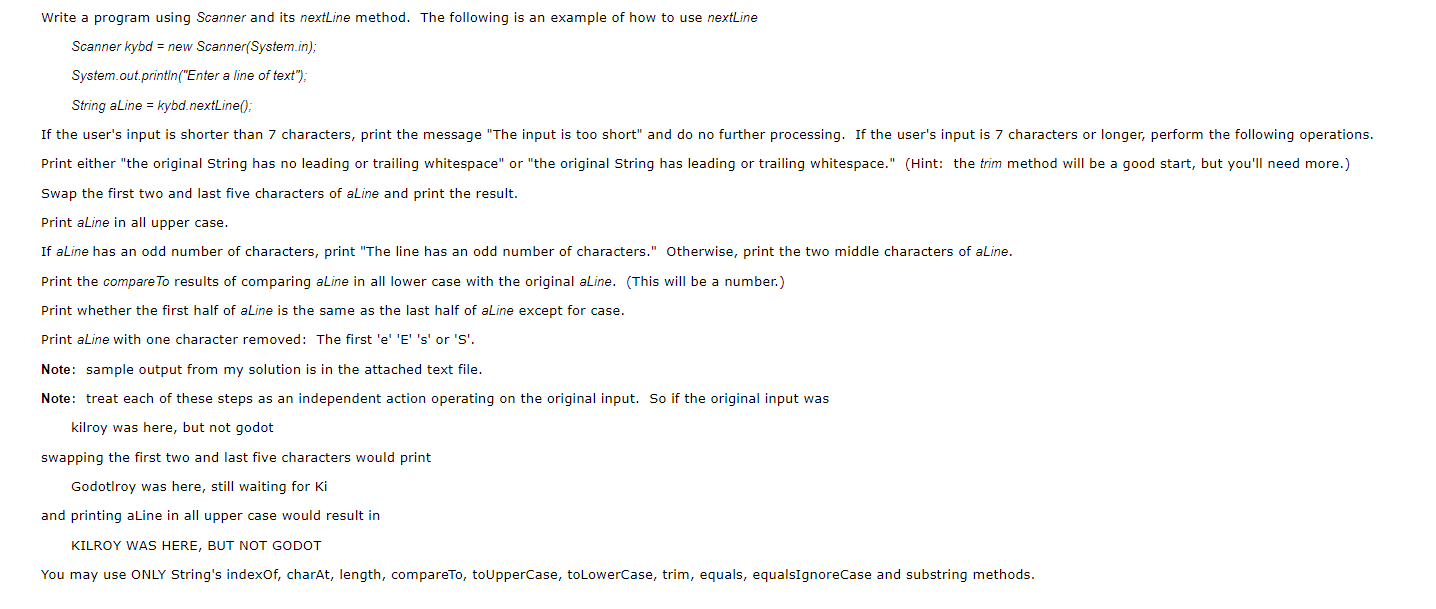
Write a program using Scanner and its nextLine method. The following is an example of how to use nextLine Scanner kybd = new Scanner(System.in); System.out.println("Enter a line of text"); String aLine = kybd.nextLine(); If the user's input is shorter than 7 characters, print the message "The input is too short" and do no further processing. If the user's input is 7 characters or longer, perform the following operations. Print either "the original String has no leading or trailing whitespace" or "the original String has leading or trailing whitespace." (Hint: the trim method will be a good start, but you'll need more.) Swap the first two and last five characters of aLine and print the result. Print aLine in all upper case. If aLine has an odd number of characters, print "The line has an odd number of characters." Otherwise, print the two middle characters of aLine. Print the compare To results of comparing aLine in all lower case with the original aLine. (This will be a number.) Print whether the first half of aLine is the same as the last half of aLine except for case. Print aLine with one character removed: The first 'e' 'E' 's' or 'S'. Note: sample output from my solution is in the attached text file. Note: treat each of these steps as an independent action operating on the original input. So if the original input was kilroy was here, but not godot swapping the first two and last five characters would print Godotlroy was here, still waiting for Ki and printing aLine in all upper case would result in KILROY WAS HERE, BUT NOT GODOT You may use ONLY String's indexOf, charAt, length, compareTo, toUpperCase, toLowerCase, trim, equals, equalsIgnoreCase and substring methods.
Step by Step Solution
3.37 Rating (163 Votes )
There are 3 Steps involved in it
Heres a Java program that uses the Scanner class and its nextLine method to implement the specified ... View full answer

Get step-by-step solutions from verified subject matter experts
 Study Help