







Question: Write a response to this article. You do not have to assume you are the new CEO. Incentives Gone Wrong, Then Wrong Again, and Wrong
Write a response to this article. You do not have to assume you are the new CEO.
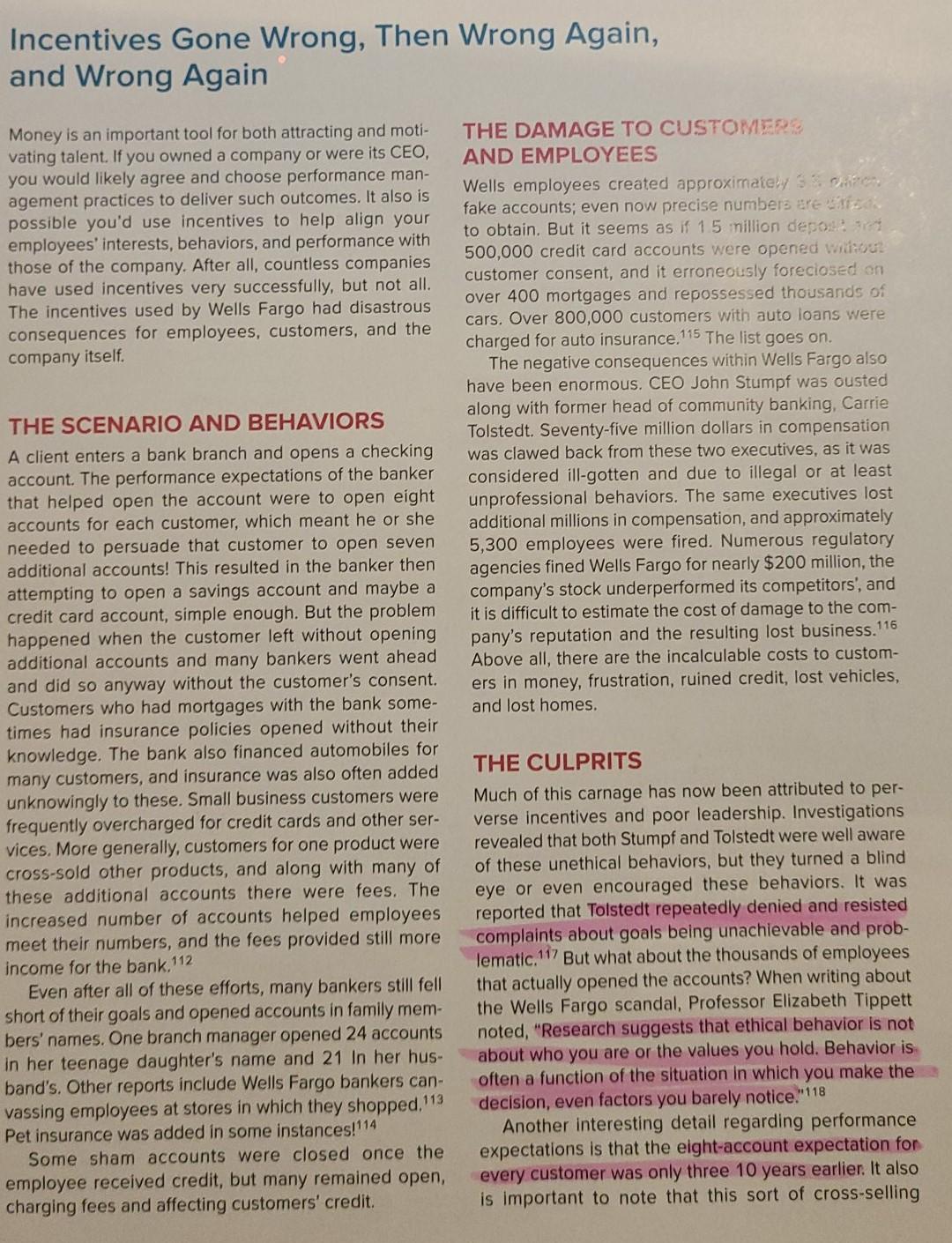
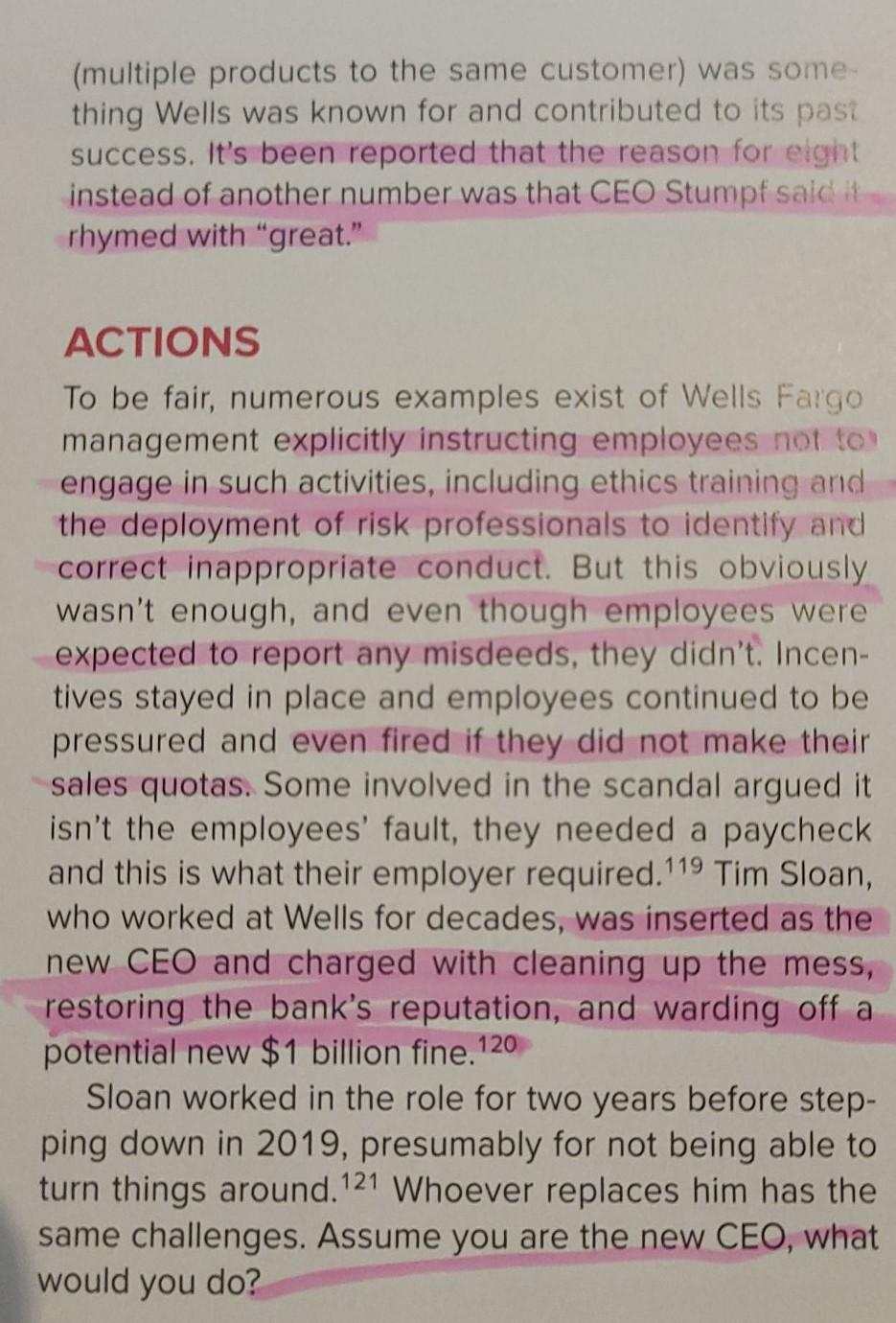
Incentives Gone Wrong, Then Wrong Again, and Wrong Again Money is an important tool for both attracting and moti- vating talent. If you owned a company or were its CEO, you would likely agree and choose performance man- agement practices to deliver such outcomes. It also is possible you'd use incentives to help align your employees' interests, behaviors, and performance with those of the company. After all, countless companies have used incentives very successfully, but not all. The incentives used by Wells Fargo had disastrous consequences for employees, customers, and the company itself. THE DAMAGE TO CUSTOMER AND EMPLOYEES Wells employees created approximatews fake accounts; even now precise numbers are the to obtain. But it seems as if 1.5 million depos 500,000 credit card accounts were opened widou customer consent, and it erroneously foreclosed on over 400 mortgages and repossessed thousands of cars. Over 800,000 customers with auto loans were charged for auto insurance.115 The list goes on. The negative consequences within Wells Fargo also have been enormous. CEO John Stumpf was ousted along with former head of community banking, Carrie Tolstedt. Seventy-five million dollars in compensation was clawed back from these two executives, as it was considered ill-gotten and due to illegal or at least unprofessional behaviors. The same executives lost additional millions in compensation, and approximately 5,300 employees were fired. Numerous regulatory agencies fined Wells Fargo for nearly $200 million, the company's stock underperformed its competitors', and it is difficult to estimate the cost of damage to the com- pany's reputation and the resulting lost business. 116 Above all, there are the incalculable costs to custom- ers in money, frustration, ruined credit, lost vehicles, and lost homes. THE SCENARIO AND BEHAVIORS A client enters a bank branch and opens a checking account. The performance expectations of the banker that helped open the account were to open eight accounts for each customer, which meant he or she needed to persuade that customer to open seven additional accounts! This resulted in the banker then attempting to open a savings account and maybe a credit card account, simple enough. But the problem happened when the customer left without opening additional accounts and many bankers went ahead and did so anyway without the customer's consent. Customers who had mortgages with the bank some- times had insurance policies opened without their knowledge. The bank also financed automobiles for many customers, and insurance was also often added unknowingly to these. Small business customers were frequently overcharged for credit cards and other ser- vices. More generally, customers for one product were cross-sold other products, and along with many of these additional accounts there were fees. The increased number of accounts helped employees meet their numbers, and the fees provided still more income for the bank. 112 Even after all of these efforts, many bankers still fell short of their goals and opened accounts in family mem- bers' names. One branch manager opened 24 accounts in her teenage daughter's name and 21 In her hus- band's. Other reports include Wells Fargo bankers can- vassing employees at stores in which they shopped. 113 Pet insurance was added in some instances!114 Some sham accounts were closed once the employee received credit, but many remained open, charging fees and affecting customers' credit. THE CULPRITS Much of this carnage has now been attributed to per- verse incentives and poor leadership. Investigations revealed that both Stumpf and Tolstedt were well aware of these unethical behaviors, but they turned a blind eye or even encouraged these behaviors. It was reported that Tolstedt repeatedly denied and resisted complaints about goals being unachievable and prob- lematic. 117 But what about the thousands of employees that actually opened the accounts? When writing about the Wells Fargo scandal, Professor Elizabeth Tippett noted, "Research suggests that ethical behavior is not about who you are or the values you hold. Behavior is often a function of the situation in which you make the decision, even factors you barely notice."118 Another interesting detail regarding performance expectations is that the eight-account expectation for every customer was only three 10 years earlier. It also is important to note that this sort of cross-selling (multiple products to the same customer) was some. thing Wells was known for and contributed to its past success. It's been reported that the reason for eight instead of another number was that CEO Stumpf saldi rhymed with "great." ACTIONS To be fair, numerous examples exist of Wells Fargo management explicitly instructing employees not to engage in such activities, including ethics training and the deployment of risk professionals to identify and correct inappropriate conduct. But this obviously wasn't enough, and even though employees were expected to report any misdeeds, they didn't. Incen- tives stayed in place and employees continued to be pressured and even fired if they did not make their sales quotas. Some involved in the scandal argued it isn't the employees' fault, they needed a paycheck and this is what their employer required. 119 Tim Sloan, who worked at Wells for decades, was inserted as the new CEO and charged with cleaning up the mess, restoring the bank's reputation, and warding off a potential new $1 billion fine. 120 Sloan worked in the role for two years before step- ping down in 2019, presumably for not being able to turn things around. 121 Whoever replaces him has the same challenges. Assume you are the new CEO, what would you do
Step by Step Solution
There are 3 Steps involved in it
1 Expert Approved Answer
Step: 1 Unlock

Question Has Been Solved by an Expert!
Get step-by-step solutions from verified subject matter experts
Step: 2 Unlock
Step: 3 Unlock
 Study Help