Question: write an in-depth response to my classmates discussion post examining and comparing the organization and ethical issues they identified. Do you see any patterns or
write an in-depth response to my classmates discussion post examining and comparing the organization and ethical issues they identified. Do you see any patterns or similarities? How do their recommendations for improving organizational ethics compare to yours? A suitable response will include several of the following: Ask a probing question. Share an insight from having read your colleague's posting. Offer and support an opinion. Validate an idea with your own experience. Make a suggestion. Expand on your colleague's posting. use references for support. write the response in paragraphs
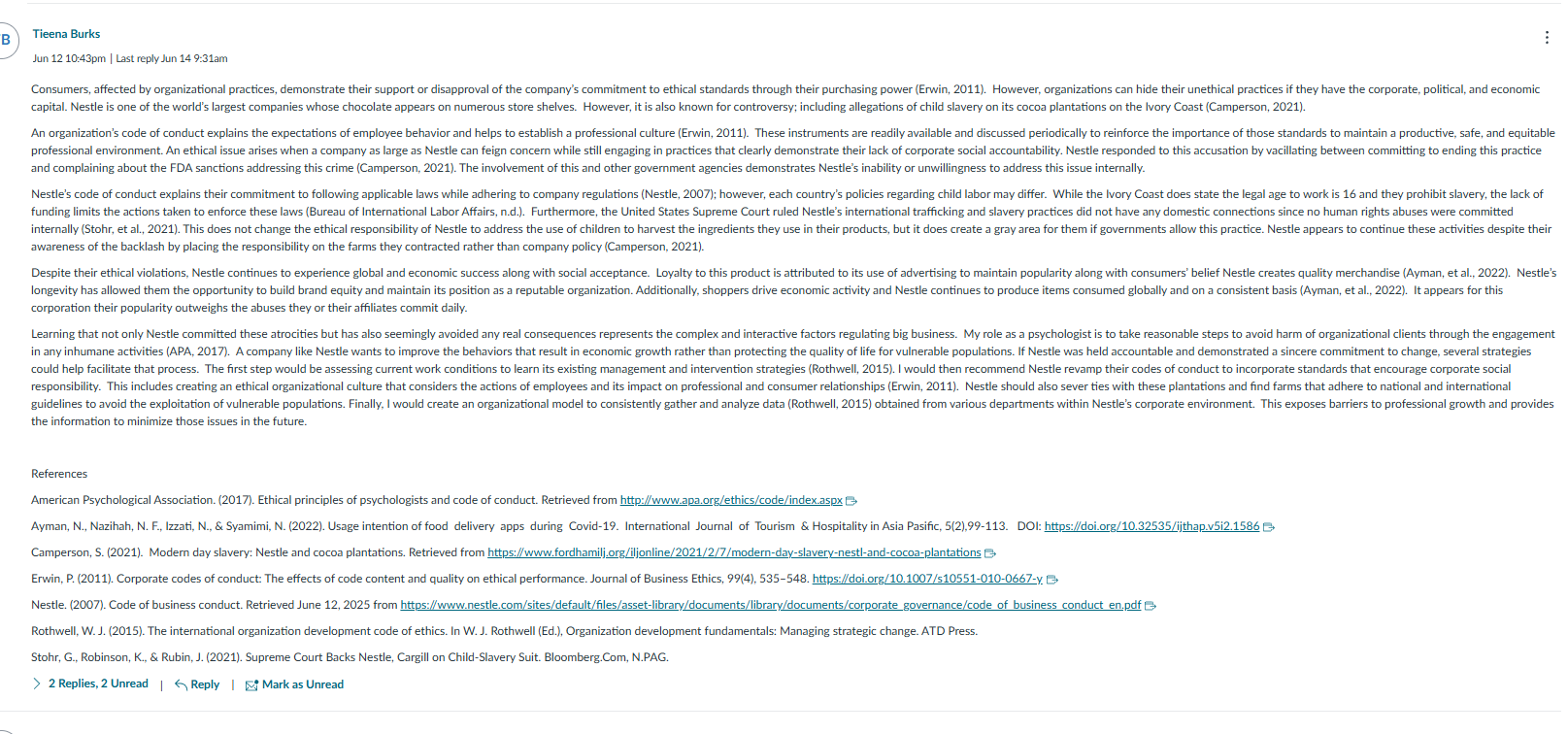
Tieena Burks Jun 12:10:43pm | Last reply Jun 14 9:34am 'Consumers, affected by organizational practices, demonstrate their support or disapproval of the company's commitment to ethical standards through their purchasing power (Erwin, 2011). However, organizations can hide their unethical practices if they have the corporate, political, and economic capital. Nestle is one of the world's largest companies whose chocolate appears on numerous store shelves. However, it is also known for controversy; including allegations of child slavery on its cocoa plantations on the Ivory Coast (Camperson, 2021) An organization's code of conduct explains the expectations of employee behavior and helps to establish a professional culture (Erwin, 2011). These instruments are readily available and discussed periodically to reinforce the importance of those standards to maintain a productive, safe, and equitable professional environment. An ethical issue arises when a company as large as Nestle can feign concer while still engaging in practices that clearly demonstrate their lack of corporate social accountability. Nestle responded to this accusation by vacillating between committing to ending this practice and complaining about the FDA sanctions addressing this crime (Camperson, 2021). The involveient of this and other government agencies demonstrates Nestle's inability or unwillingness to address this issue internally. Nestle's code of conduct explains their commitment to following applicable laws while adhering to company regulations (Nestle, 2007); hawever, each country's policies regarding child labor may differ. While the lvory Coast does state the legal age to work is 16 and they prohibit slavery, the lack of funding limits the actions taken to enforce these laws (Bureau of International Labor Affairs, n.d). Furthermore, the United States Supreme Court ruled Nestle's intemational trafficking and slavery practices did not have any domestic connections since no human rights abuses were committed internally (Stohr, et al., 2024). This does nat change the ethical responsibility of Nestle to address the use of children to harvest the ingredients they use in their products, but it does create a gray area for them if governments allow this practice, Nestle appears to continue these acti awareness of the backlash by placing the responsibility on the farms they contracted rather than company policy (Camperson, 2021). ies despite their Despite their ethical violations, Nestle continues to experience global and economic success along with social acceptance. Loyalty to this product is attributed to its use of advertising to maintain popularity along with consumers' belief Nestle creates quality merchandise (Ayman, et al., 2022). Nestle's longevity has allowed them the opportunity to build brand equity and maintain its position as a reputable organization. Additionally, shoppers drive economic activity and Nestle continues to praduce items consumed globally and on a consistent basis (Ayman, et al., 2022). It appears for this corporation their popularity outweighs the abuses they or their affiliates commit daily. Learning that not only Nestle committed these atrocities but has also seemingly avoided any real consequences represents the complex and interactive factors regulating big business. My role as a psychologist is to take reasonable steps to avoid harm of organizational clients through the engagement in any inhumane activities (APA, 2017). A company like Nestle wants to improve the behaviors that result in economic growth rather than protecting the quality of life for vulnerable populations. If Nestle was held accountable and demonstrated a sincere commitment to change, several strategies could help facilitate that process. The first step would be assessing current work conditions to learn its existing management and intervention strategies (Rothwell, 2015). | would then recommend Nestle revamp their codes of conduct to incorporate standards that encourage corporate social responsibility. This includes creating an ethical organizational culture that considers the actions of employees and its impact on professional and consumer relationships (Erwin, 20111). Nestle should also sever ties with these plantations and find farms that adhere to national and international guidelines to avoid the exploitation of vulnerable populations. Finally, | would create an organizational model to consistently gather and analyze data (Rothwell, 2015) obtained from various departments within Nestle's corporate environment. This exposes barriers to professional growth and provides the information to minimize those issues in the future. References American Psychological Association. (2017). Ethical principles of psychologists and code of conduct. Retrieved from http://www.apa.org/ethics/code/index.aspx Ayman, N., Nazihah, N. F., lzzati, N., & Syamimi, N. (2022). Usage intention of food delivery apps during Covid-19. International Journal of Tourism & Hospitality in Asia Pasific, 5(2),99-113. DOK https://doiorg/10.32535/ijthap.v5i2.1586 = Camperson, 5. (2021). Modem day slavery: Nestle and cocaa plantations. Retrieved from https./www.fordhamilj.org/iljonline/2021/2/7 /modern-day-slavery-nest!-and-cocoa-plantations (> Erwin, P. (2011). Corporate codes of conduct: The effects of code content and quality on ethical performance. Journal of Business Ethics, 99(4), 535-548. https://doi.org/10.1007/s10551-010-0667-y = Nestle. (2007). Code of business conduct. Retrieved June 12, 2025 from https:/www.nestle.com/sites/default/files/asset-library/documents/library/documents/corporate_governance/code of business conduct en.pdf Rothwell, W. J. (2015), The international organization development code of ethics. In W. J. Rothwell (Ed), Organization development fundamentals: Managing strategic change. ATD Press. Stohr, G., Robinson, K., & Rubin, J. (2021). Supreme Court Backs Nestle, Cargill on Child-Slavery Suit. Bloomberg.Com, N.PAG. > 2Replies,2 Unread |